Not Everyone Can Do This
The expanded revival of the production of Così fan tutte by Christof Loy and a semi-staged performance of Lucio Silla bring the soul-illuminator Wolfgang Amadeus Mozart centre stage.
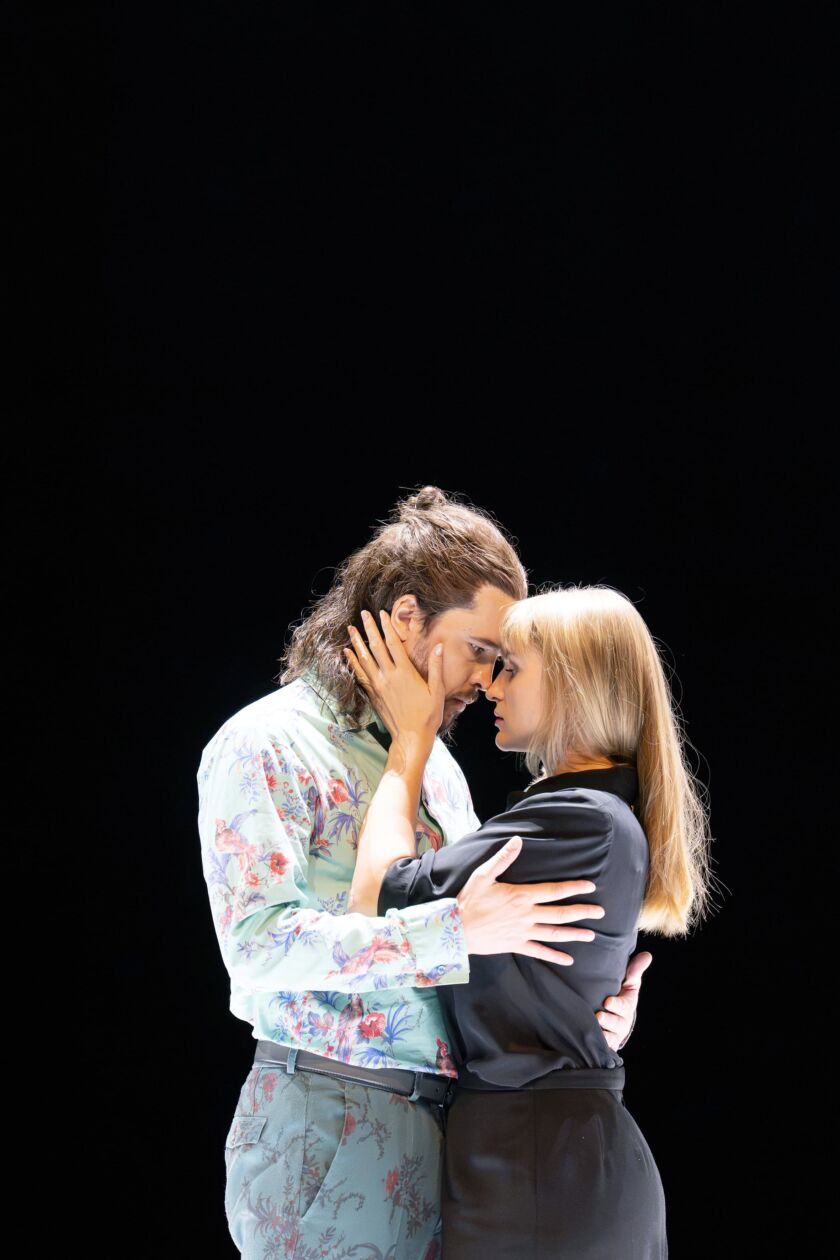
Just a moment ago the wily Don Alfonso, in the guise of Johannes Martin Kränzle, was wringing imaginary crocodile tears with a trembling hand as he deceived the sisters about the call-up of their fiancés – but then he really weeps: for when Bogdan Volkov as Ferrando sings Un’ aura amorosa with unhurried breath and a legato culture born of genuine love. Don Alfonso suddenly feels that he has long since lost the capacity for such feeling – and cannot do otherwise than spontaneously to lament this unspeakable loss. And the Fiordiligi of Elsa Dreisig, who in Come scoglio invokes her steadfastness with great gestures and the last reserves of her strength, seems by doing so to attract Ferrando all the more strongly through her supposedly inviolable fidelity …
A Unique State of Exception. Love in its happiness and despair, in its surprises and pains, sensitive and precise, sober yet empathetic, explored in Mozart’s Così fan tutte: two friends enter into the foolish, contemptible wager that their fiancées will remain faithful to them under all circumstances. And then have to experience at first hand how fleeting and fragile, yet also powerful and irresistible (new) love can be. And all of this in performance-practice terms under unique, anything but enviable conditions: No, not everyone can do this – if only because many simply cannot and could not. Or lacked the courage, the resources and the inventiveness. Così fan tutte in the Corona summer of 2020 at the Salzburg Festival: that was one of the artistic highlights of the time, achieved under extraordinarily adverse circumstances. Circumstances whose memory has since strangely faded and blurred for many people. But those who were there have not forgotten this Così as an operatic event.
Possible Impossibilities. The Festival had actually wanted to celebrate its centenary in 2020 with a particularly opulent programme. The pandemic that broke out in the spring and the measures adopted worldwide against the spread of the virus appeared at first to draw a general line through the celebratory plans. All the major music festivals of that year were cancelled completely, including the Bayreuth Festival. All music festivals? No. In Salzburg the triumvirate of President Helga Rabl-Stadler, Artistic Director Markus Hinterhäuser and Commercial Director Lukas Crepaz managed to put together a programme that was significantly reduced but by no means minimal, combined with a sophisticated security concept meeting all requirements, and thereby succeeded on every front. Hinterhäuser aptly called it at the time a “small miracle” and emphasised: “It is the most emphatic signal to the cultural world: that art is possible, that culture is possible. That the coming together of people is possible.”
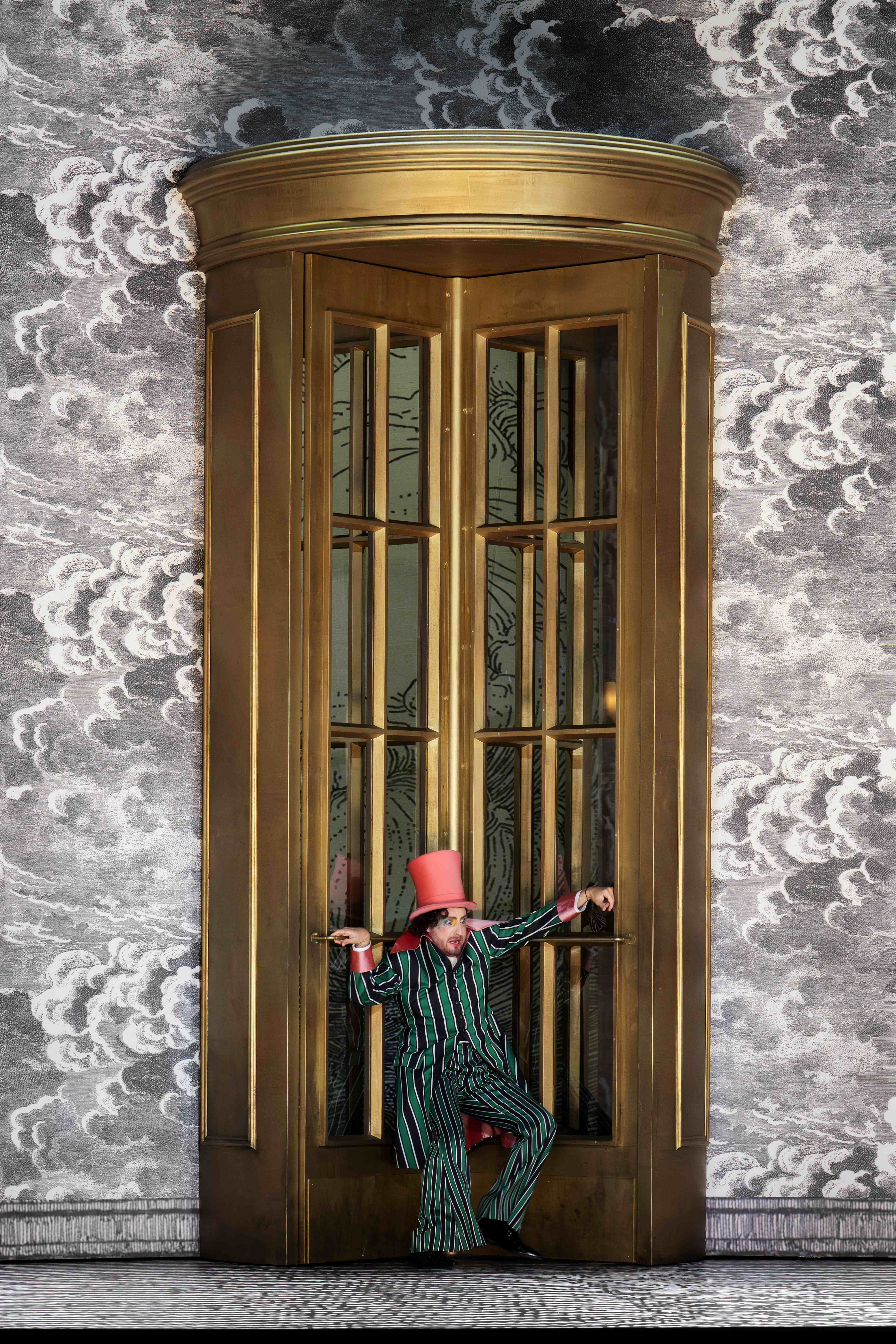
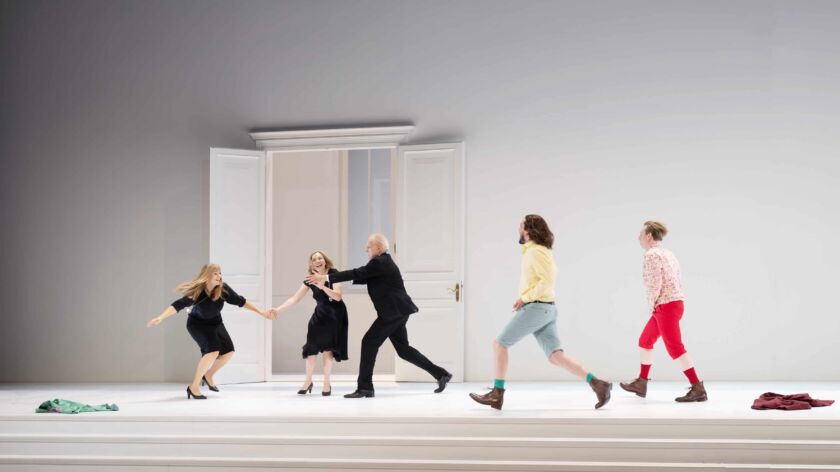
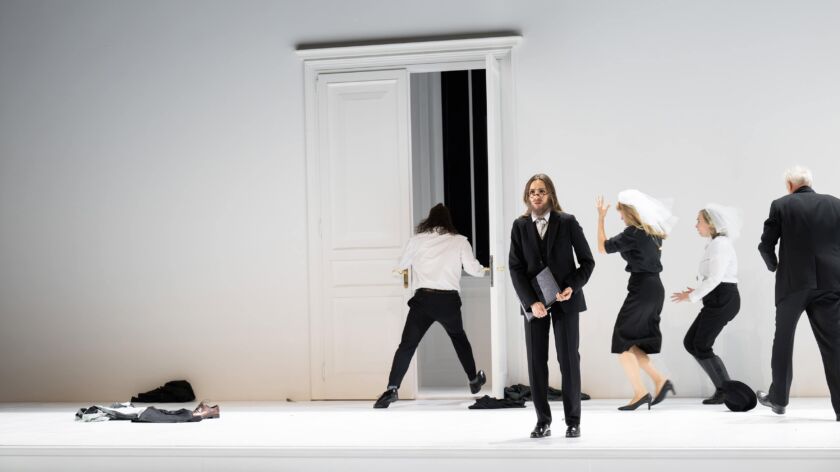
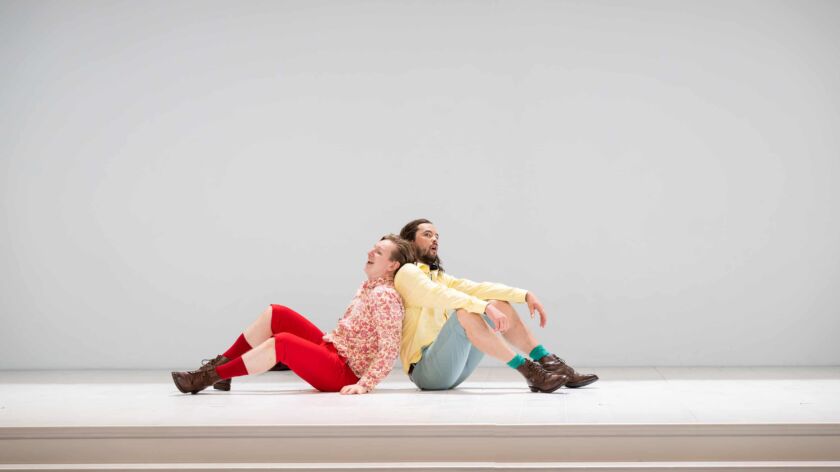
Director Christof Loy had worked closely with conductor Joana Mallwitz to produce a version equally intelligent and practical, which showed no seams in the dramaturgy: the whole was gripping as a relationship drama with humour and depth for two and a half uninterrupted hours. Stage designer Johannes Leiacker needed for this, true to his style, little more than a chalk-white wall with two bourgeois double doors. Loy’s central poetic idea: the elaborate disguises simply do not exist. True, Ferrando and Guglielmo return in ridiculously colourful get-ups, but the test of love seems to proceed with open visors, without any great fuss being made about it. All the deeper do the glances that Loy casts into this experimental arrangement penetrate. And a largely young, dramatically convincing and musically strong ensemble lays bare human souls.
Alongside Dreisig, Volkov and Kränzle, Andrè Schuen as Guglielmo and Lea Desandre as Despina also return; only the Dorabella played by Victoria Karkacheva is new, when Loy and Mallwitz now bring this Così as an expanded new production to the stage of the main Festival theatre. In doing so they can reinstate the cuts that were forced on them at the time and reveal an even more precise, more detailed web of relationships. In terms of life and musical experience, all have grown richer too.
Not least Bogdan Volkov. For him the Così was, as he recounted in an interview, “the beginning of my story with the Salzburg Festival. I could not believe that so much good fortune and so many coincidences could happen to me. I was in lockdown like everyone else, and then I came here and am forever grateful to the Austrian government for making a visa possible for me. The first two flights fell through, but the third time I was here and felt as if the whole cosmos were watching us perform before an audience while everywhere else was closed. That will remain in my heart forever, and Salzburg remains for me the place of magical moments.”
A Soul Laid Bare. Volkov himself has contributed to these moments in a most impressive manner, this tenor born in 1989, still in Soviet times, in Ukraine – long since one of the most sought-after in the world: not only in the Mozart repertoire but above all through his in every respect breathtaking, moving portrait of Prince Myshkin, the title role in Mieczysław Weinberg’s fascinating Dostoyevsky setting Der Idiot at the Salzburg Festival 2024 directed by Krzysztof Warlikowski and with Mirga Gražinytė-Tyla at the podium.
“Being in love, the solitary love, the desperate love, the doubting love, the kindred-spirit love, the light love: all forms, all stages through which we can pass in an entire human life can be narrated through this story,” enthuses Joana Mallwitz about Così fan tutte. Born in Hildesheim in 1986, she was still General Music Director at the Nuremberg State Theatre in 2020; she is now Chief Conductor of the Konzerthausorchester Berlin, was portrayed in the documentary “Joana Mallwitz – Momentum”, made her debut at the Metropolitan Opera in 2025 with Le nozze di Figaro, and in the same year won several prestigious prizes for her recording of works by Kurt Weill. She was 13 or 14 when she wrote in the pocket score of Schubert’s Unfinished Symphony: “This is my first score and hopefully later the first piece I will conduct as a conductor.”
The Harnoncourt Experience. For Così she now returns to the podium of the Vienna Philharmonic. Her generation had grown up “with everything that Harnoncourt and many other fantastic musicians and ensembles have researched and tested with curiosity,” Mallwitz emphasises. “Their new way of thinking about music has enriched our world. At the same time I have taken the thoroughly classical conductor’s path; I feel at home on both sides and wish to combine them.” For, as she reflects: “One does not access the essence of a work from a particular period simply by using gut strings, baroque bows and historical wind instruments. My wish is to link the living tradition of the great symphonic sound – cultivated through the collaboration of the most significant orchestras and conductors – with the detailed work on articulation and phrasing from early music. The opulent, the great, the genuine cantabile, the supported, sustained tone, combined with the joy in music-making, even the wildness: that is perhaps how I would describe my way of playing generally.”
And, the conductor sums up her experiences as a répétiteur and song pianist: “In the end, everything is song! The best music always tries to imitate song. But song also carries a text – and this text depends on articulation and phrasing. So both must go hand in hand.” In this insight, Mallwitz naturally also meets the accomplished Lieder singer Andrè Schuen, who as Guglielmo suffers most under the game of shifting loves.
Mozart is and remains inexhaustible. “I now still have 14 pieces to finish, then I am done, of course one can count the Terzet and Duetto for 4 pieces. I simply cannot write a lot, because firstly I know nothing, and secondly I don’t know what I write, since my thoughts are always with my opera, and I run the risk of writing a whole Aria for you instead of words”: hastily scribbled lines from 5 December 1772 to his sister Maria Anna, known as Nannerl, testifying that the not-yet 17-year-old Wolfgang Amadé was seized by a kind of creative frenzy.
More than a Talent Showcase. His opera seria Lucio Silla, written in the shortest time and under partly adverse circumstances for Milan, marks the fascinating point at which the child prodigy transforms into the mature composer. The plot revolving around the abdication of the Roman dictator Lucius Cornelius Sulla (also “Silla” in Italian), cast into a libretto enriched with dark scenes by Giovanni de Gamerra, inspires Mozart to astonishing music: following the time-honoured rules of the genre yet transcending them, he composes accompanied recitatives with rich wind participation, ventures unusual harmonic effects, chains arias into continuously conceived scenes and converts vocal virtuosity into dramatic expression. Here in fact much is already sown that he needed only to harvest in „Idomeneo“. Too unusual, too bold for his time? Despite the great success recorded by 26 performances, Lucio Silla marked the end of Mozart’s operatic career in Italy – and at the same time the beginning of his maturity. Performances of Lucio Silla are comparatively rare to this day. When the Salzburg Festival now wishes to lift the work from the shadow of the seven great stage works that Mozart intended to open with his Idomeneo, it does so under special music-dramatic conditions – namely in a semi-staged interpretation for which Birgit Kajtna-Wönig is responsible.
This means, also in collaboration with the Bach Choir and the Mozarteum Orchestra Salzburg under the direction of Adam Fischer – an equally stylistically expert, energetic and passionate Mozart interpreter – the continuation of one of the greatest successes of last Festival summer. For that saw Mozart’s Mitridate on the programme, the precursor work first performed in Milan in 1770 – in a semi-concert performance that was anything but merely a half measure.
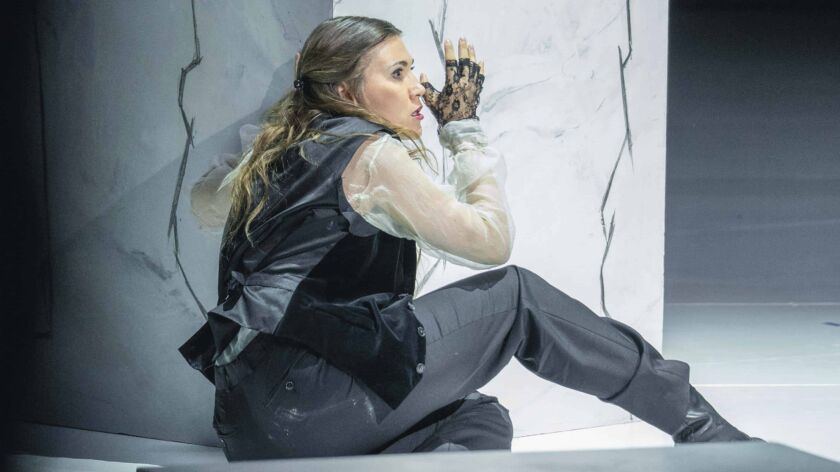
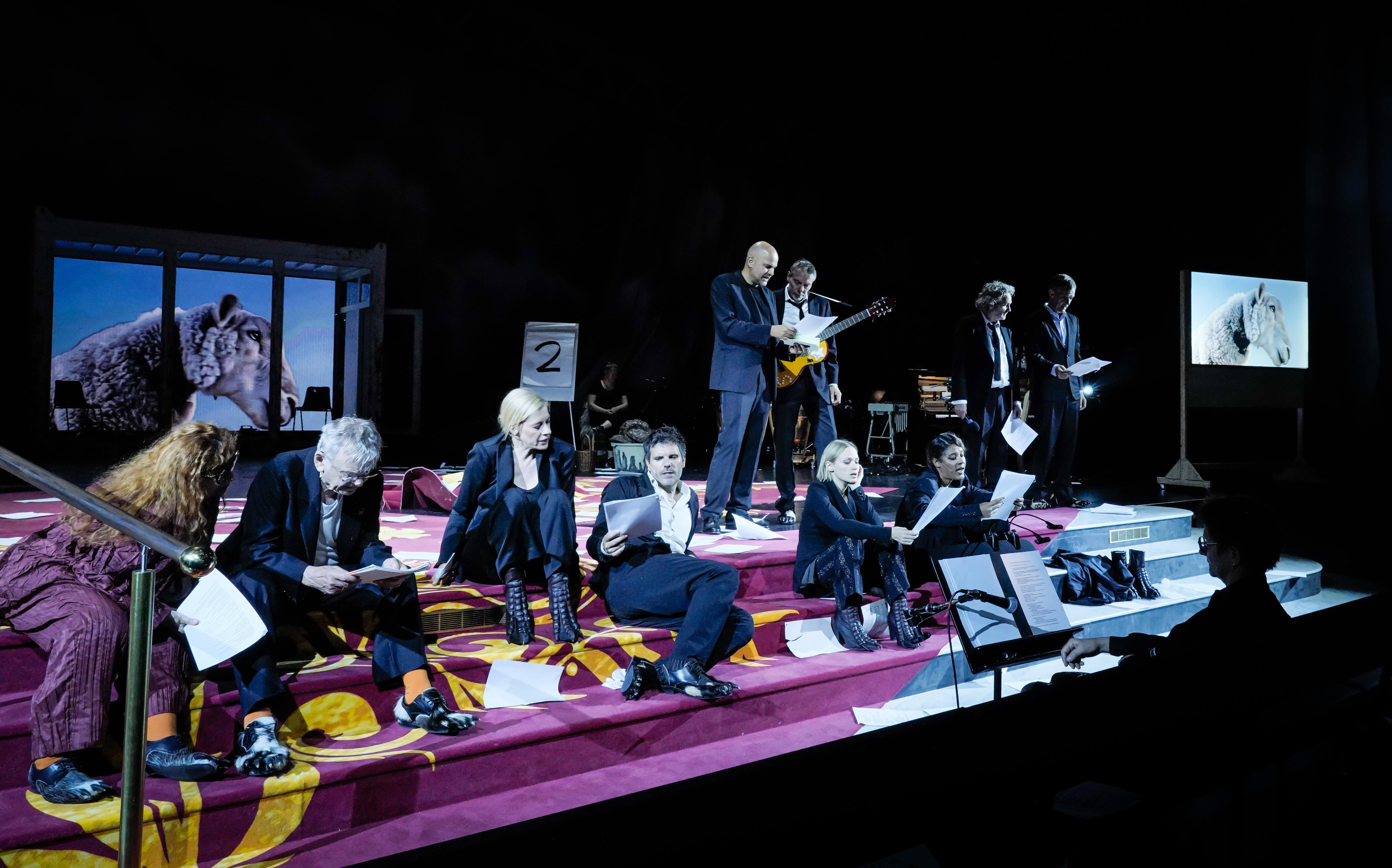
A Pinch of Humour Helps. Mara Wild had created helpful, partly animated subtitles for that production, which not only reproduced the sung texts but also supplied background information: the characters, their at times tangled relationships and motivations were explained unobtrusively and with well-dosed winking. Bernadette Salzmann’s plain, clean costumes and above all Kajtna-Wönig’s direction of the performers lacked neither seriousness nor humour. Together with a brilliant cast, this offered a fascinating glimpse into the operatic workshop of the young Mozart.
Even then the Catalan soprano Sara Blanch was on hand, who now moves from the Aspasia in Mitridate to the similarly fulminantly virtuoso role of Giunia in Lucio Silla. The Australian mezzo-soprano Xenia Puskarz Thomas slips into the trouser role of her betrothed Cecilio, who has secretly returned from exile to Rome: he wants to topple the dictator Lucio Silla, sung by the tenor Giovanni Sala. Still to come are two more soprano roles: Martina Russomanno, also from Italy, sings Cecilio’s friend Lucio Cinna; the Armenian singer Lilit Davtyan embodies Silla’s sister Celia.
The result is a dangerous gathering of private-amorous and power-political conflicts: at least in opera, forgiveness, magnanimity and absolution can point a way out of misery.