Composed in 1789, shortly after the storming of the Bastille and in the final months of the reign of Joseph II, Così fan tutte reflects the full flowering of the ancien régime immediately before its collapse.
It all begins in a coffee house in Naples – a place full of ambivalence, where the beauty of the landscape contrasts starkly with the ever-present threat from Vesuvius. And it’s in this atmosphere of tension that the ensuing story unfolds, with consequences that will unsettle all characters alike.
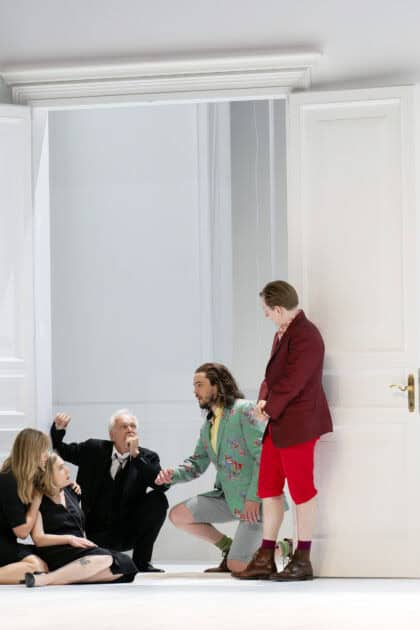
Disillusioned by love, Don Alfonso explains his philosophy: ‘Fidelity in women is like the Arabian phoenix; everyone says that it exists, but no one has ever seen it.’ With this assertion he provokes Ferrando and Guglielmo, who are both in love, to make a wager: an experiment set up by Don Alfonso will test the faithfulness of their fiancées Dorabella and Fiordiligi. Don Alfonso’s aim, however, does not merely concern the issue of faithfulness: he wants to reveal the relativity of love – and prove that the emotion people believe is unshakeable is in fact subject to the laws of play, deception and chance.
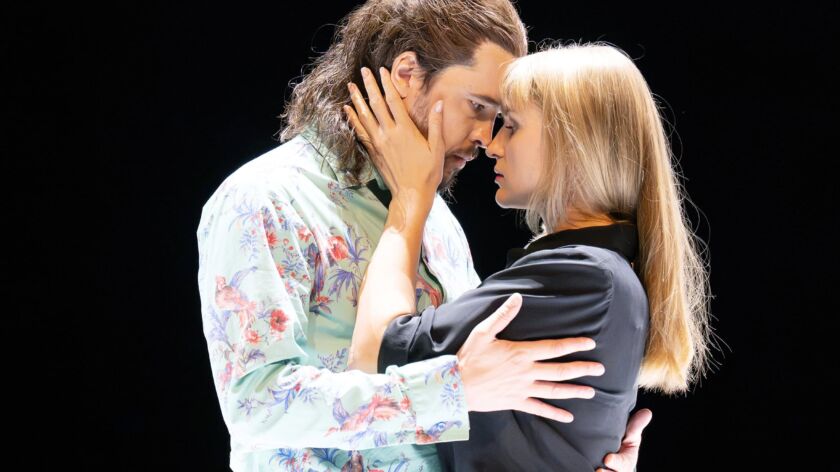
What starts out as a parlour game develops into a pitiless experiment. Hearts are taken apart, dissected and put together anew; the couples enter the vertiginous zone of love. All four characters become strangers to themselves: Fiordiligi, who initially seems unshakeable, is overwhelmed by a passion that both delights and dismays her; Dorabella seems to effortlessly welcome the new situation, but this ease betrays knowledge of the heart’s fragility; the men who think they are setting the rules ultimately find themselves tested, their own vows devalued. Even Don Alfonso is no longer able to preserve his position as impartial observer. During the course of the action all familiar co-ordinates will give way, every certainty be suspended.
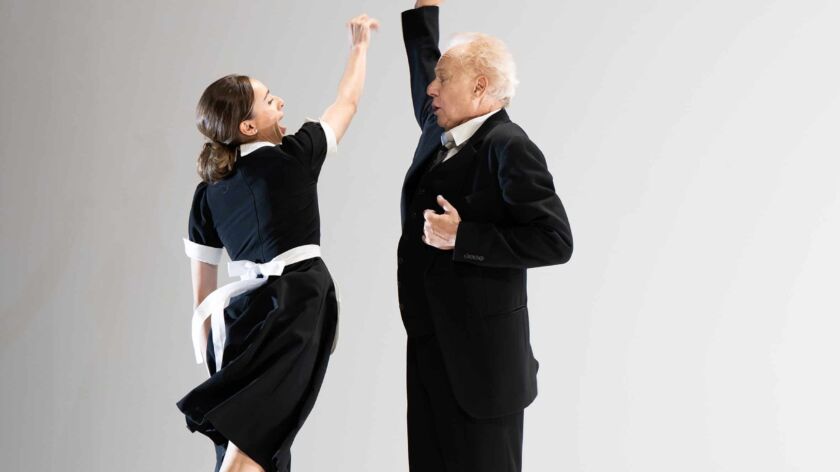
Despina, Don Alfonso’s ally, shows the two women a way out of the crisis. She has come to terms with the world of uncertainty and faithlessness. For her, love is an amusement and a diversion: ‘One man is worth the same as any other, for no man is worth anything.’ But her wisdom is not that of the opera! Così fan tutte moves in entirely different dimensions: it explores the question of how our humanity can be saved – despite the events that may seem to confirm Despina’s view of things.
The enigmatic truth of the libretto only reveals itself fully through Mozart’s music: he does not compose with alienating irony, nor consign human relationships to mockery by representing them as mechanistic and marionette-like. Instead, he touches the beating heart of the action and through this the deep mystery of love.
The music develops a unifying power without denying what has happened. The conflicting elements are reunited without force: all the protagonists are aware of the suffering and tears they have gone through. But through their painful experience they have attained serenity and a kind of harmony of the heart. Laughing and weeping appear as equals. The musical depiction of the ‘bella calma’ that has been achieved contains not a trace of irony.
All the protagonists are able to return to themselves with a deeper knowledge of the world – perhaps accompanied by the gentle question that concludes Heinrich von Kleist’s essay On the Puppet Theatre from 1810: ‘Does that mean that we must eat again of the tree of knowledge in order to return to the state of innocence?’
Yvonne Gebauer
Translation: Sophie Kidd