“Variations of Love under a Magnifying Glass“
“It’s like a family reunion here,” says conductor Joana Mallwitz about the cast of
the Salzburg opera production CosÏ fan tutte. In 2020, she and Christof Loy created a reduced version
of the opera without an interval – for the Salzburg Festival’s centennial and due to the circumstances
of the pandemic – which many viewers still remember vividly. Now the successful production returns
to the stage of the Grofles Festspielhaus as an expanded revival: within its signature stage set, the
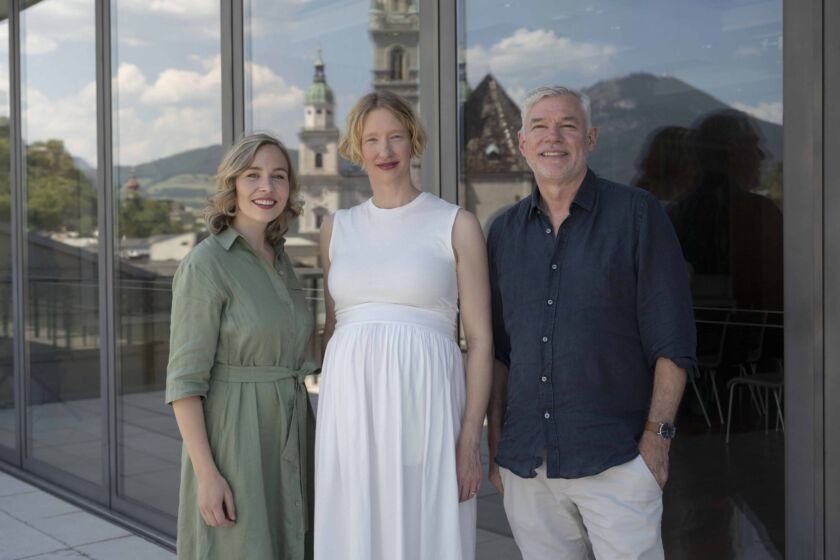
entire 2020 cast meets again, with the exception of one new cast member. During the Terrace Talk,
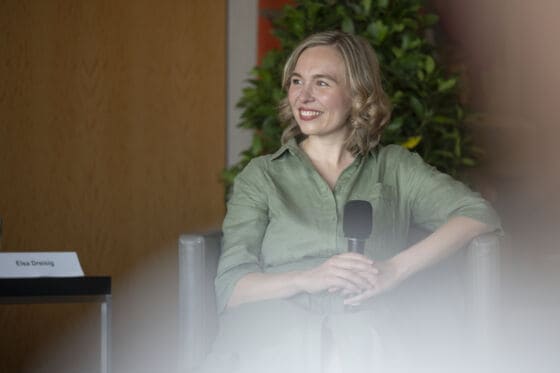
Joana Mallwitz, Christof Loy and Elsa Dreisig, who sang the role of Fiordiligi then and now reprises it,
discuss the extended concept and the rehearsals for this year’s CosÏ fan tutte.
Inside the Emotional Labyrinth
The casual title of Wolfgang Amadeus
Mozart’s opera CosÏ fan tutte – which
translates to “That’s how all women do it”
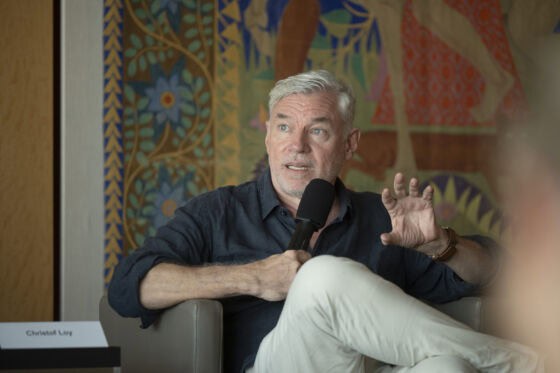
– may be irritating. According to director
Christof Loy, there are numerous
productions which portray the female
figures in a naÔve, exaggerated way,
focusing on the superficial humour. Loy,
on the other hand, tries to treat the
characters with dignity, without creating
“caricatures”. He speaks of the “paradisical
state” they find themselves in at the
beginning of the piece, and describes “the women’s innocence as something very beautiful”. After
all, the men are „initially far more depraved” with their wager to test the women’s faithfulness, and
Loy’s staging makes them “look into unexpected abysses” when the intrigue slips out of their hands.
In Fiordiligi, the director sees “the absoluteness of feelings”, which is something Elsa Dreisig relates
to: “She experiences everything 100 percent, there is nothing half-hearted there. I love this woman;
she has an enormous amount of temperament.” The soprano speaks lovingly about her role: „She
could be a friend of mine.”
“I try to focus all my concentration and
that of the audience on the states
immanent in the characters, states that
keep changing. And I leave out anything
that might be distracting.“ Unlike the
scenario in the libretto, the Salzburg
production is not set in a specific
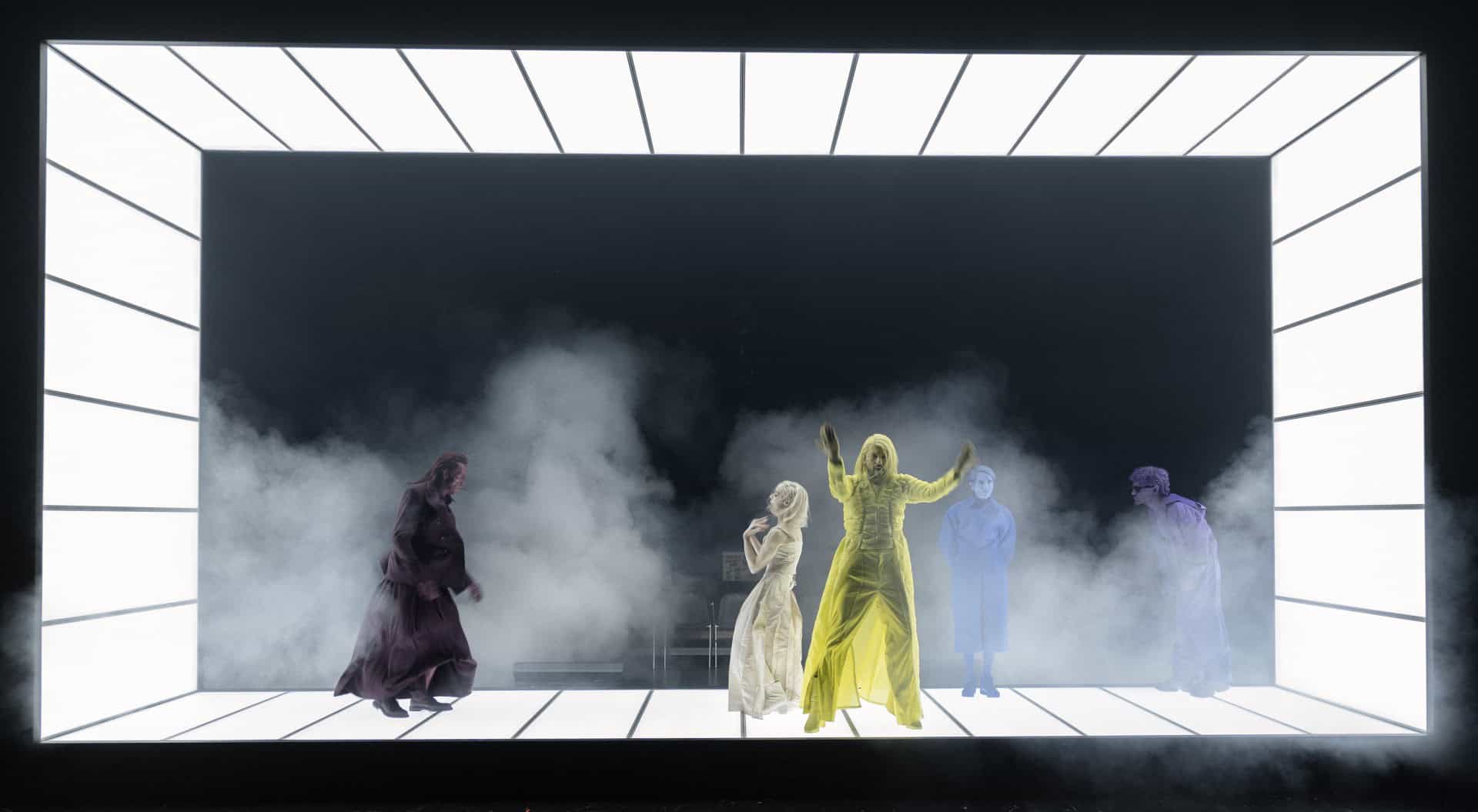
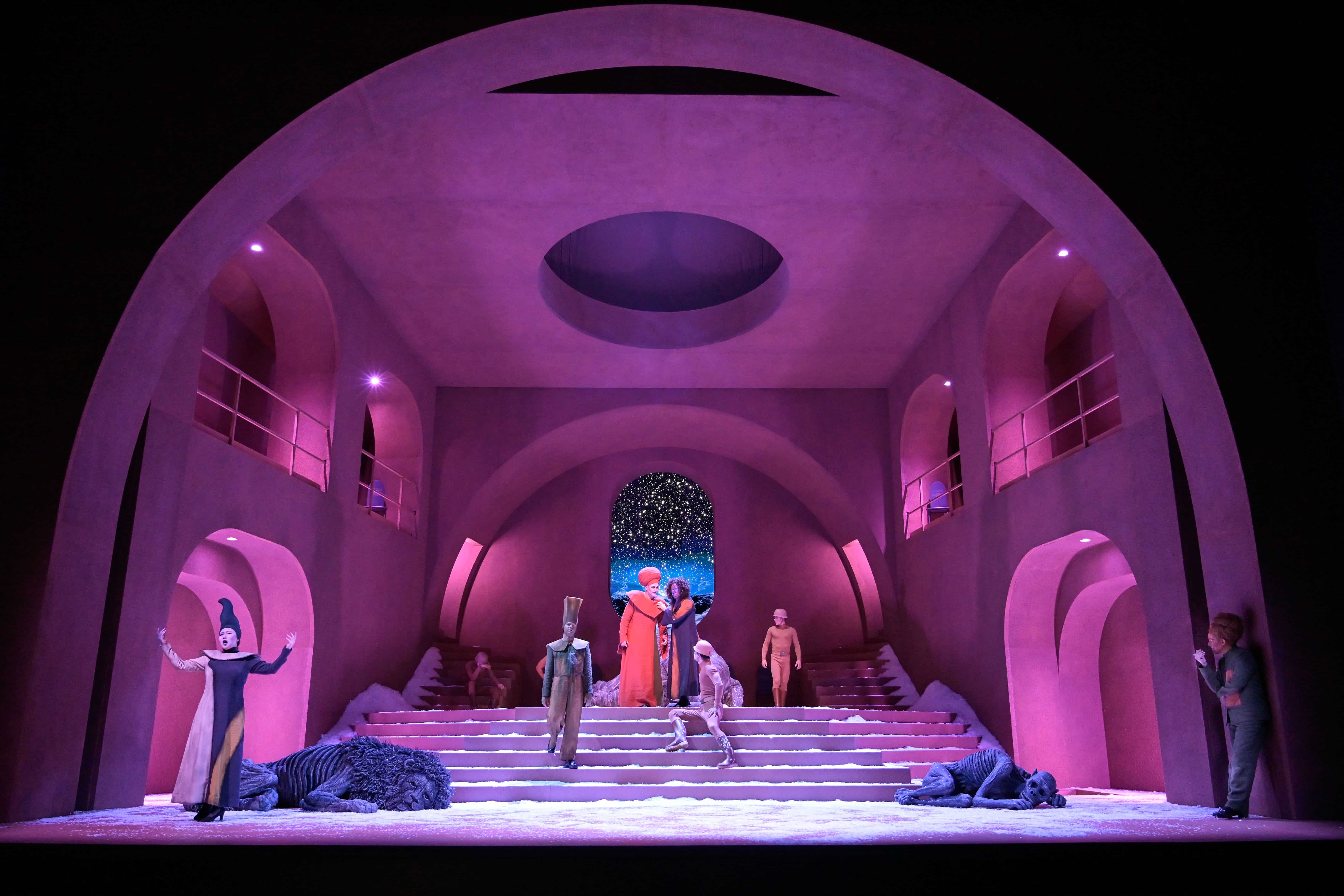
location; the viewer sees an expansive,
white set with two doors. This
timelessness and general validity gives
the characters on Loy’s stage plenty of
room to wear their innermost feelings on
their sleeves. Even when he first
borrowed the score at the age of 12, he suffered with the characters in Act II. He missed this
empathetic reading, however, in the productions he subsequently saw: “Most of the time, the first
act was odd, because there was too much superficial comedy and elaborate stage sets, making it
impossible to delve into this labyrinth of feelings later.” Even the puppet master Don Alfonso has
more sensitive facets in Christof Loy’s concept than in many other productions: “He too has been
wounded by love.” To Joana Mallwitz, the opera is like a “magnifying glass”, broadening our views on
various forms of love, i.e. “love between siblings, infatuation, mad love, desperate love, lonely love
and fateful love”.
Starting with the Innermost
“We had to be fast,” Joana Mallwitz
remembers the creation of the 2020
version. She and Christof Loy pursued
the same vision: “Not thinking about
what we could cut, but considering
the things we definitely wanted to
hear.” Both describe some of the cuts
as “painful”; mostly, this concerned
the soloists’ second arias. While these
gaps are filled in the revival, Mallwitz
and Loy have kept some of the cuts –
some of them recommended even by
Mozart himself, for example in the ensemble sections.
The conductor emphasizes the “incredible diversity of layers you can hear at any time in this opera”.
The psychological view of the characters does not work through subtraction, but by “starting to think
from the innermost, from the core”: “In 2020, for the first four weeks we only sat around the piano,
working on the texts and asking ourselves: what’s the timing? Where’s the impulse? Where does the
feeling start, at which point does it have to be established? Which chord from the fortepiano has to
follow it, in which shape? And then the opera was complete, and we were able to stage the whole
thing in brief.” The fact that most of the soloists from the first time are once again part of the
production this year is a “great stroke of good fortune”: “Everyone is so very attuned to each other in
these roles. The core is still there, and it works.” In her musical work, Mallwitz emphasizes the
confluence of very good technique and “a musical articulation that is always pegged to the text, that
can even be a bit cheeky”. This is an attitude she attests to the soloists and the Vienna Philharmonic:
“They have the ability to deal with the text and to bring out even the smallest emotion in every
letter.” The Salzburg production allows the singers a good view of the orchestra. To Elsa Dreisig, this
proximity feels “like chamber music“. “It’s a dream come true.”
“The ideal CosÏ“
The reduced version is now six years old, and a lot has happened in these years: “personally, in terms
of development, also vocally,” Joana Mallwitz explains. The fact, however, that CosÏ fan tutte “was
rehearsed at the time with such precision and passion” means that it’s burned into their memories. “I
am curious to see what the piece does to us now, six years later.” To Mallwitz, it’s “the most honest
of all Mozart operas”, and this production is “the ideal CosÏ”. Christof Loy underlines the
“responsibility towards the work created at the time”, describing a choreographic and emotional
“clockwork” whose precision needs to be restored. Elsa Dreisig remembers having “butterflies”: “I
had the feeling that we were all collectively in love.” At the 2026 Salzburg Festival, CosÏ fan tutte will
be performed six times, starting on 6 August at the Grofles Festspielhaus.