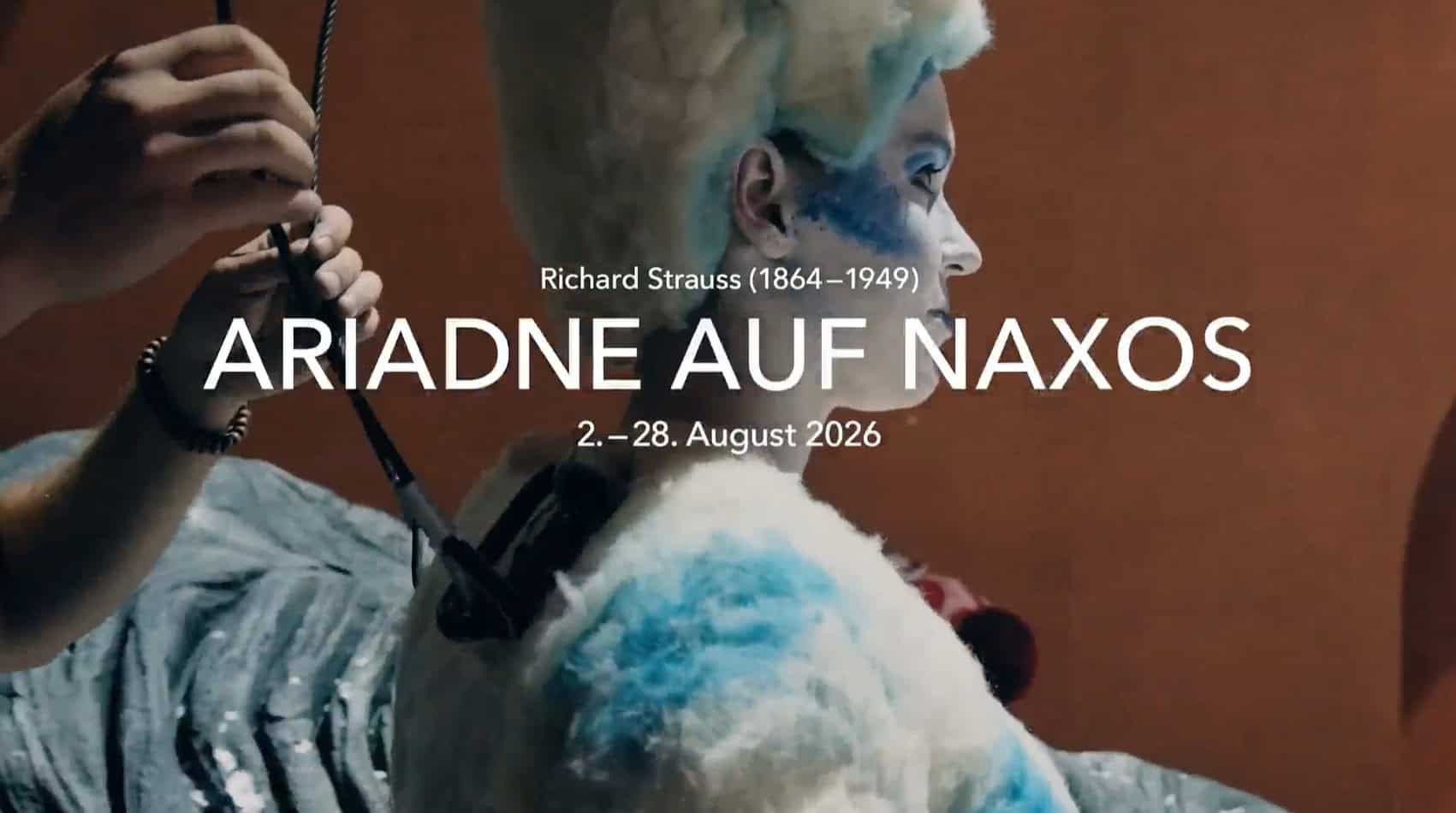
Ancient Abysses, New World Order
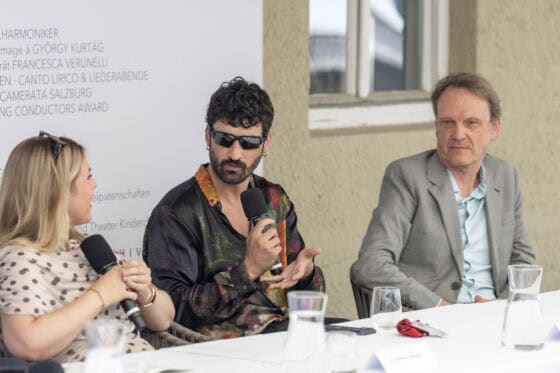
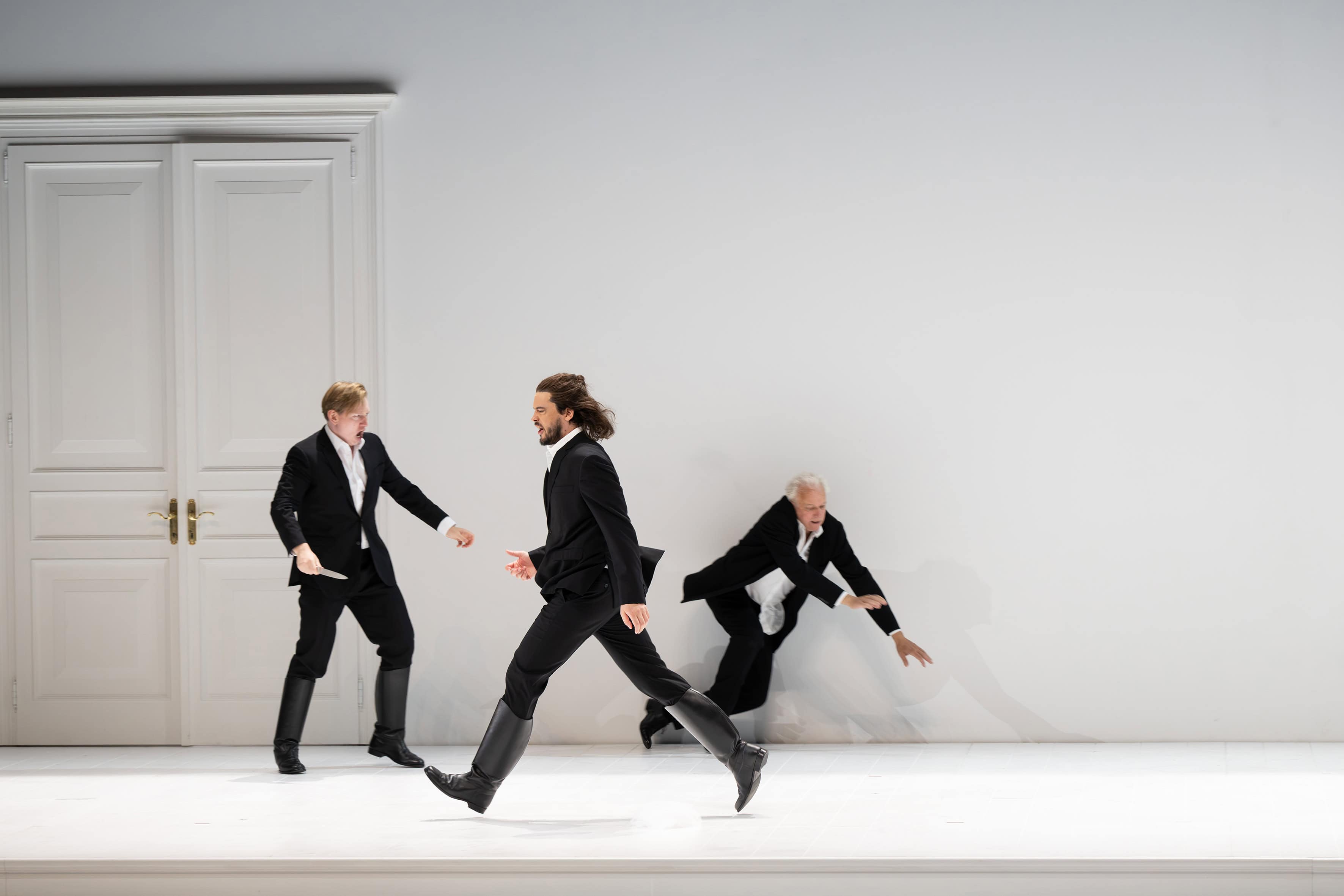
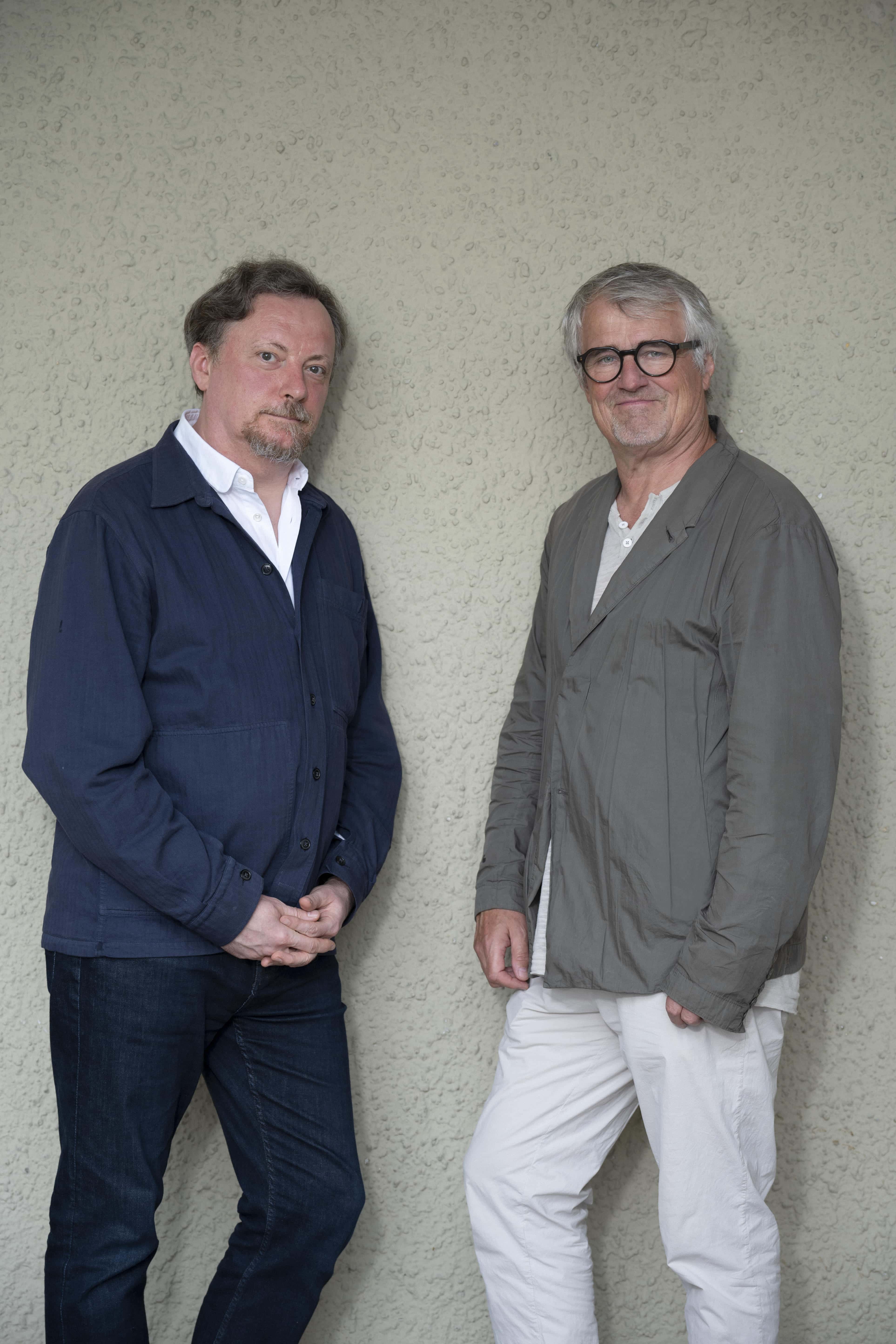
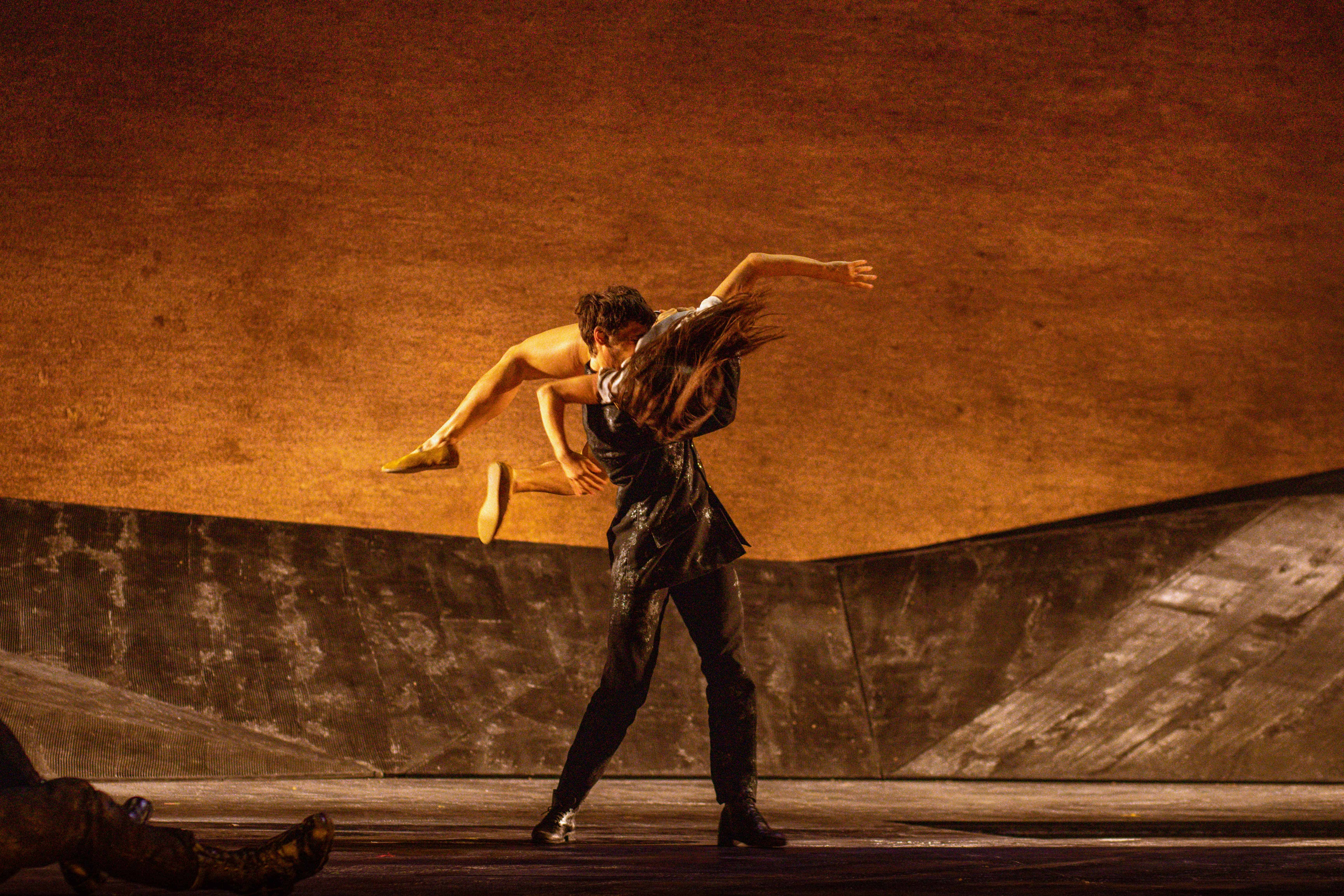
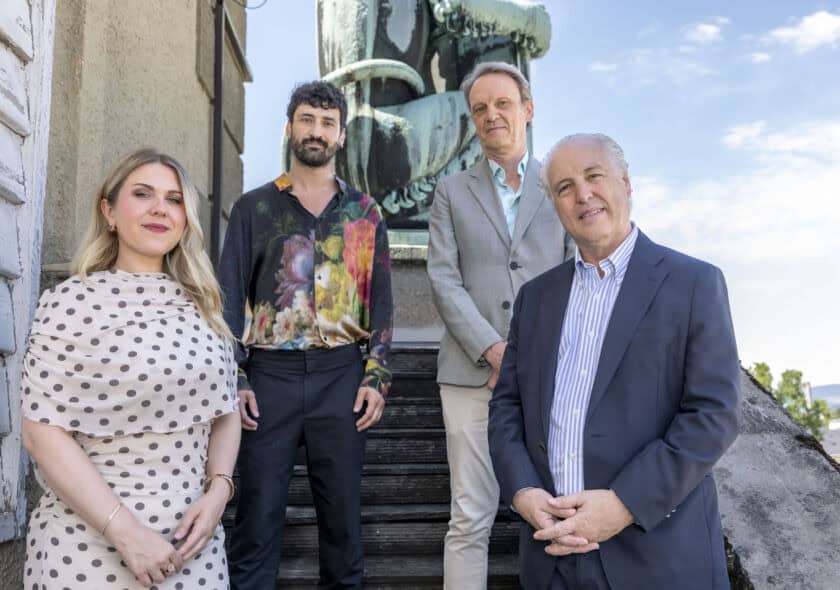
“Something is out of joint; the world order has shifted completely:” thus, director Ersan Mondtag defines the point of departure of his new production of Ariadne auf Naxos, which he presented in a joint conversation with dramaturge Till Briegleb, conductor Manfred Honeck and soprano Christina Nilsson. The opera by Richard Strauss and librettist Hugo von Hofmannsthal was created during World War I, holding up a mirror to the upper class that had managed to avoid the war, insulated from the painful reality of most people. Mondtag and Briegleb have taken this concept of a closed society further, staging it as a time capsule on Mars.
An Aesthetic of Threat on Mars
“We used the urge of the superrich to build themselves a state within the state as a matrix,”
says Till Briegleb, naming Jeff Bezos, Elon Musk, but also Peter Thiel’s special development
zone Próspera on the Honduran island of Roatán as real-life examples. The dramaturge,
journalist and critic has been working with Ersan Mondtag since 2018, explaining their joint
interdisciplinary work: “We always try to reinterpret opera stories with a certain political
dimension.” In Ariadne auf Naxos, Mondtag and Briegleb explore the consequences of
turbocapitalism and astro-fantasies, moving the opera to a new location: the “desert island”
of Naxos becomes the desert planet of Mars. The characters are part of a closed society,
having left Earth behind and built a new order for itself. Security forces and guards protect
this space: “We are creating a kind of aesthetic of threat. There are uniforms, all coded down
to the last detail – all the way to the dressing gowns of the performers. There are plenty of
entrances and exits in this architecture, but above all else stands the state, which controls
everything,” Ersan Mondtag explains.
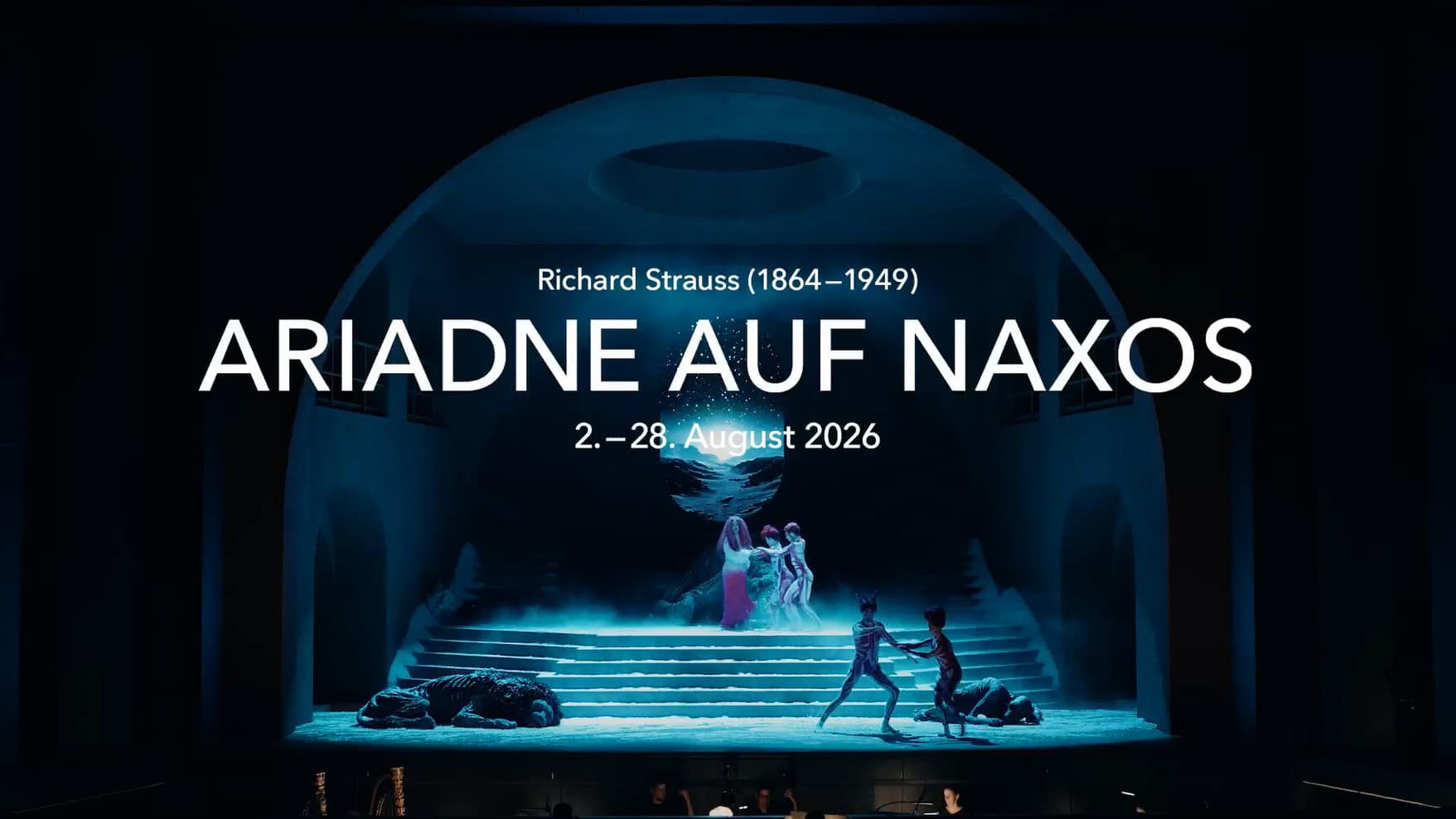
Various forms of isolated time capsules had an atmospheric influence on the production and
its set design: air-raid shelters during wars, sacred buildings of all religions, but also fictitious
examples, such the one in Emir Kusturica’s film Underground or Dracula’s castle. Ersan
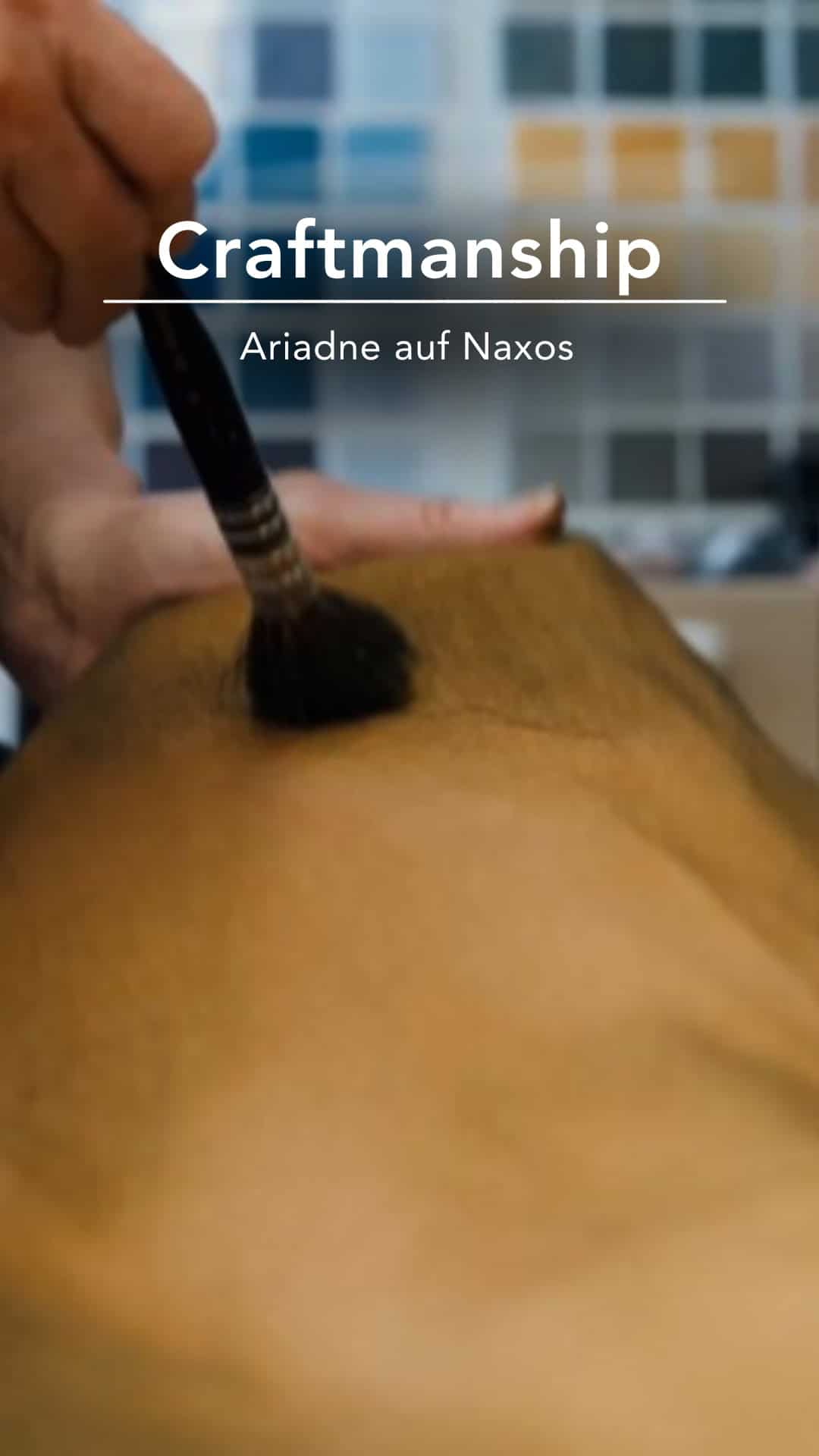
Mondtag compares the stage sets to a kind of sacred building, adding: “We used Salzburg’s
architecture and arches as orientation, and the colours of the Haus für Mozart. This
integrates the stage with the auditorium.” After the prologue, there will be a break for
resetting the stage: “The architecture in the second part stays the same as in the first, but
there will be stage sets inserted into the interior, for the opera within the opera, for the
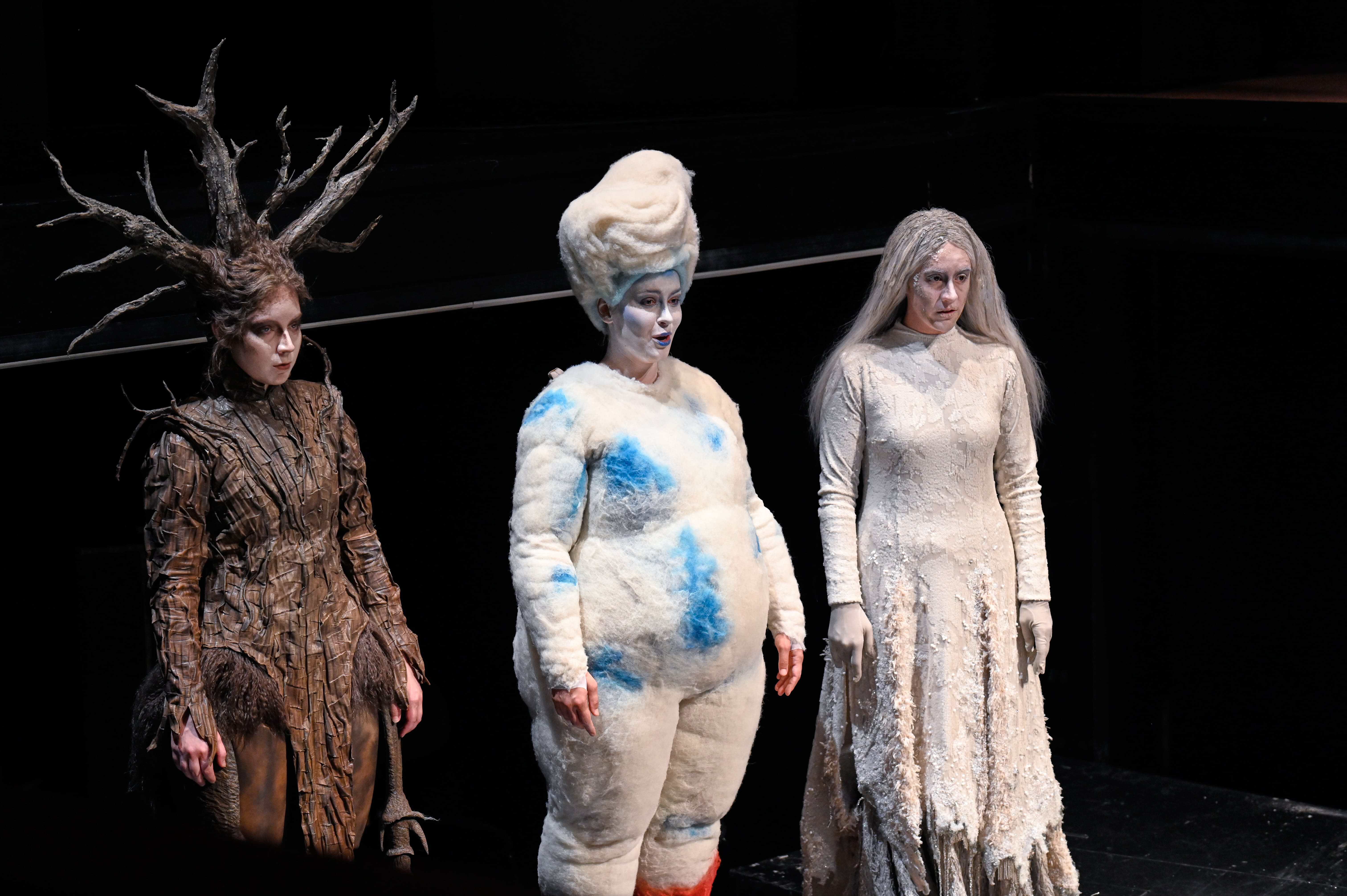
performance within the performance.” The production transforms „the desert into a snowy
landscape“, with a freezing Ariadne and the cadavers of starved animals (an elephant, a lion
and a monkey). This image “points to the present time, of course, and the potential
destruction of nature”. The director is keen to emphasize the seriousness: “You can read the
original as an ironic take on opera. The second part of the opera opens an intriguing friction:
is this irony or not? We intentionally leave that open. But we are not working with irony. Our
setup on Mars is not ironic. We have built complex Mars landscapes: in the background, you
see metal titans 100 metres high, robbing Mars of its resources; there is a journey through
the universe; a kind of Hermes figure arrives by spaceship – this world is one we built, and
we refer to the very serious aspect of Strauss’ music.” For their dream of a new society,
people destroy Earth, says Till Briegleb. However, the result is the “rapid establishment of a
social system that reproduces all the levels of eroticism, of love, enmity, envy, egoism, all
the things we know from our society, in this time capsule as well. Thus, we really tried to
extend this concept of the time capsule right into the architecture.”
“Clichéd roles exist to be destroyed“
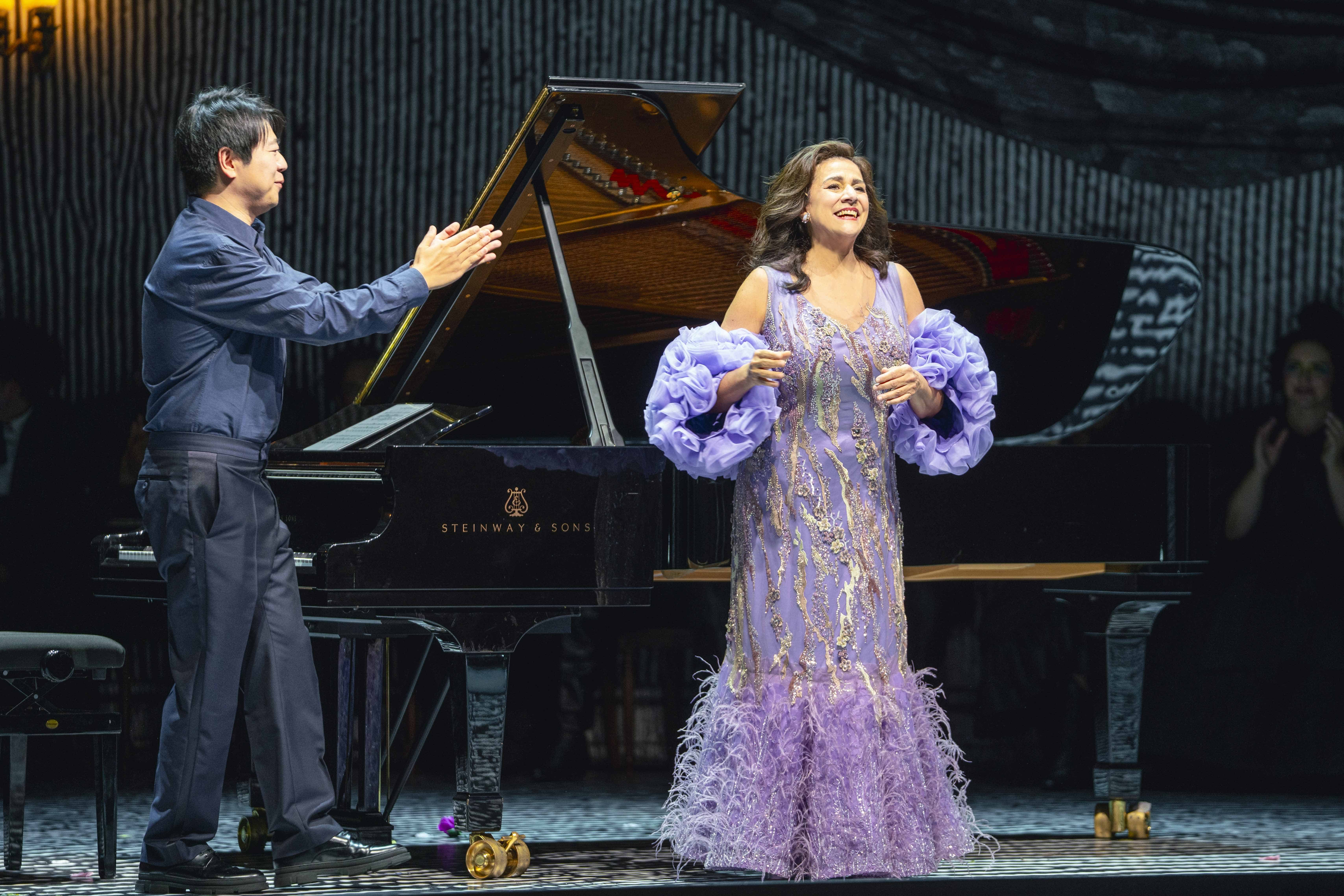
In the midst of this time capsule on Mars, we find Ariadne. The title role is sung by the
Swedish soprano Christina Nilsson, making her Salzburg Festival debut in the double role of
The Prima Donna / Ariadne. “Strauss brings out the beauty of the voice and allows us to use
its full spectrum. He offers us all the sonic colours imaginable,” Nilsson enthuses, when
asked to characterize Strauss’ music. While she describes The Prima Donna as “not the
nicest person”, she also underlines the many facets of Ariadne’s character: “She may be the
woman who was abandoned, but she is not depressed. It begins so quietly and beautifully,
with a memory. I see so much force, strength and determination in her. She is a woman
reawakening to life. That’s something one can bring out wonderfully in the music.” Till
Briegleb emphasizes: “She is often reduced to her death wish. I think that’s totally wrong.
When you truly read Hofmannsthal’s libretto with regard to Ariadne, you discover different
facets. Her childhood memories, her purity, her lightness. And the death she imagines is
really a transition to a different world, a transition she considers a mystery. It is a continuous
exploration of the question how we can deal with death.” Ersan Mondtag makes Ariadne’s
different facets visible by using dancers who express the emotions on the one hand, but
also interact with the character on the other. “It’s like an organism,” Christina Nilsson says.
“When I sing, the dancers take over and amplify the expression.”
The characters in Ariadne auf Naxos are plagued by clichés which Ersan Mondtag and Till
Briegleb are intent to eliminate: “Such clichéd roles exist to be destroyed,” the director
states. “In our production, the women are all very strong. It’s a relic of the time to portray
female characters as weak. There are simple tricks to reinterpret that, and we have done so
throughout the piece.” Furthermore, Mondtag points to the love story between the
characters of Zerbinetta and the composer, which is in essence a love story between two
women. The composer is a female role, sung here by Kate Lindsey. “Since we deconstruct
the matrix of the figure, Kate becomes visible as Kate,” and the production recounts this love story as it is already found “on the meta-level of the composition”. Till Briegleb adds that the point was not only to reinterpret the roles, but also to exaggerate them in order to expose “the structures this opera buffa is about”.
An “enormous palette of colours“: Richard Strauss‘ tonal idiom
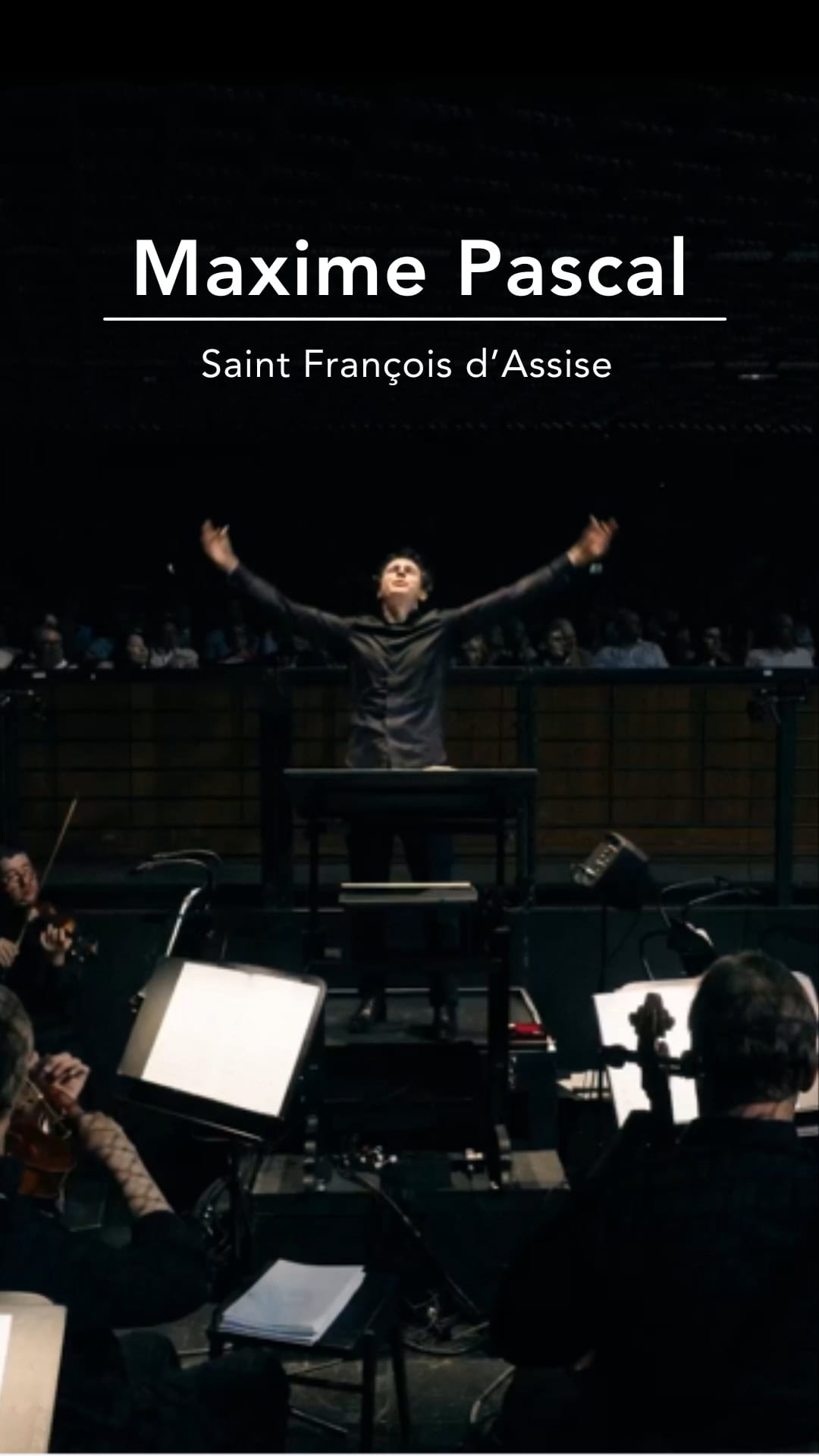
The conductor Manfred Honeck, a renowned Richard Strauss expert, confirms that the
strong female characters are “very clearly recognizable” in the music. He explains that in
Wolfgang Amadeus Mozart’s Le nozze di Figaro – one of Strauss’ models for Ariadne –
“Cherubino is not a man either. It’s fascinating how Strauss copied this idea and designed
the Composer as a woman.” Zerbinetta expresses her seductive powers through coloratura,
making her touching, tender moments surprising. “It’s incredible how Strauss translates this
lively woman into music,” Honeck says, remembering Edita Gruberová as Zerbinetta in a
Viennese production of Ariadne in the 1970s which he was involved in as a player in the
Vienna Philharmonic. “This challenge involves an enormous palette of colours: drama,
coloratura, passion, earnestness and voice-leading that might be Mozart’s – it’s all there. It’s
the same with the Composer.” Asked about the Salzburg production of Ariadne auf Naxos,
he says: “It’s not a copy of the world premiere, but it’s set here in Salzburg in 2026. It’s nice
that we go with the time, inviting other influences.” For him, this literal reaching for the stars
and the setting on Mars brought the fascinating question of how to merge the director’s
concept with the music. “Ersan was very open to ideas of how to stage these ideas
musically.” A quintet in the style of the band Kraftwerk is part of the production.
Furthermore, “we built a resounding body on stage. The stage sets work as an amplifier for
the music,” Ersan Mondtag adds. Manfred Honeck began searching for suitable singers two
years ago. “Everyone is incredibly motivated and well-matched,“ the conductor concludes
with satisfaction.
Manfred Honeck has been associated with the Salzburg Festival for “a quarter of a century”,
as the interim Artistic Director Karin Bergmann emphasized in her welcoming remarks.
Almost for the same length of time, since 2008, Honeck has been chief conductor of the
Pittsburgh Symphony Orchestra, which he leads in a concert at the Großes Festspielhaus on
27 August. Asked what fascinates him about Strauss’ music, he mentions the “transparency”
which Strauss borrowed from Mozart to fashion this orchestration. At the same time, he is
taken with the chamber music quality that Strauss manages to combine with “opulent,
orchestral gestures”. “I love this language, this profundity. His tone poems are all operas
without voices.” Honeck brought a second violin part from the archive of the Vienna State
Opera to the press event. He points out how the musicians made their marks on the part,
amounting to almost a chronicle of the times, for example: “Nowak, 1947. It says: “Peace.‘
And then: ‘1954, still no treaty. 1955: finally, the treaty.‘ That is so authentic.“ Ariadne auf
Naxos was the first opera by the Festival’s co-founder Richard Strauss which was
performed at the Festival, exactly one hundred years ago. On 21 August 1926, the composer
himself conducted a performance. In 2026, the premiere of Ariadne auf Naxos takes place
at the Haus für Mozart on 2 August