Of War and Capitalism
Elfriede Jelinek tells a financial comedy from the perspective of animals in Unter Tieren; Ingeborg Bachmann and Hans Werner Henze de-Nazify Der Prinz von Homburg.
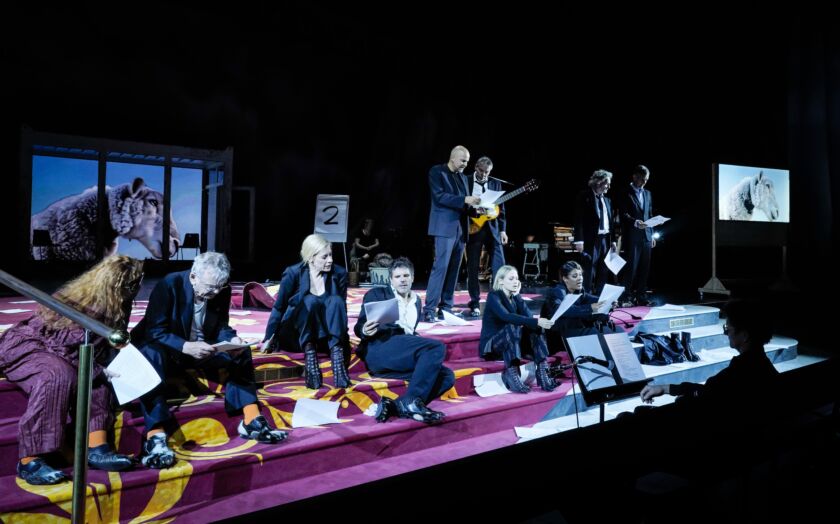
They are two of the most important Austrian women writers: Elfriede Jelinek and Ingeborg Bachmann. What connects their works in this selection is not a shared aesthetic signature but a thematic field of tension in which violence manifests in different forms: as war, as political structure, as economic principle. This juxtaposition creates a space of resonance that grasps war not merely as a historical event but as a mode of thinking that continues in capitalism.
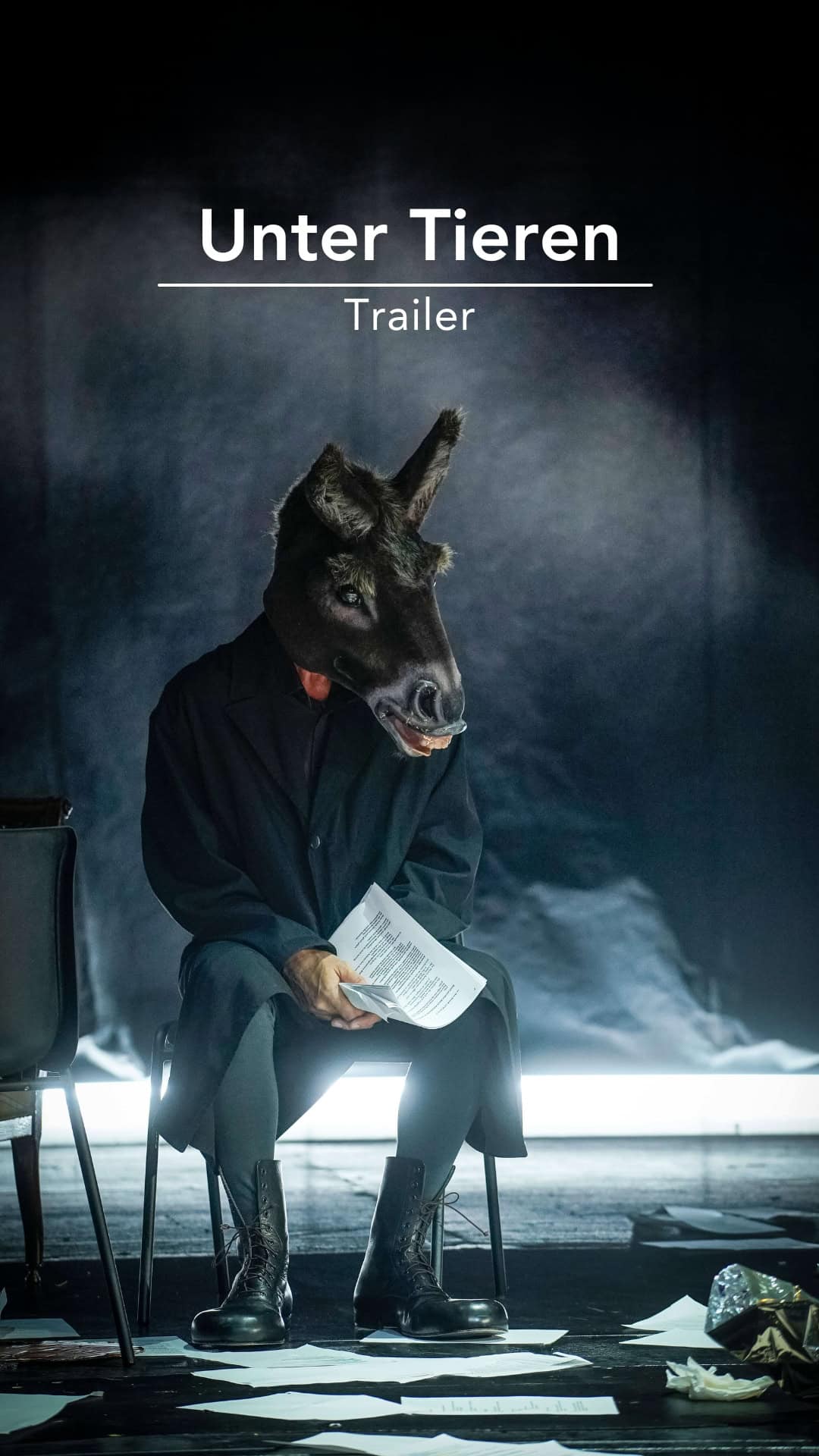
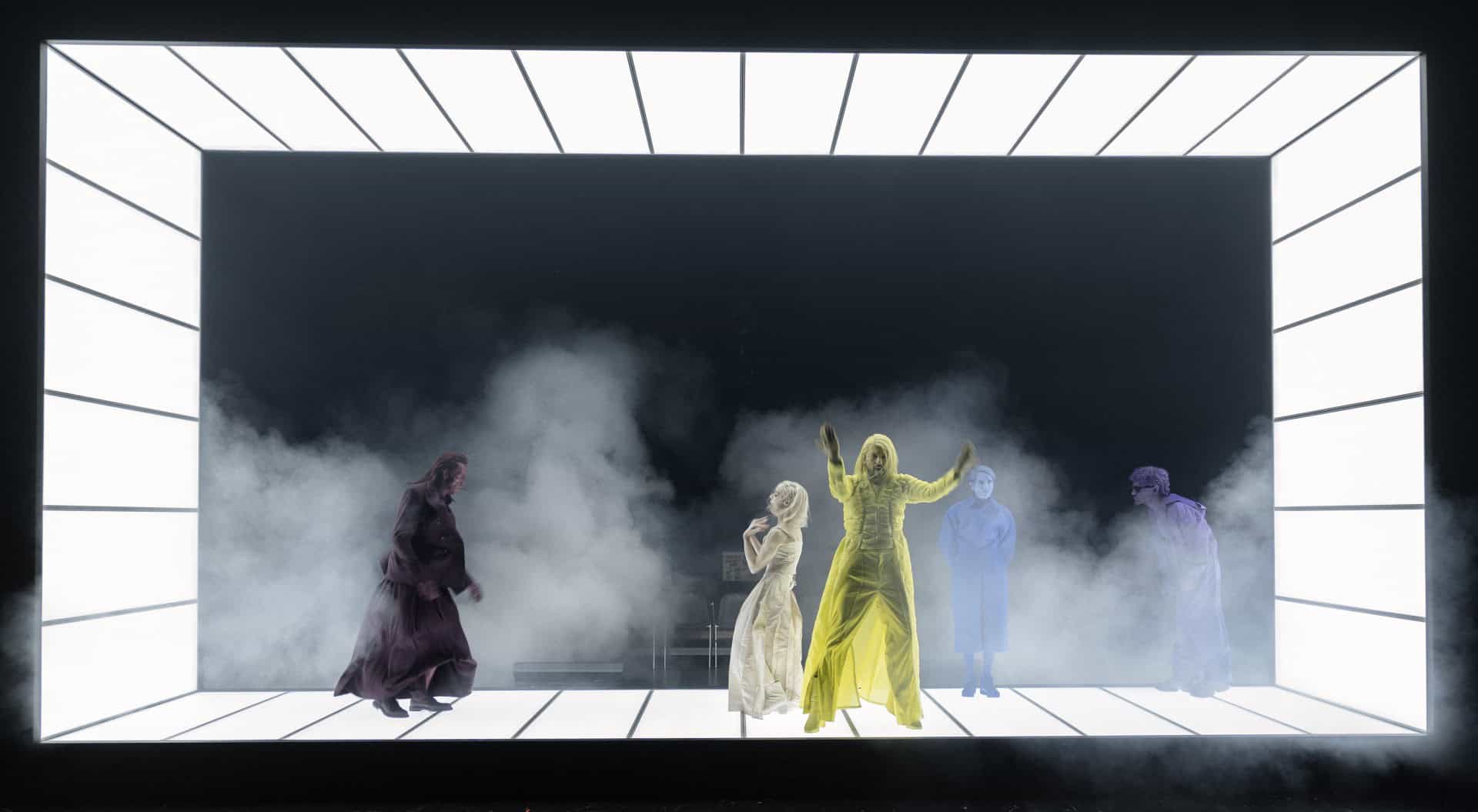
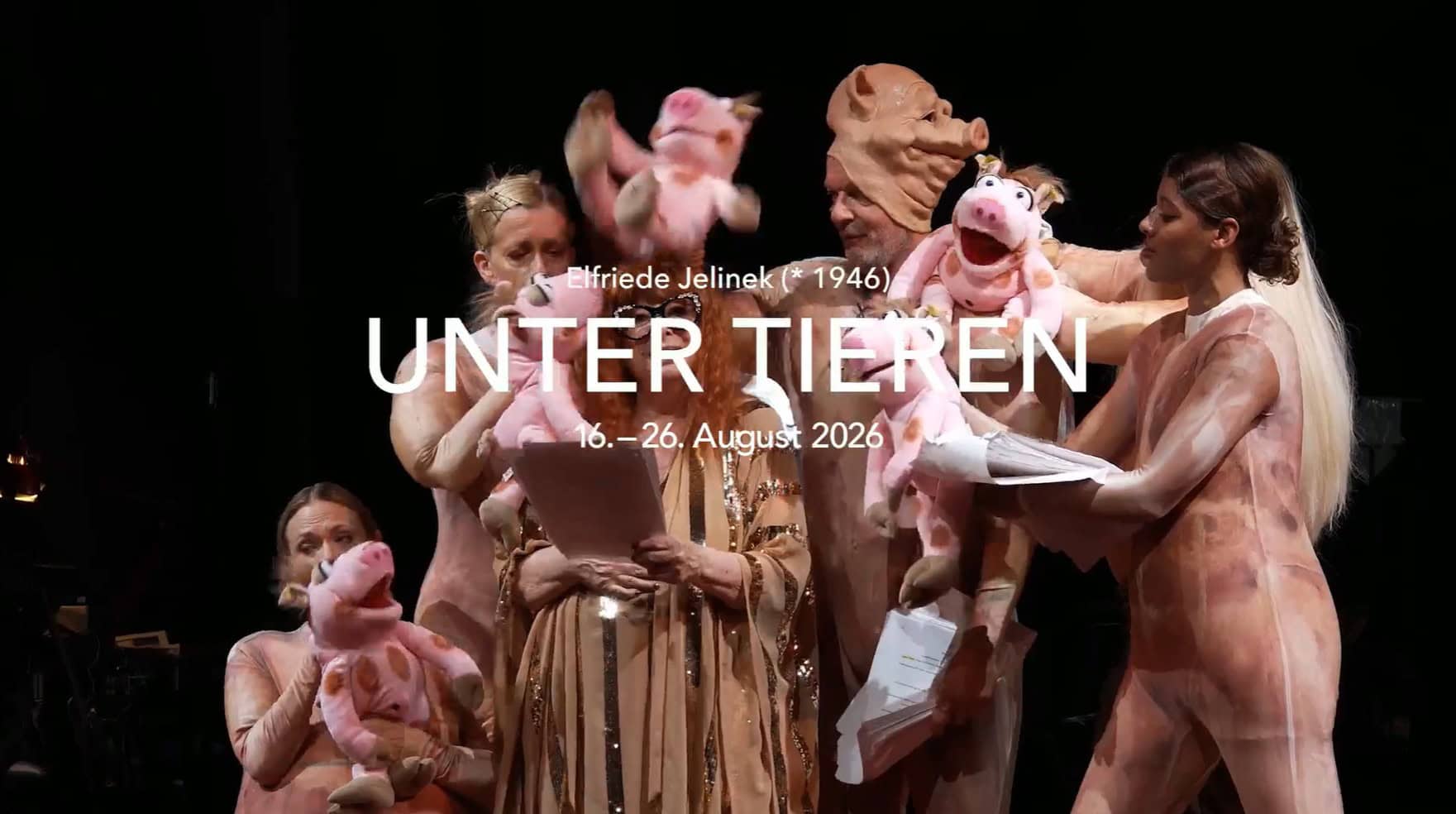
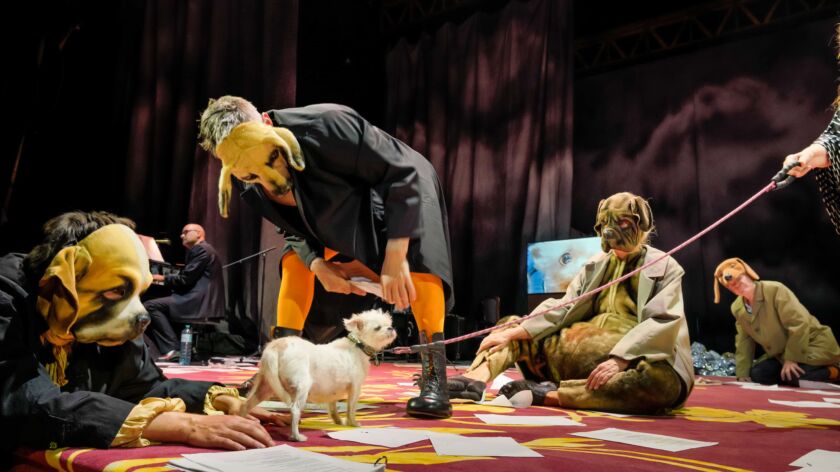
Fauna as Mirror. With the world premiere of Unter Tieren (Among Animals), Elfriede Jelinek returns to Salzburg after a long absence. The Nobel laureate in literature devises a scenario in which animals explore the history of money. Bears, cows, pigs, doves and foxes appear as humming, lowing, squealing and cooing – but above all verbally articulate – figures. Although they command language, they do not fully shed their specifically animal perspective and characteristics. The attempt to penetrate the mechanisms of modern financial capitalism is not doomed to failure by their incapacity, but because the system itself evades any clear-cut grasp.
Jelinek, as a chronicler of the present, reflects not only on social, political and economic discourses, but makes them visible in her linguistic structure. Particularly central to this is the consistent deconstruction of myths, whether national, economic or gender-specific narratives that are undermined in their apparent self-evidence. Language functions for Jelinek not as a neutral medium but as the very site of contestation: it lays power structures bare, simultaneously reproduces them, and makes their brittleness visible. Thus Unter Tieren also becomes part of a comprehensive poetics that does not depict social reality but critically penetrates it in its linguistic constitution.
The reference to the genre of the animal fable evokes on one hand associations with George Orwell’s „Animal Farm“, in which the animals rebel against their human owners yet the pigs quickly seize power and reintroduce social classes; on the other hand also with Johann Wolfgang von Goethe’s „Reineke Fuchs“ (Reynard the Fox), in which the cunning fox escapes through manipulation the just punishment for his manifold crimes. By shifting the perspective to the animals, Jelinek exposes the absurdities and contradictions of a society shaped by economic constraints. Themes such as political corruption, economic power structures, social inequality and the entanglement of war and the arms industry pervade the text.
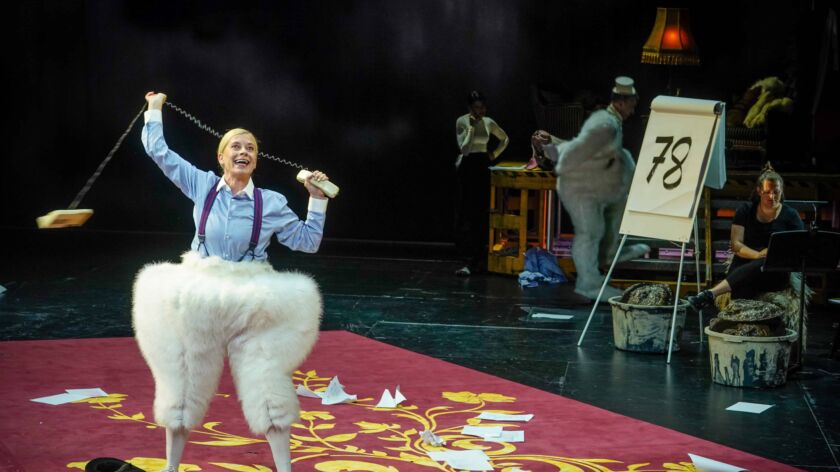
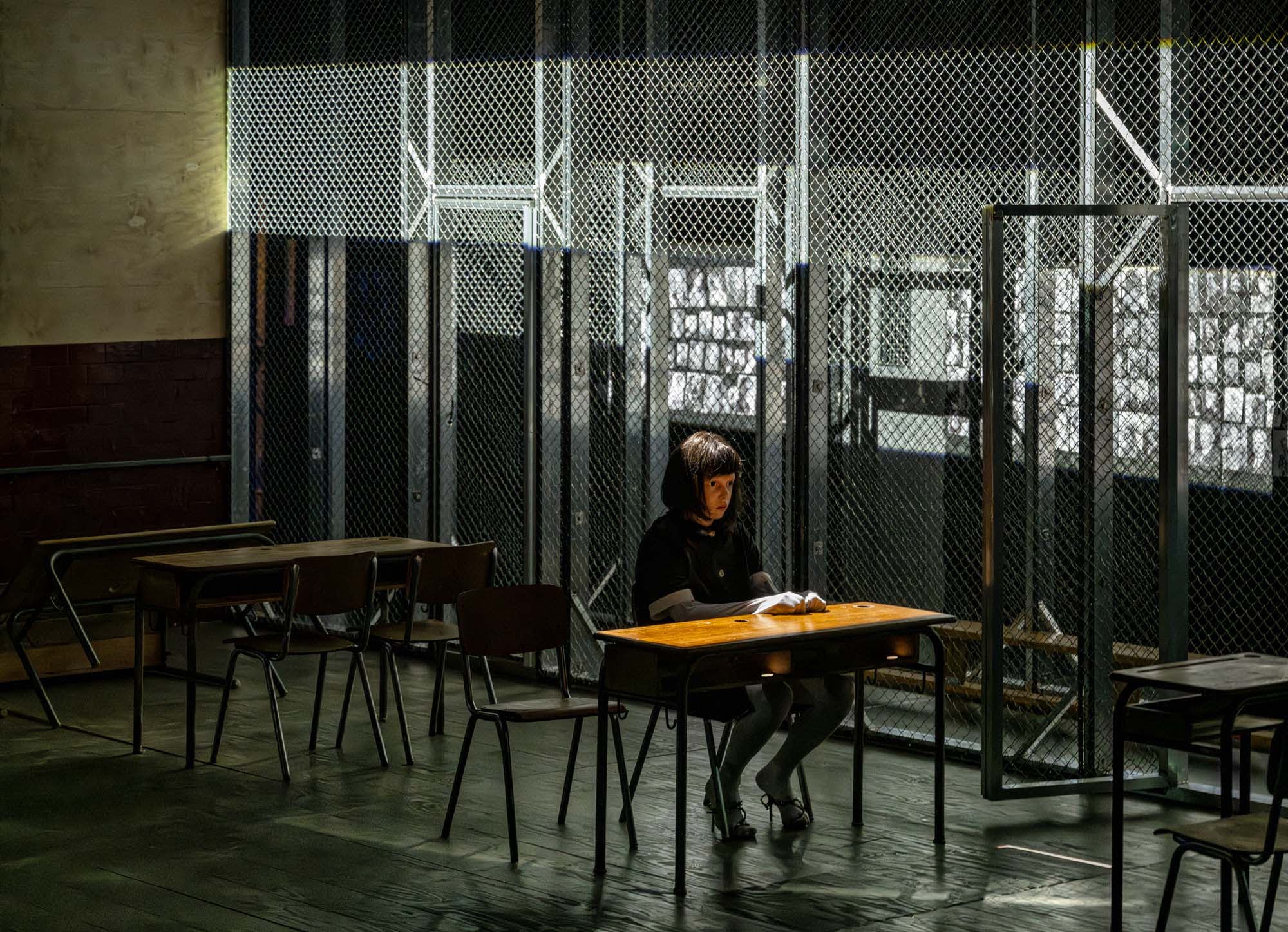
Fairy-Tale Ruin. In earlier works, Jelinek had already engaged with comparable questions, including in her economic comedy Die Kontrakte des Kaufmanns (The Merchant’s Contracts), in which real Austrian banking scandals such as the Bawag affair and the collapse of Meinl Bank served as models. In Unter Tieren she continues her critique of capitalism and sketches the portrait of a greedy society. The production on the Perner Island is being created in cooperation with the Burgtheater and assembles a prominent ensemble including Mavie Hörbiger, Caroline Peters and Thiemo Strutzenberger. Direction is by Nicolas Stemann, who has been bringing her texts to the stage for more than two decades, including more than ten world premieres. He describes his approach as deliberately fragmented, creating a “desolate and disintegrating children’s fairy-tale production”. Stemann presents a “morbid fairy-tale show” in the awareness that the grand fairy tale of a stable world order has long since been dreamt out. This aesthetic of disintegration corresponds precisely to Jelinek’s poetics. With her, language becomes the central medium of composition: where classical dramaturgy fails, rhythm and sound contribute substantially to the creation of meaning.
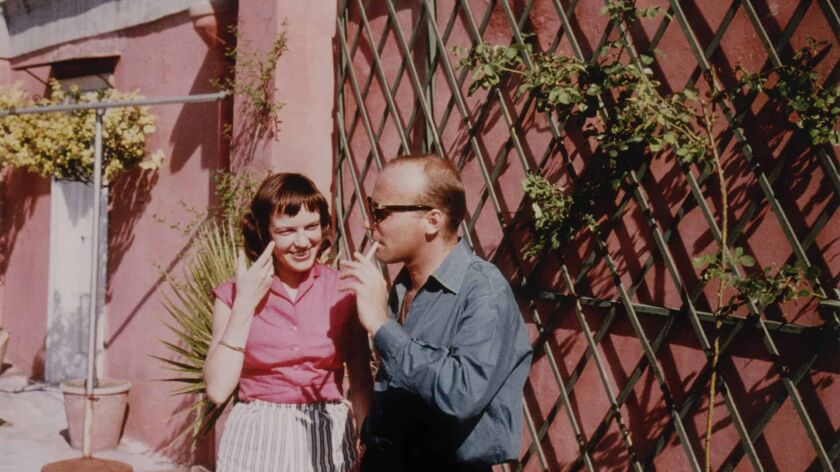
Jelinek’s artistry with language creates a connection to Ingeborg Bachmann, for whom music was important not on a formal but on a biographical level. This becomes apparent in the concert performance of the opera Der Prinz von Homburg under the musical direction of Ingo Metzmacher. Following last year’s performance of Henze’s Das Floß der Medusa (The Raft of the Medusa), which Metzmacher conducted, this work marks the continuation of the engagement with the composer.
Conscience or Obedience? Bachmann wrote several libretti for works by Henze, including Der junge Lord and the ballet pantomime Ein Monolog des Fürsten Myschkin. The suggestion to set to music Heinrich von Kleist’s play Prinz Friedrich von Homburg oder die Schlacht bei Fehrbellin – written between 1809 and 1811 and not premiered until 1821 (since members of the Hessen-Homburg family felt their family honour was under attack) – came from the Italian director Luchino Visconti. Bachmann and Henze pondered for a long time, given the problematic reception history of the play during the Nazi period, before beginning work at the end of the 1950s.
The plot is quickly outlined: After a sleepwalking stroll by the Prince of Homburg through the palace park and the victorious Battle of Fehrbellin, the Brandenburg army emerges triumphant. The Field Marshal explicitly instructs the Prince before the battle against Sweden to enter the engagement only when the Elector orders it through an officer. But the Prince, distracted by thoughts of his impending marriage to Natalie, is inattentive. Despite the success, he is sentenced to death for having acted autonomously in disobedience. However, the Elector presents him with the choice of rejecting the verdict and going free or accepting it, whereupon the Prince chooses the latter and is finally pardoned by the Elector. The tension between law and individual decision forms the kernel of the work. It raises questions of obedience, responsibility and justice.
De-Nazification. Heinrich von Kleist, himself having left the Prussian army and not, as was later interpreted, as a pacifist, takes up in Prinz von Homburg the theme of insubordination, historically present in his day. In Prussian military history there had previously been several prominent cases that might have served as Kleist’s inspiration. A further source of inspiration may also have been the memoirs of Frederick the Great from 1751, in which he describes how the Prince of Hessen-Homburg acted autonomously at the Battle of Fehrbellin in 1675 and was successful, though this contradicts historical accounts. Kleist makes an important change, however: the Prince does not act without explicit command, but explicitly “against” it.
The National Socialists then refashioned the Kleistian material into a war-glorifying, patriotic Prussian drama and Der Prinz von Homburg became a symbol of blind obedience, martial patriotism and a representative figure of German power.
Aware of the necessity of a critical engagement with the drama’s reception history and the burden of Homburg as a figure of patriotism, Bachmann and Henze set themselves the task of depoliticising the piece and freeing it from its appropriation by the National Socialists. Their declared aim is a radical counter-reading that liberates the material from its ideological determination. Given the literary quality of the original text, Bachmann saw her challenge as handing “the poetry over to the music as undamaged as possible […] for a second life in music and with music.”
Utopian Draft. She achieves this through several artistic devices without encroaching on Kleist’s language: Bachmann reduces the military linguistic register, the text is freed of all militarisms such as strategic discussions or battle scenes. The focus is on the love story between the Prince and Natalie, bringing individual experiences to the fore. This is accomplished through the redistribution of text passages, so that a higher proportion of speech falls to Natalie; monologues are partly spoken jointly and scenes are intertwined. The theme of freedom and justice is no longer bound up with Prussian state ideals; there are also still many passages that permit a local-historical situating. A kind of utopian sketch of the state is created, to counter the misinterpretation of Kleist’s work as national and patriotic poetry. At the world premiere, however, standards, halberds, Prussian flags and caps were again employed; the familiar naturalistic battle images and the visual emphasis on the militaristic were preserved.
Dream Sounds. But musically too, Henze refuses any form of operatic war gesture; his music does not set battles to booming marches, he foregoes pathetic gestures and concentrates instead on the inner life of his characters. Henze expressed himself as follows: it is about “the glorification of a dreamer, the destruction of the concept of the classical hero, against the blind, unimaginative application of the laws, and the glorification of human goodness.” Particularly in the dream sequences he creates an artful, floating sound world that makes the sleepwalking nature of the Prince vivid. The score is dedicated to Igor Stravinsky and processes musically serial elements, twelve-tone technique and tonality.

Bachmann Illuminated. The programme is supplemented by a staged reading with the title Ingeborg Bachmann. Wer? (Who?), devoted to her wide-ranging work. Poems, prose texts and letters give an insight into a network of literary relationships. Bachmann shared a lifelong friendship with Hans Werner Henze, which also manifested itself in correspondence. Alongside the correspondence with Max Frisch that caused a sensation some years ago, Bachmann was also in lively exchange with Paul Celan, Hans Magnus Enzensberger and Heinrich Böll. Six actresses and actors, including once again Mavie Hörbiger as well as Valery Tscheplanowa and Sylvie Rohrer, seek to open up the Bachmann cosmos, which cannot be reduced to biographical aspects.
In Salzburg two positions thus meet that each in their own way explore the entanglement of politics, history and aesthetics: the contemporary animal fable in Jelinek and the Prinz von Homburg interpreted far from national connotations. Jelinek’s analysis of the present and Bachmann’s engagement with historical materials both point to shared questions: How do structures of violence continue to operate in social systems? What role does language play in their depiction and critique? And in what form can art open spaces in which alternative perspectives become visible?