The Misanthrope – a battleground, and we watch
Molière’s hero rebels against a society shaped by hypocrisy. Director Jette Steckel finds this translates well to the world of the Salzburg Festival.

Molière was embittered. The great theatrical scandal of which he had been the centre lay only a few months behind him. The Sun King Louis XIV had attended the premiere of his comedy Tartuffe, or The Hypocrite at the Palace of Versailles – and actually had it banned. The playwright had portrayed religious hypocrisy so drastically that he had offended not only the Queen Mother but above all the powerful Catholic Society of the Holy Sacrament, which in the name of religion campaigned against all manner of things, from necklines that were too low to tobacco consumption.
On Trial for Honesty. In this mood of the wounded artist, Molière began his play Der Menschenfeind oder der verliebte Melancholiker (The Misanthrope or the Amorous Melancholic) in 1664 – and created a new genre in theatrical history: the serious comedy. Where „Tartuffe“ embodied religious hypocrisy, Alceste, the title character of Der Menschenfeind, rails against a different kind of hypocrisy: a social culture in which flattery and lies in the guise of courtesy not only belong to good manners but are an essential part of the code of conduct, the very prerequisite for every social success. He himself refuses to conform, pushes back against it rudely, and is thus doomed to failure from the start. He even ends up in court – simply because he tears apart rather than praises the wretched poem of a courtier. What makes his misery even worse is that he acts contradictorily: he is in love with the young, coquettish Célimène, who has mastered this courtly manner of interaction perfectly and knows how to exploit it to her own advantage. This above all makes the Misanthrope a tragicomic figure. One can also detect certain autobiographical traits of the playwright in him – who played the role himself at the premiere. This time there was no scandal.
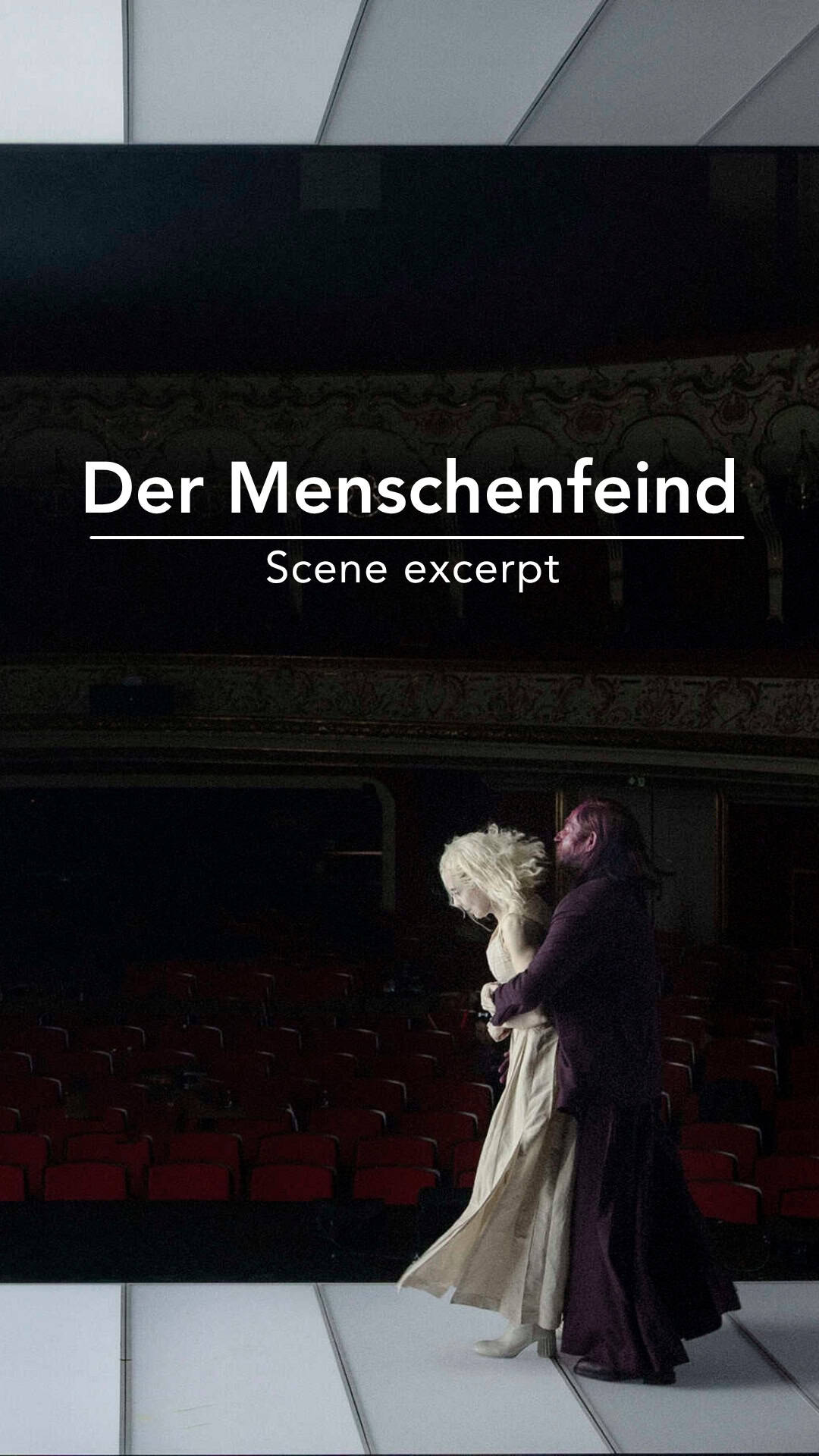
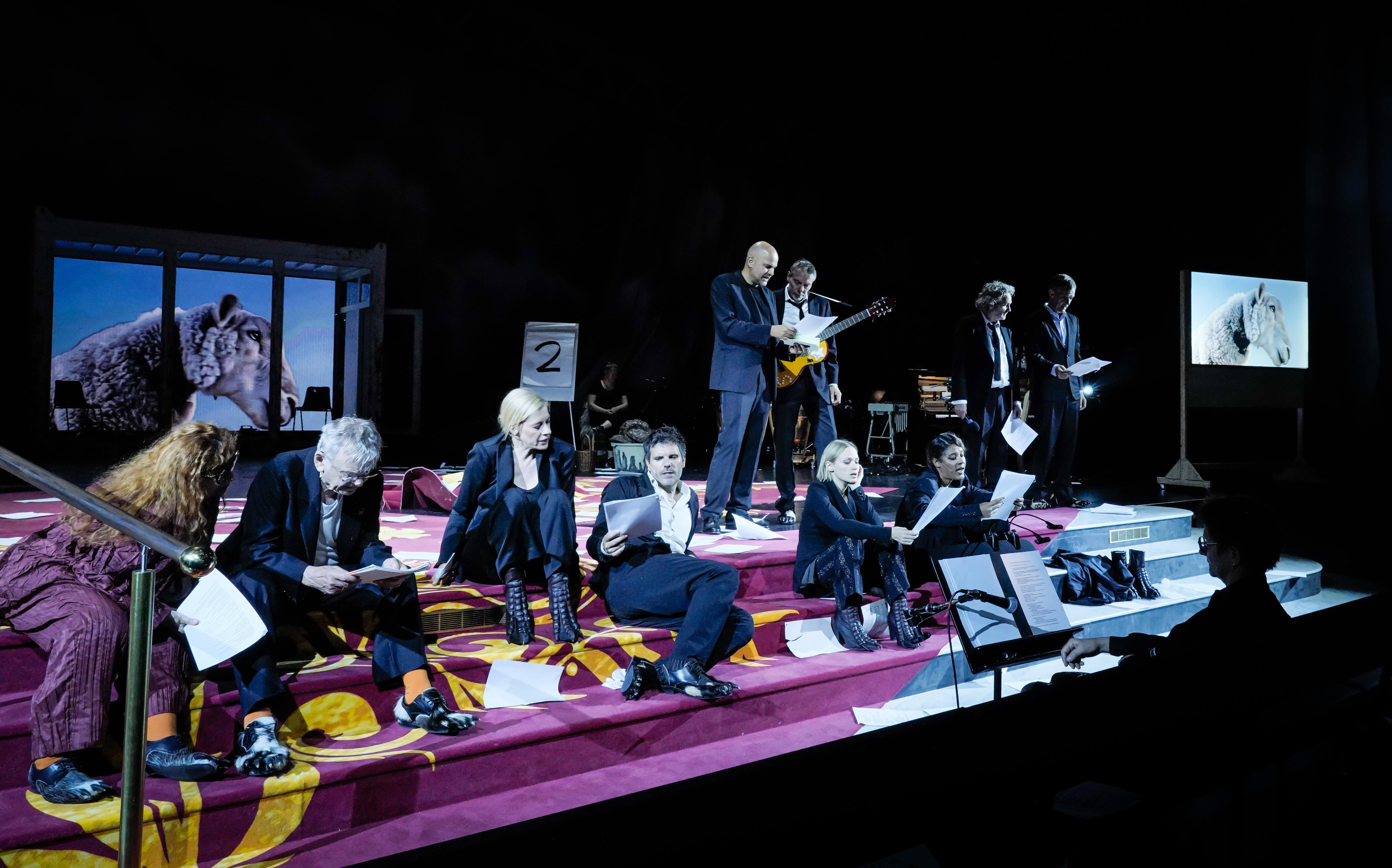
Molière’s classic is part of this year’s theatre programme, personally curated by Markus Hinterhäuser – and it has turned out as interestingly as it has not been for years. Audiences can look forward to the rapid verbal sparring between the characters in the lively translation by Frank-Patrick Steckel, which preserves the Alexandrine verse form to a considerable degree without making it audible. And one can be pleased that it is important to Jette Steckel to let the audience experience this “verbal battleground”. Among other things because the seats will surround the stage as in an arena.
“No. I cannot bear the treacherous method now in fashion with your kind,” Alceste flares up at his friend Philinte. “My utter scorn goes to those slippery acts of the great suppliers of insincere contacts, of frivolous kiss-blowers, of vacuous flatterers, of artful climbers who fawn on anyone they meet, who besiege through courtesy, whether man of honour or scoundrel, they must deceive him.” Molière’s hero repeatedly voices things that also lie close to her own heart, says the German director Jette Steckel, who is staging the piece. That is salutary and funny, but also painful to hear – “because we feel how far we have removed ourselves in part from a culture of honesty.”

The “Bon Ton” of Society. Jette Steckel wants to draw connections between Molière’s text and our own time, which has “removed itself so far from what we might call truth”. But she also finds that the world of Der Menschenfeind can be well transposed to the reality of the Salzburg Festival. This luxurious cultural world has much to do with Society, with a particular tone. It is compelling to introduce “a figure who tries to set herself against all of that”.
The fundamental conflict in Molière’s play also has to do with the relationship between bourgeois and courtly society. Molière himself, born Jean-Baptiste Poquelin, was the son of a well-situated Parisian home textile dealer (upholsterer) who purchased the title of royal interior decorator (similar to how it was in Vienna with court confectioners, court jewellers and so on).
On the other hand, Alceste, though a nobleman, is not part of the court. It may help to imagine his social position – or what Molière’s audience would have imagined – by recalling the historical background of the civil wars known as the Fronde. These years-long uprisings (1648 and 1653) against royal authority were, when Molière wrote his play, barely a decade in the past. After their final suppression, royal power was further strengthened – and many noble families that had “stood on the wrong side” in the uprisings had fallen from favour and been excluded from court life. One might also imagine Alceste as belonging to such a family.
To secure the absolute authority of the King, there was also a special institution that settled conflicts between nobles: the so-called „tribunal des maréchaux“, the Tribunal of the Marshals. This court also summons Alceste after he has torn apart the courtier Oronte’s poem and Oronte feels insulted. By announcing at the outset that he intends to lose proudly, because he will not ingratiate himself with the judges as the others would, Alceste catapults himself still further out.

The „Honnête Homme“. Even small missteps had this effect. In the courtly culture of France in the second half of the 17th century, good behaviour was less a matter of ethics than of style and social adaptation. The „honnête homme“ was not the “honest, decent” man as he would later be understood. He was rather someone who perfectly followed the conventions governing social interaction.
“The sick conformism is displayed to excess in the scoundrel who is my opponent in the trial,” rages Alceste against Oronte. “Through his mask grins the shameless intriguer … His statesmanlike air, his thick layer of rhetoric deceives no one any more …” And yet it is Oronte who will win the legal case.
Alceste is a figure who sways before the audience’s eyes between comedy and tragedy, because his hatred is ultimately so fruitless, his assault on society so futile, and also because as an unhappy lover of Célimène he constantly contradicts himself. His friend Philinte harbours no illusions about humanity either, but counsels calm acceptance: “Does it seem reasonable to you, in the human world, to tell thousands of people what you think of them?” And more broadly: “The human being today is a mirror of his times; it would be folly to let oneself be seduced into believing it possible to correct the world … The sight of a greedy, base man can surely not be worse to reason than that of a vulture hovering over carrion, of malicious apes, wolves wild for prey.” Philinte has chosen the easier part. The only path left to Alceste is the one he calls “the desert”. And even that is in truth blocked – for his Célimène will not go with him.