„What a Stroke of Luck“: A Journey Through the World with Peter Handke
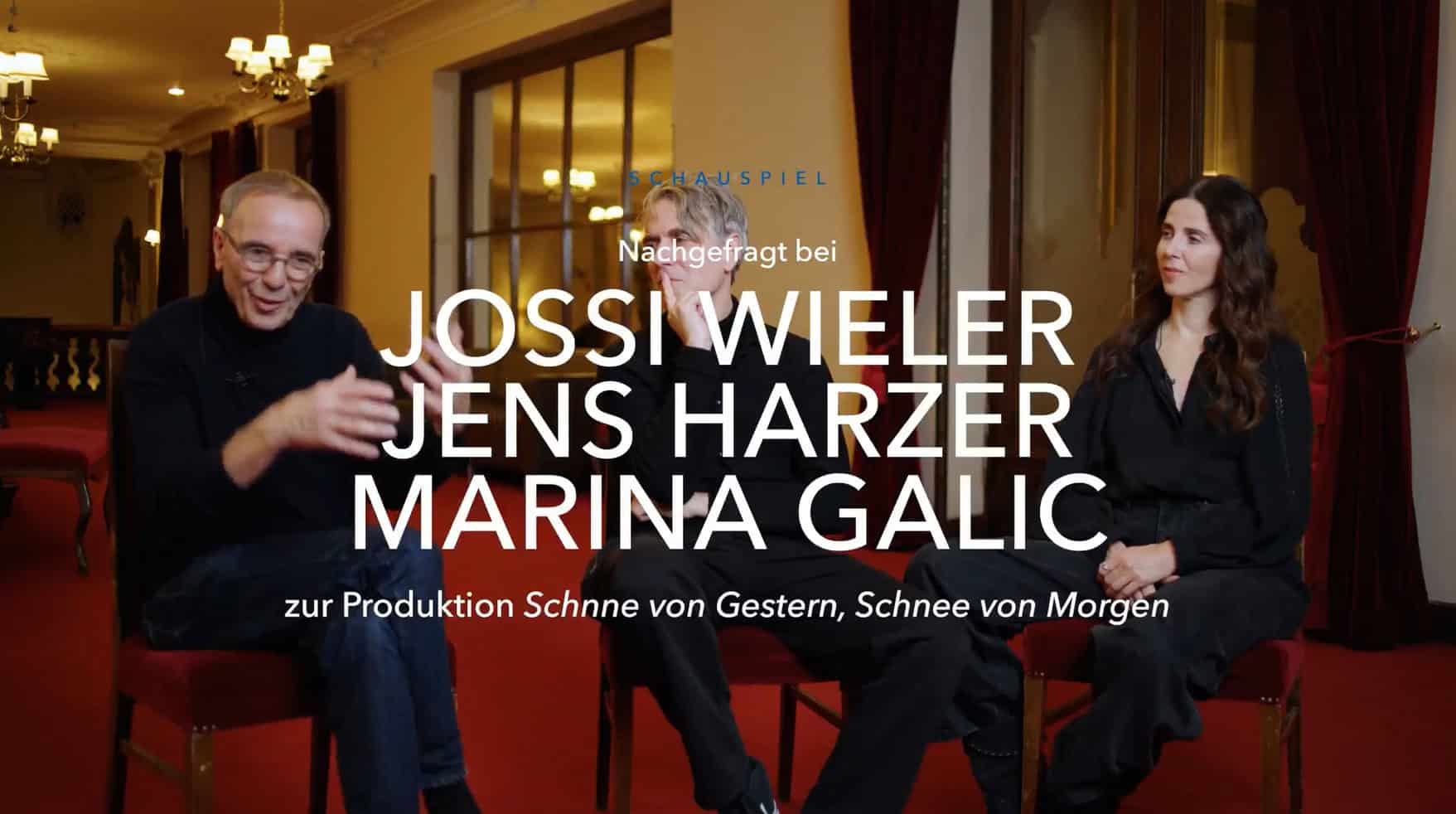
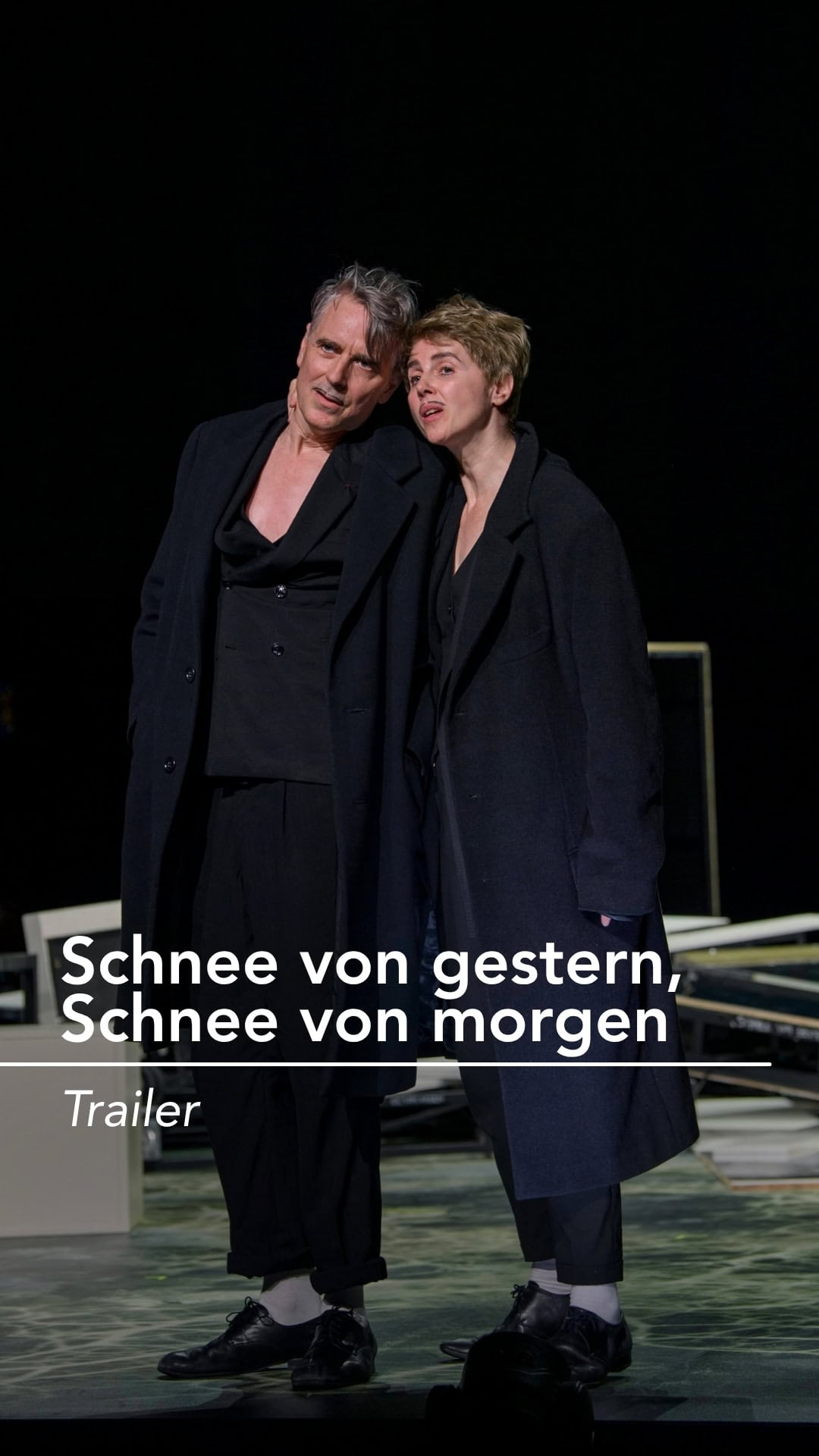
Jossi Wieler stages Schnee von gestern, Schnee von morgen with Jens Harzer and Marina Galic. The three of them visited Peter Handke in France.
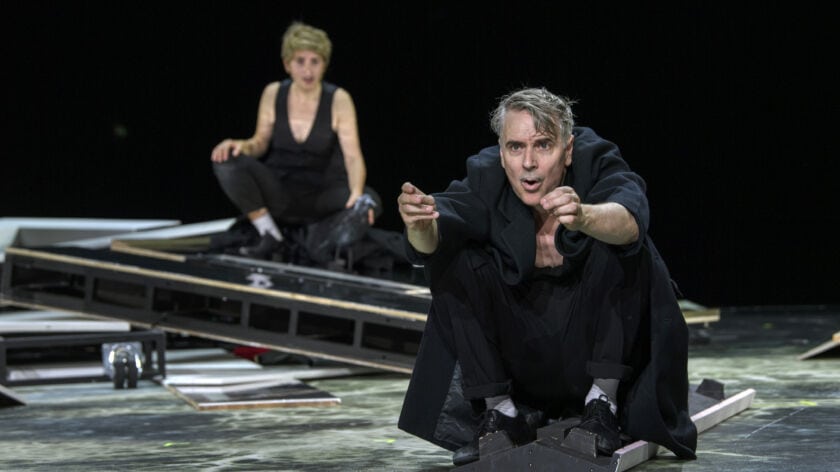
“Walking, walking at random – till the goodwill,” reads one passage in Schnee von gestern, Schnee von morgen (Snows of Yesteryear, Snows of Tomorrow). The great walker Peter Handke himself furnished this text with the wryly portentous subtitle “The Sounding-Forth of a Cross-and-Contrary-and-Cross-Country Walker during his pauses of reflection at the given time”, published in January 2025 and beforehand entrusted to Markus Hinterhäuser, who was then still Artistic Director of the Salzburg Festival and found himself facing the task of developing the theatre programme for 2026 as well. He naturally seized on it, for it is (also) a text for the theatre.
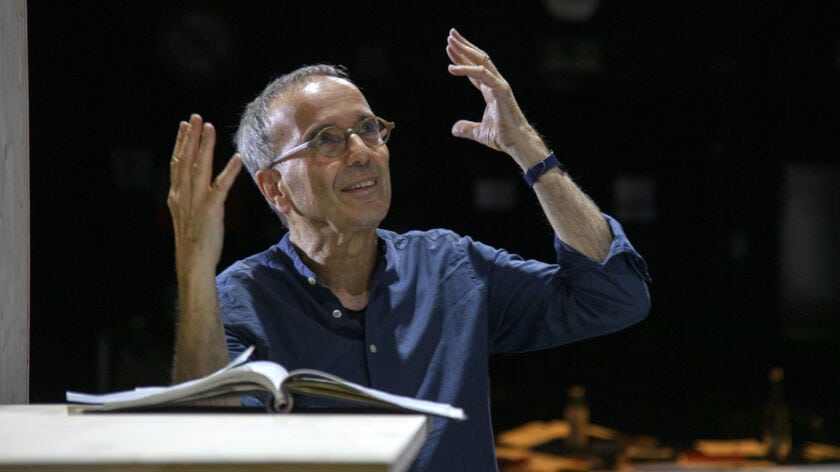
Transience. “It is written for the theatre, it is particularly sensuous,” says director Jossi Wieler, who has already staged some Handke works, such as Kaspar and Zdenèk Adamec. How does he view the text? “It is about transience, about how time passes, about farewell, about the world as it is seen from within and as it is seen from outside,” he says, apparently alluding to a famous Handke title (Die Innenwelt der Außenwelt der Innenwelt, The Inner World of the Outer World of the Inner World).
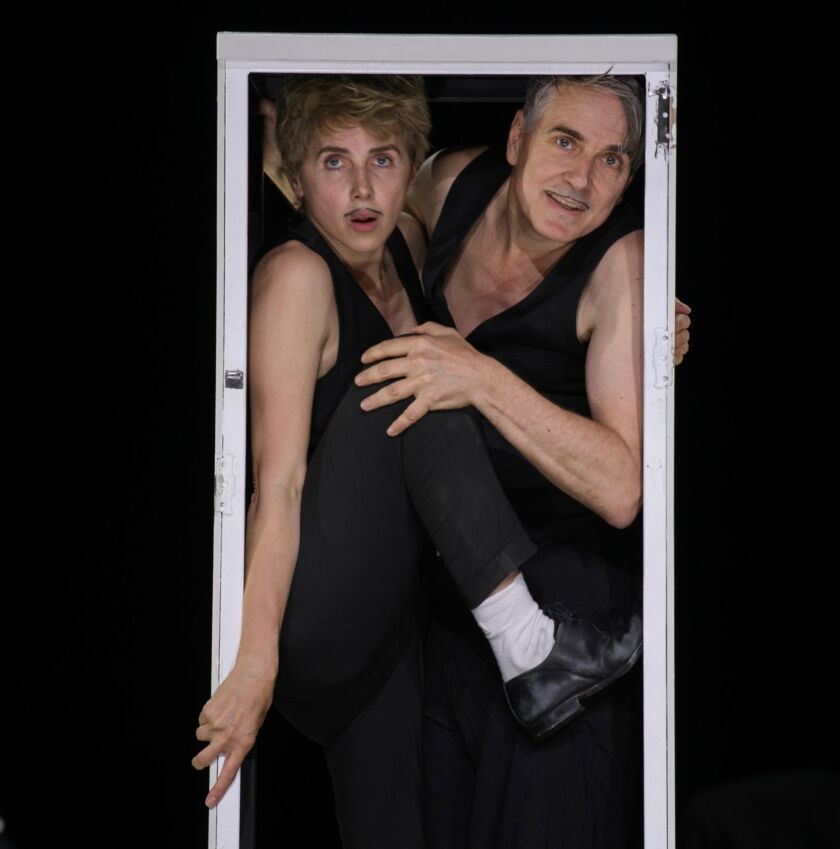
The actors who would play and speak the text were also soon decided, both thoroughly familiar with Handke’s work: Jens Harzer performed in Salzburg as early as 2011 in Immer noch Sturm (Storm Still). His close relationship with Handke’s texts has not changed since, he says: “The final half-hour of Storm Still, where my character walked alone across the stage, has something to do with this new text: this kind of searching movement of a figure walking alone through the world, inventing the world for itself.”
Speechless. Marina Galic was also in Storm Still, and she also performed in 2016 in Die Stunde, da wir nichts voneinander wussten (The Hour We Knew Nothing of Each Other) at the Hamburg Thalia-Theater: “A play without language,” she says, “but one that tells us just as much about Handke, about his loving and humorous observer’s gaze at the happenings of the world.”
Galic, Harzer and Wieler visited Peter Handke in May 2025 in Chaville, the place south of Paris where he has lived since 1990. “We spent a day together,” Wieler recounts, “it was in the most beautiful sense a shared meandering through the play.” They also visited the small Chinese restaurant where Handke is a regular. “He told us that he prefers eating out to eating at home, because he likes to hear the sounds of people and enjoy watching them,” says Galic. She was also impressed by Handke’s connection to nature, by the consistency with which he simply does not live in the city. “When he goes to dinner in Paris in the evening, he goes back by train. He walks in the forest every day; he knows the birds that fly there.”
What struck Galic above all in Handke’s text „Schnee von gestern, Schnee von morgen“ was the abrupt break close to the end: suddenly the perspective shifts, the wandering first-person narrator disappears, and a narrator takes over who begins with the sentence: “The cross-and-contrary-and-cross-country walker no longer lives here – I am now, for his final leg of the journey, and then his chronicler.” And a little later: “He is said to have been seen some time ago as the last passenger huddled at the back of the very last night bus.” This shift of perspective is “an incredible trick,” says Galic: “It is like a detective story to me.”
“The text is exciting because you never know where exactly it is leading,” Wieler adds: “But it is also somehow comic, has a roguish quality, is cheeky, funny. There is nothing despondent about it. There is simply no clear message behind it. This is essential for Handke texts in general, and it is important, especially for our society today, which constantly demands the determined, clear answers, unambiguous colours. No, the world is not like that: it has many colours, and there are no clear answers to the chaos, to the contradictions. For this, this text is like a medicine, prescribed by a world doctor.”
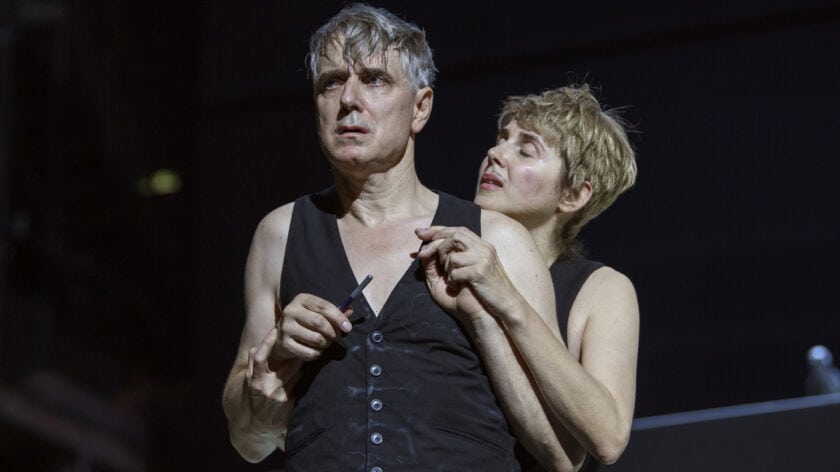
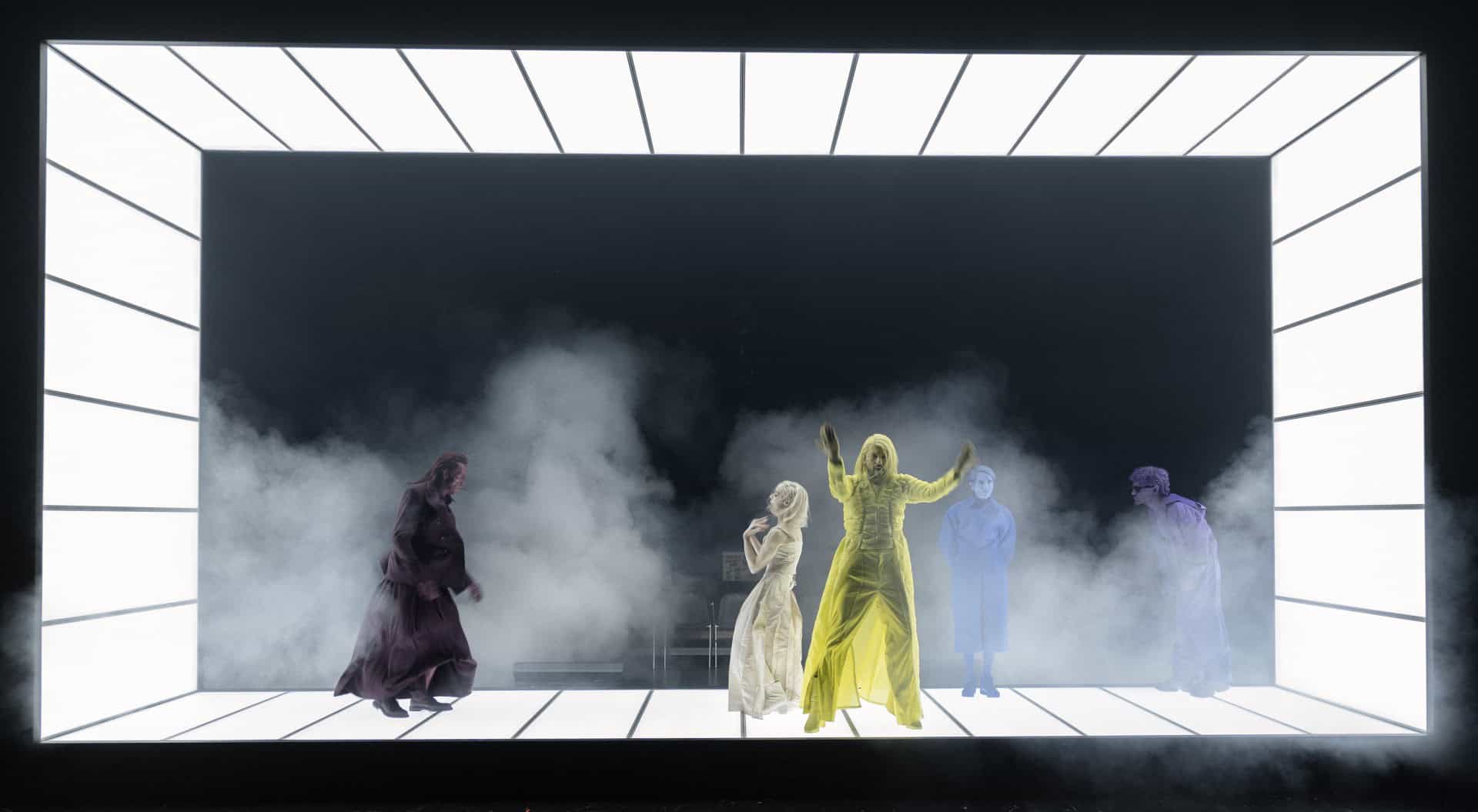
Magical. How Wieler will bring this to the stage, how Anja Rabes will design it – this is still developing. “We will try to create a world that corresponds to this linguistic world,” says Wieler: “One thinks it is an abstract world, but behind it there is something more concrete, possibly a magical realism.”
And why is this play being developed and spoken by two? Handke accounts for this with the ambivalence in all Handke texts, particularly clear in „Die Wiederholung“ (Repetition): “The unconditional wish to be alone, and at the same time the wish to be with others. To communicate to the world and to withdraw from the world. These two levels are always present in Handke. This is why it is important that we develop it as a dialogue, that there is an echo chamber, whoever it is who speaks, whether the woman to the man or the man to the woman or whether gender is not important at all. Or is it a couple? We honestly do not know yet.”
One may be curious. And in the meantime browse Handke’s text, which in one passage answers the question of “the others” in almost enraged terms: “I can do nothing against you and how it strikes me, and how it strikes me that I am nonetheless against all of you, every single one, in my thoughts your mass shooters – mass shooters as awakeners of humanity, new world history – figure, if not protagonist?” Shortly afterwards follows one of those outbursts of joyful optimism that Wieler finds suffusing Handke’s texts more often: “What a stroke of luck in your life, and what a stroke of luck will be waiting for you in the next!”
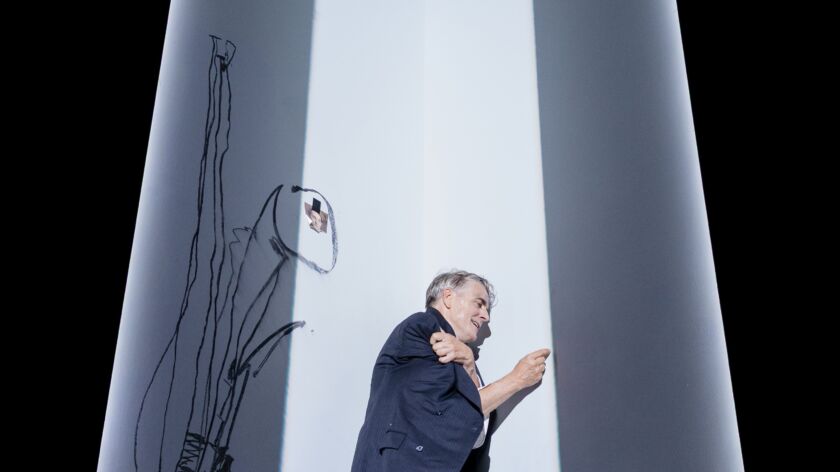
De Profundis. Quite different in mood is a second text that Jens Harzer interprets at a guest performance by the Berliner Ensemble in Salzburg: De Profundis, the open letter that Oscar Wilde wrote between 1895 and 1897 from English prison institutions, where he was imprisoned for homosexuality – then called “gross indecency” – to his friend and lover Lord Alfred Bruce Douglas. The title comes from Psalm 130: “De profundis clamavi ad te Domine.” “Out of the depths I have cried to you, Lord.”
On a bare stage symbolising the prison cell, Harzer portrays the pain and turmoil of the artist: an intense evening directed by Oliver Reese on 20 July at the Landestheater. At the same venue Schnee von gestern, Schnee von morgen has its premiere on 27 July.