Two and More Souls: All of Faust!
Ulrich Rasche stages Goethe’s Faust: on the Perner Insel, from 25 July.
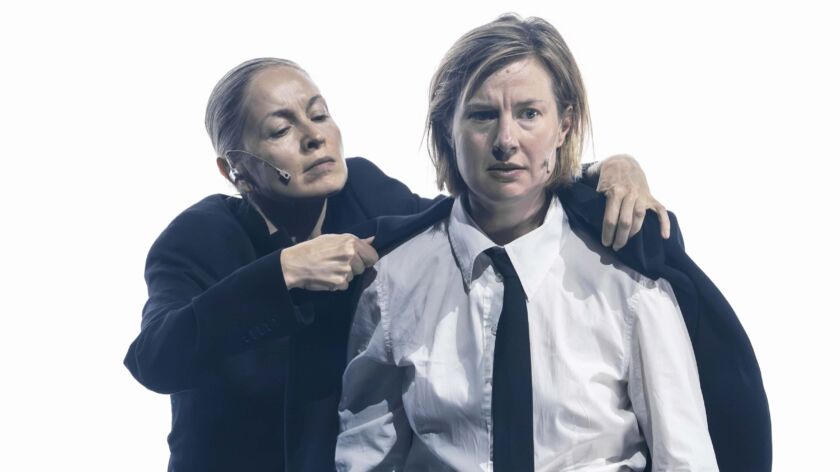
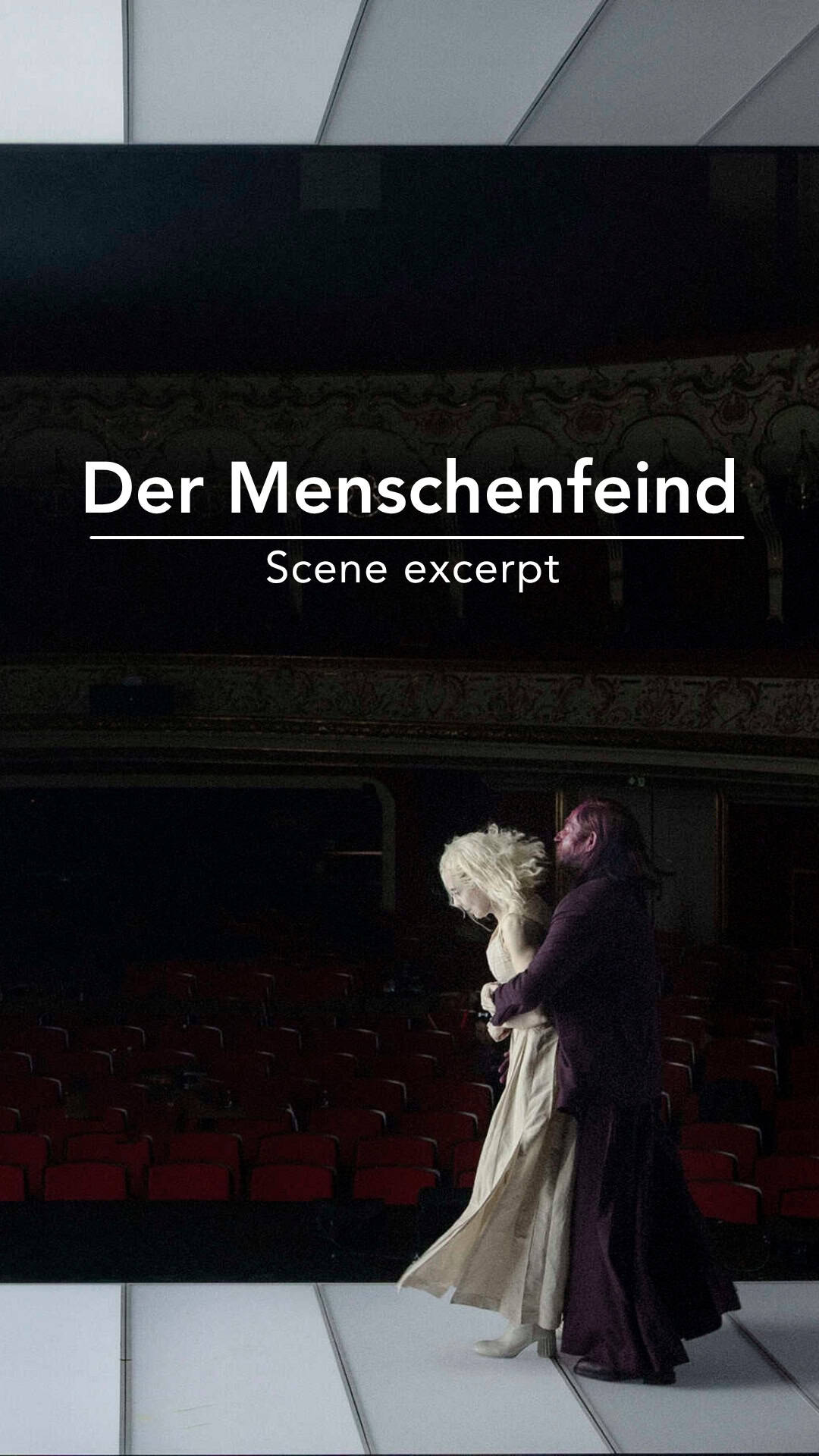
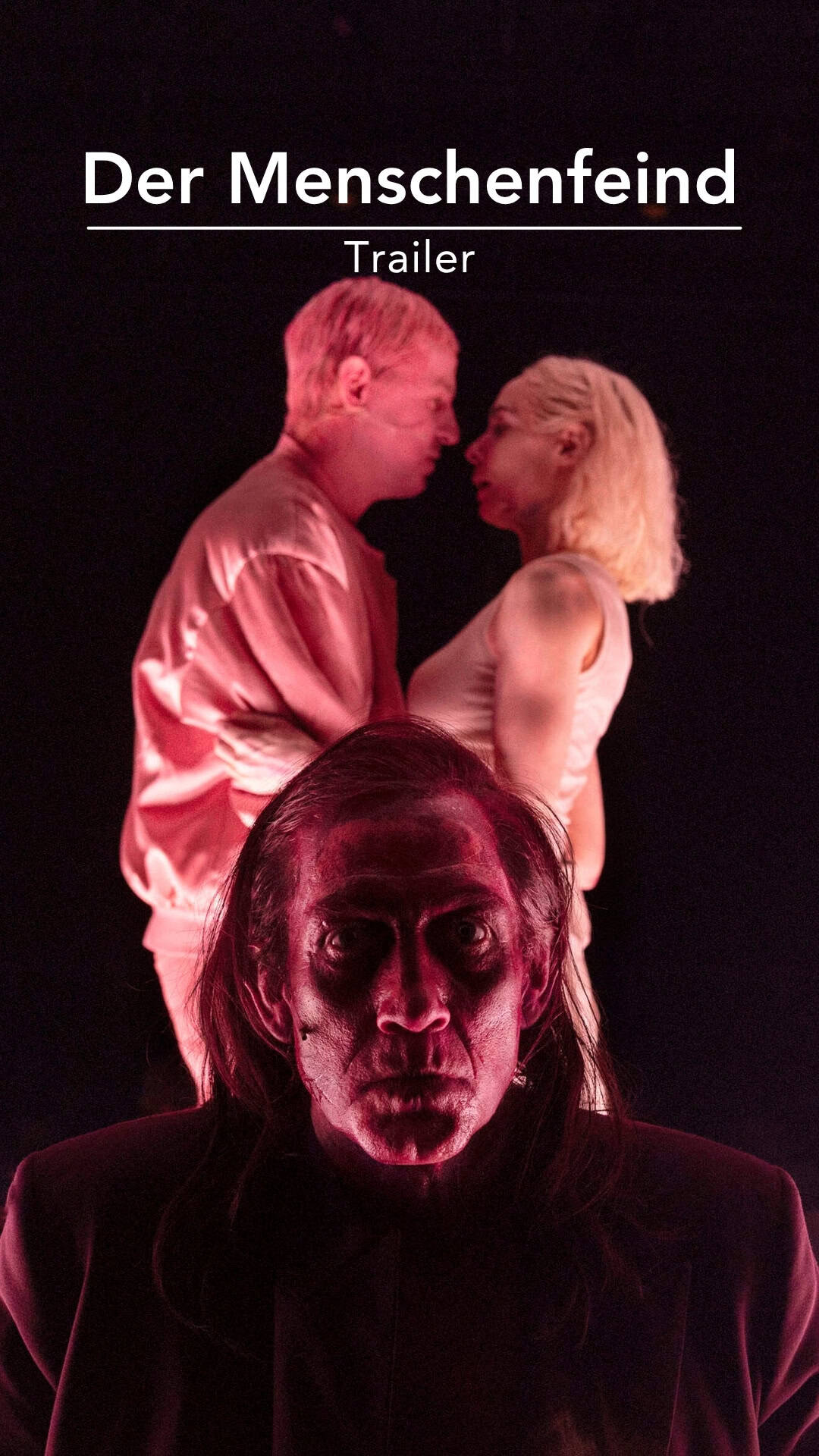
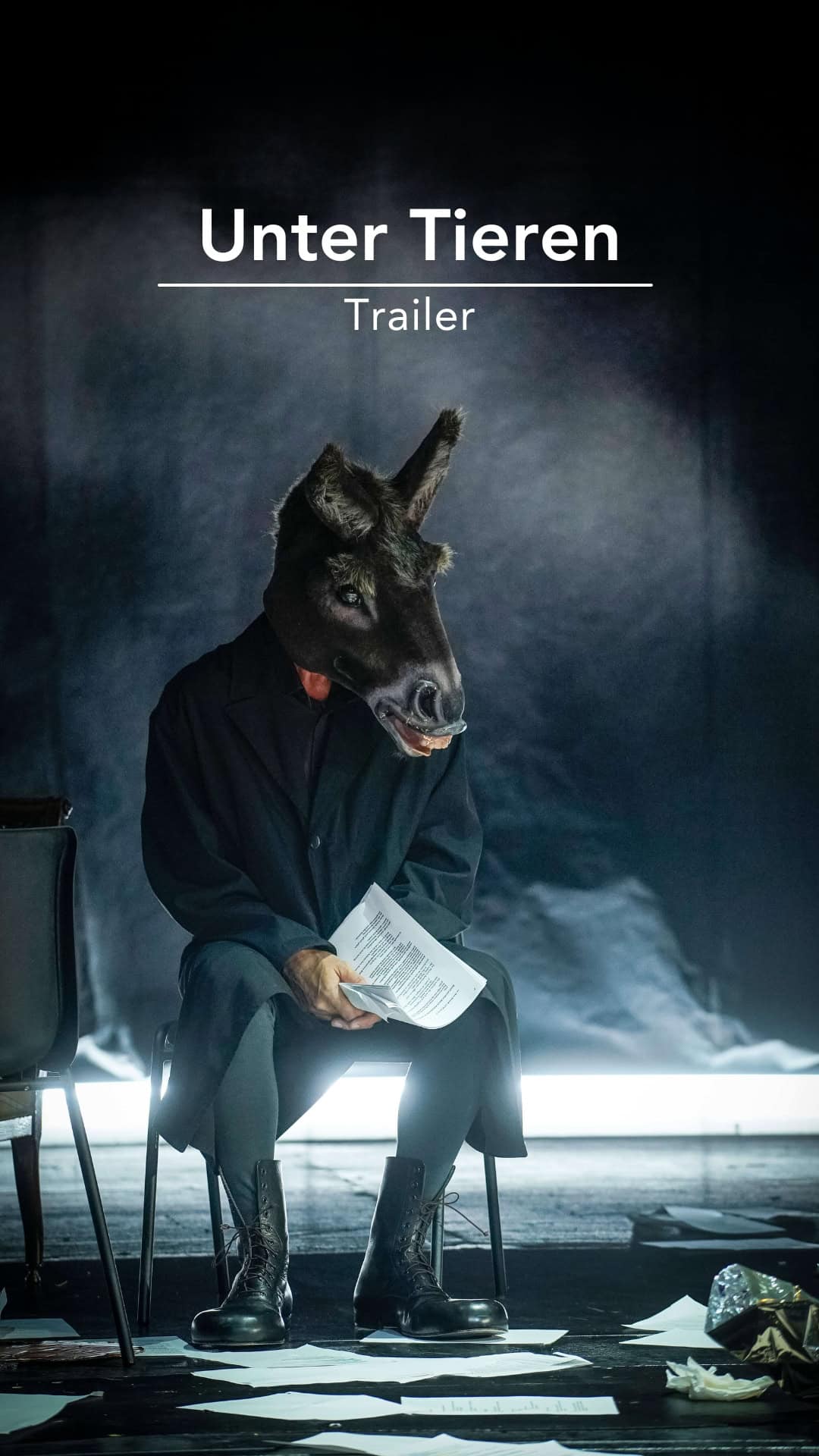
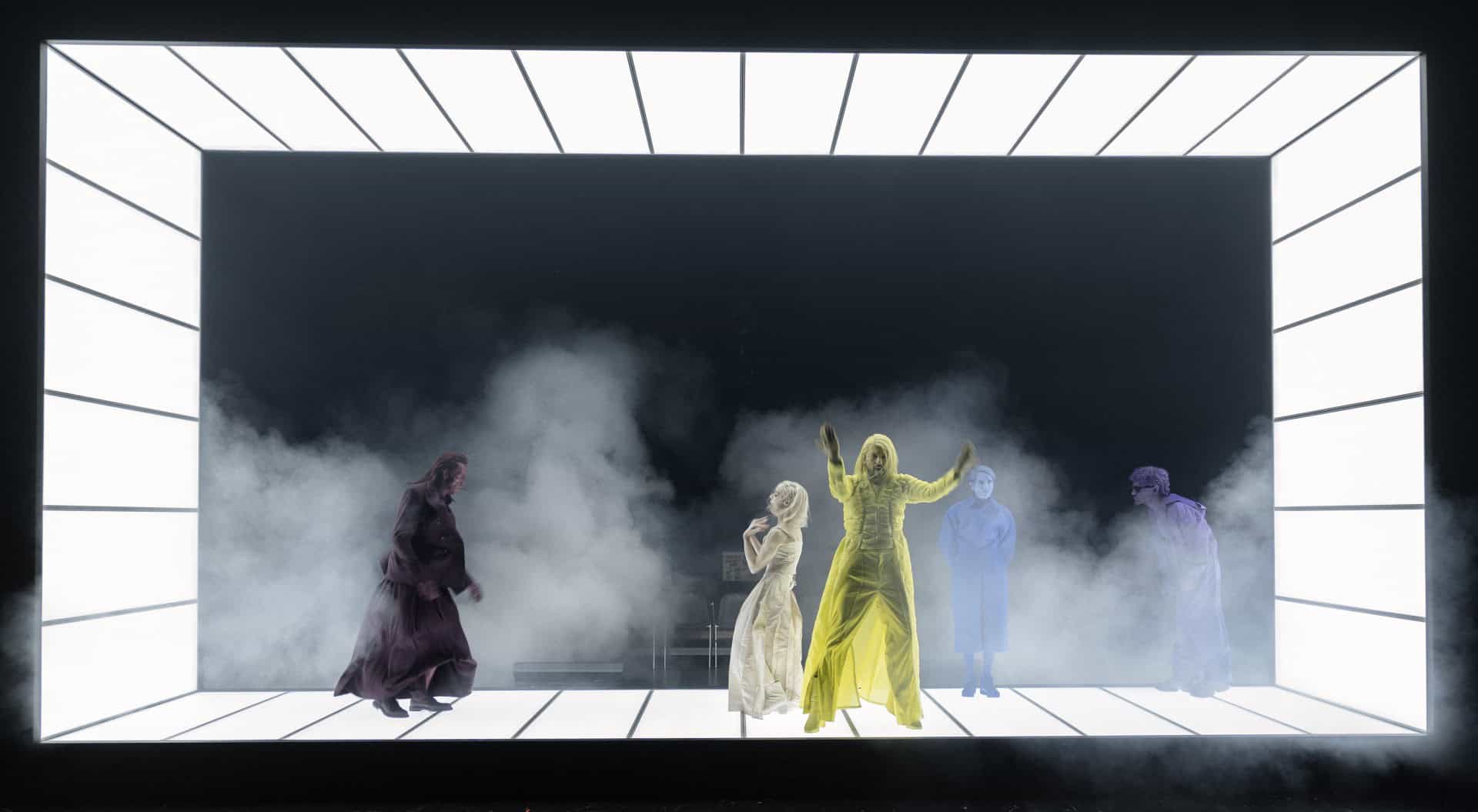
“All the figures in Faust are parts of Faust himself,” says the German director Ulrich Rasche about his interpretation of Goethe’s world drama, which he understands as an “inner drama”, proceeding from the “Dedication” that Goethe placed before it: “You come again, wavering shapes” – who is speaking here? “One can also read it as Faust speaking,” thinks Rasche: “In an almost psychoanalytical manner he lets certain parts of himself come to the fore again.” So Gretchen, played on the Perner Insel by Anna Drexler, is a part of Faust’s psyche – “the ideal, the purity, the faith, the sincerity” – her brother Valentin embodies the bourgeois values. Mephisto is also a part of Faust, says Rasche: “the drive structure, the intoxication, the experience, the embracing of the world. In contrast to what Faust has hitherto been engaged in: the search for knowledge.” This alter ego, this “shadow side” of Faust, is played by the Russian-born Valery Tscheplanowa, who thereby continues an astonishing Salzburg career of roles: from the Ghost of Dareios in the Persians of Aeschylus (2018) through the Paramour in Jedermann (2019) and as Nathan the Wise (2023) to now the “Spirit that always negates”, the “Part of that force which always wills the evil and always creates the good”.
Evil. This canonical self-description of Mephisto is one that Tscheplanowa is happy to quote. And she too emphasises that she does not see Mephisto as a human but as an allegory. For evil? “One immediately has to ask: what is evil?” she replies: “Perhaps what has no values, no heart. Nothing we can depend on. At the same time something incorruptible: you cannot draw it to your side. ‘That is something I would never talk about. It is a bit like cooking. The guest in the restaurant gets no guided tour of the kitchen.'”
That as a young actress she was “fascinated and unsettled” by the archetypal Mephisto of Gustaf Gründgens, she reveals at least, and she also speaks about her artistic relationship with director Rasche, with whom she has already collaborated on the „Persians“ and on „Nathan“: “I would describe it as a love-hate relationship. I love just as much about him as irritates me. I believe that if he were sitting here, he would say the same about me. As people say here: we arm-wrestle.”
Mephisto has always attracted her, says Tscheplanowa: “Playing her is one of my great dreams. I would have thought I would be much older when this role was offered to me. I hope I am old enough; I hope I have gathered enough experience for it.” Perhaps this role also comes at exactly the right time for her: as a kind of farewell to the theatre. “I barely make theatre any more – I have become an author now,” she explains, and reflects: “As a migrant too, I had to take leave very often. There are two possibilities: to become bitter or free. Mephisto embodies for me the position of freedom.”
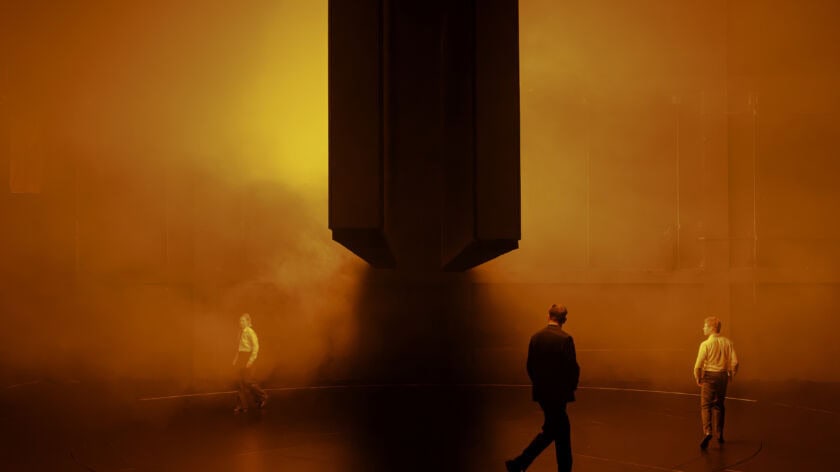
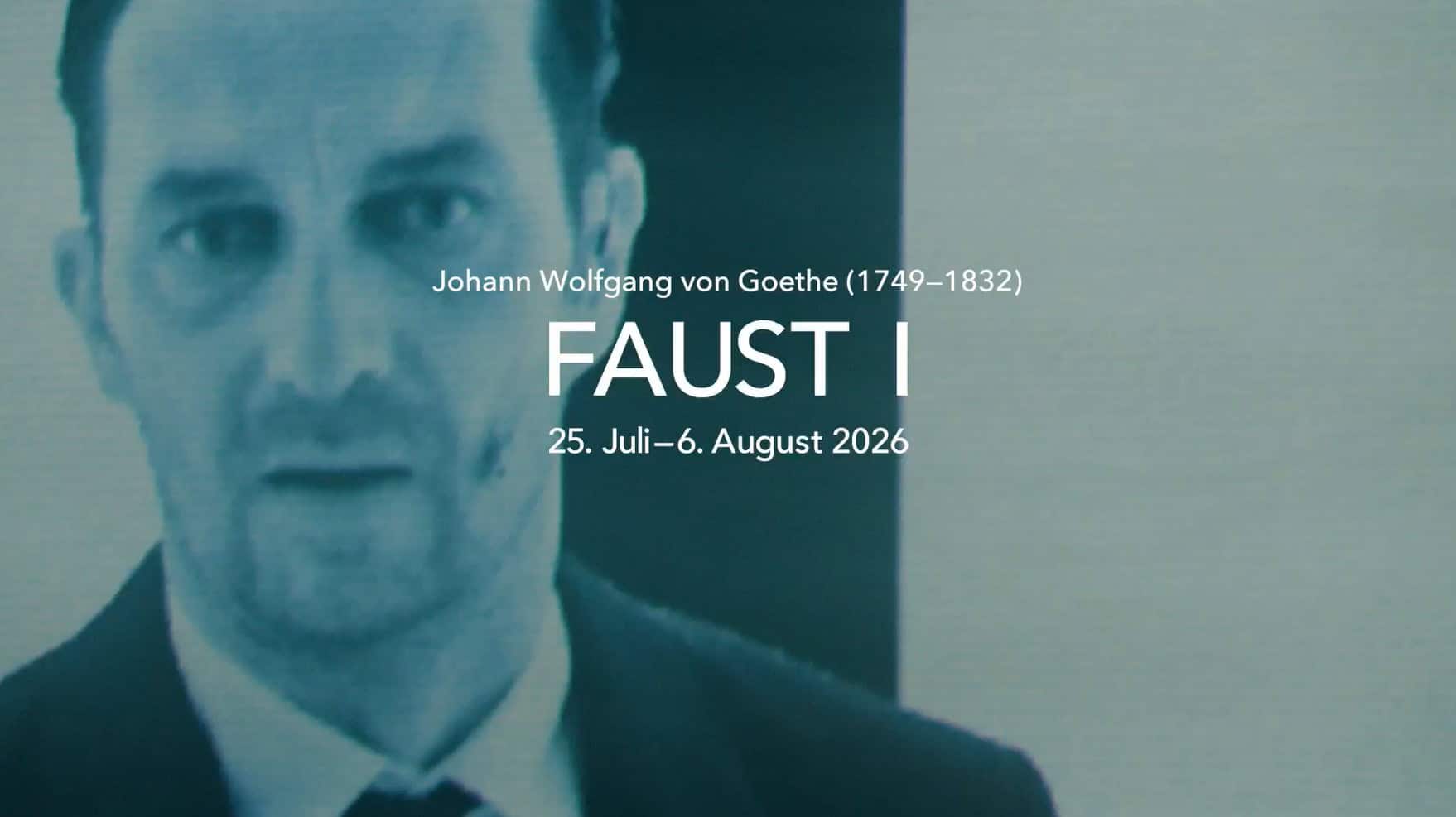
A Rift. Doubled. Mephisto’s (inner) counterpart, Doctor Faust, is portrayed in Rasche’s production by two actors: Steven Scharf, born 1975 in Thuringia, is the old Faust; Johannes Nussbaum, born 1995 in Mödling, who has already played Werther and Hamlet at the Bavarian State Theatre, is the young one. The division Rasche explains logically through the programmatic exclamation “Two souls, alas, dwell in my breast”: “The line says that there is a rift in this figure. The whole play speaks of this fragmentation of the subject.” In the Witch’s Kitchen the old Faust transforms into the young one; in the Walpurgis Night the latter seeks intoxication, ecstasy, oblivion, “perhaps as a contrast to the love he feels for Gretchen”.
A drama of ambivalence. On the stage, which as always Rasche has designed himself, one will also feel this through “claustrophobic narrowness”, “a state of hopelessness, almost like a birth canal”. This narrowness will be created in a corridor inspired by the “Corridors” of American artist Bruce Nauman. There Faust will be stuck, forced to concentrate on himself before Mephisto, a part of this self, confronts him for the first time. The corridor will be created by two walls that shift. And rotate, as befits a Rasche production. It will also be a highly motorised Faust in Hallein this year.