Celebrating the 100th Birthday of Ingeborg Bachmann and Hans Werner Henze
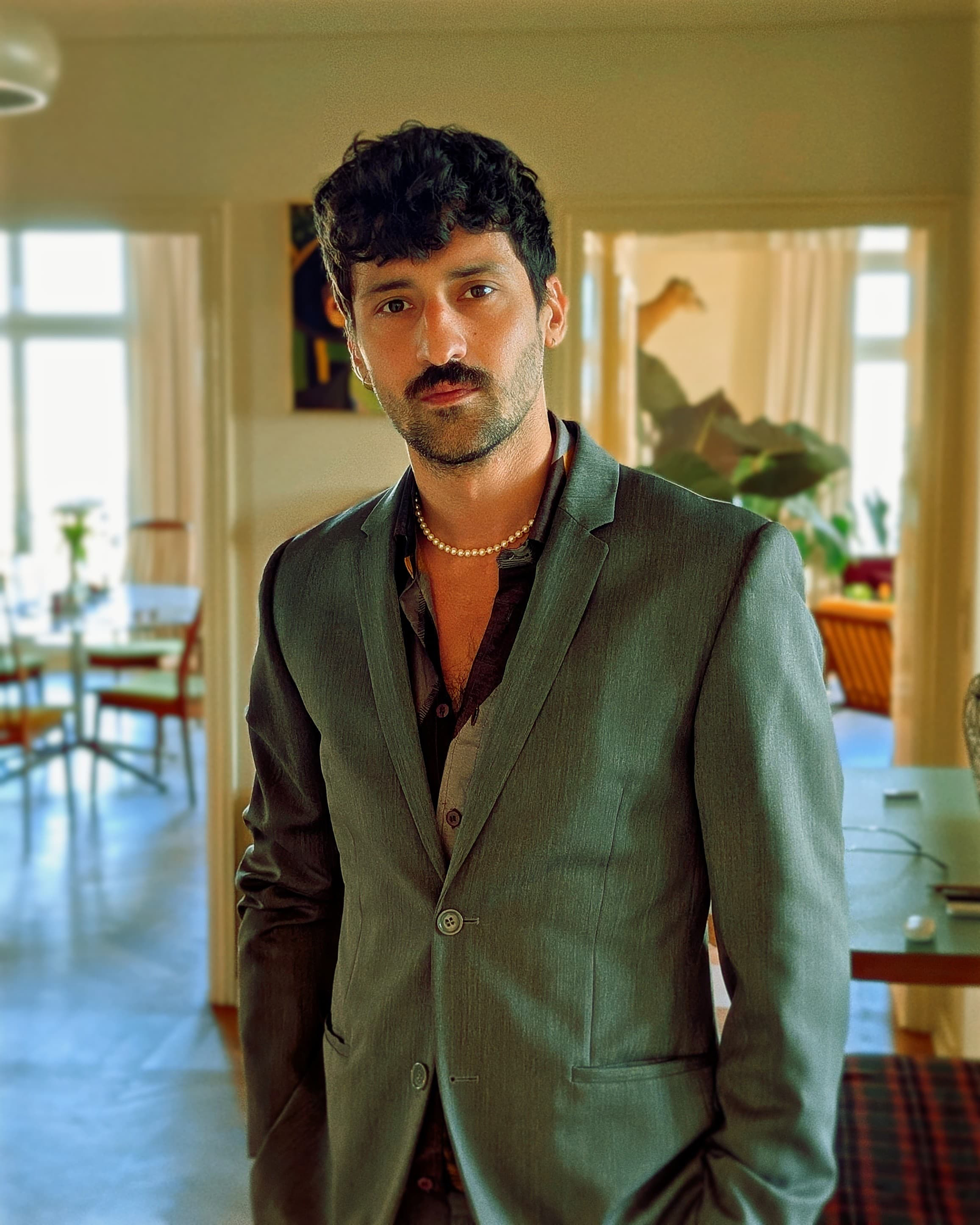
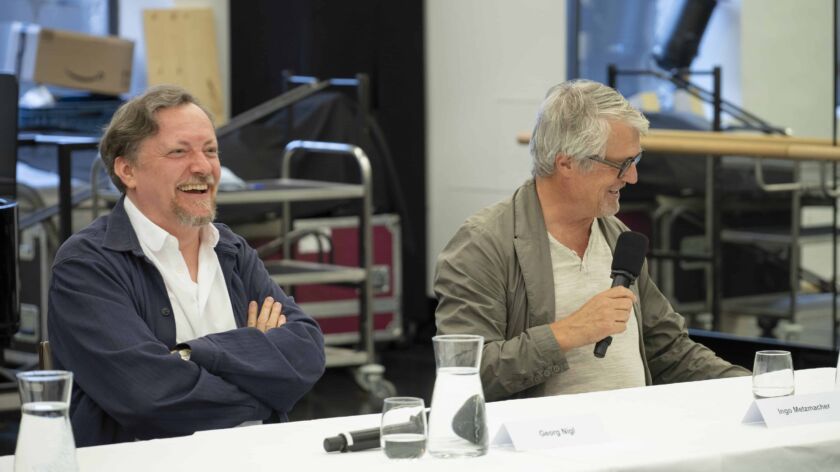
Georg Nigl and Ingo Metzmacher in a TerraceTalk on the concert performance of the opera Der Prinz von Homburg.
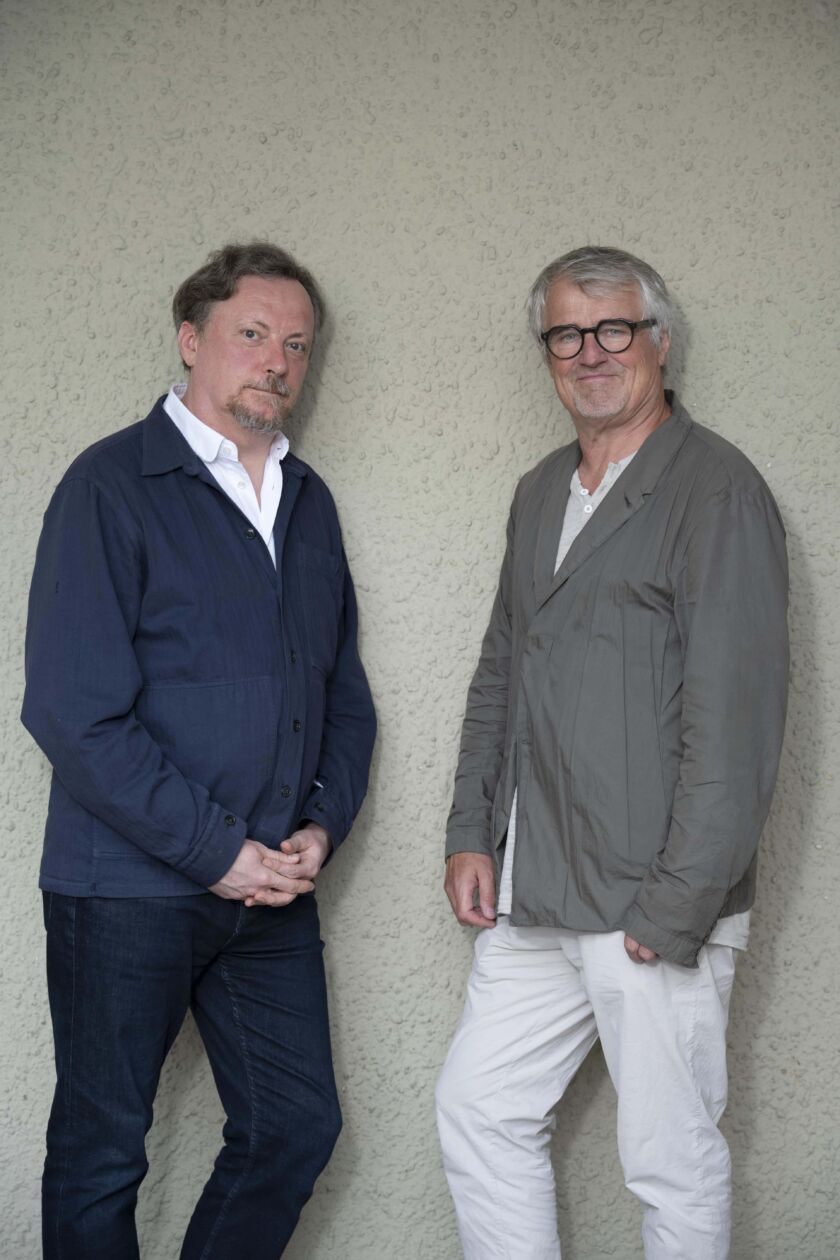
“Two opposite poles that inspired one another” – that is how baritone Georg Nigl describes the great artists Ingeborg Bachmann and Hans Werner Henze. The author and the composer, whose birthdays were only six days apart, had “a symbiotic relationship and a genius for collaboration,” as Karin Bergmann remarked in her introduction. Their intense artistic partnership led to ballets, audio plays and the two operas Der junge Lord and Der Prinz von Homburg, among other works. The latter is based on Heinrich von Kleist’s play Prinz Friedrich von Homburg, which Ingeborg Bachmann adapted into a libretto for Henze’s opera. In a concert performance conducted by Ingo Metzmacher, Der Prinz von Homburg offers one of the few opportunities to hear a stage work by Henze this year.
Georg Nigl will sing the title role. In the press conversation, he describes their close relationship: “Ingo and I are friends, and artistically we have much in common. Working on this together was very good, but also very challenging.” They already presented a Henze work last year at the Salzburg Festival, the oratorio Das Floß der Medusa. The opera Der Prinz von Homburg was new to both artists. “I was delighted to note, as I delved deeper into the work, how remarkable it is. It’s about as long as Wozzeck and has a very dense texture,” Metzmacher says. The large-scale scenes are found in the first and third act, whereas he describes Act II as “a bit more intimate”.
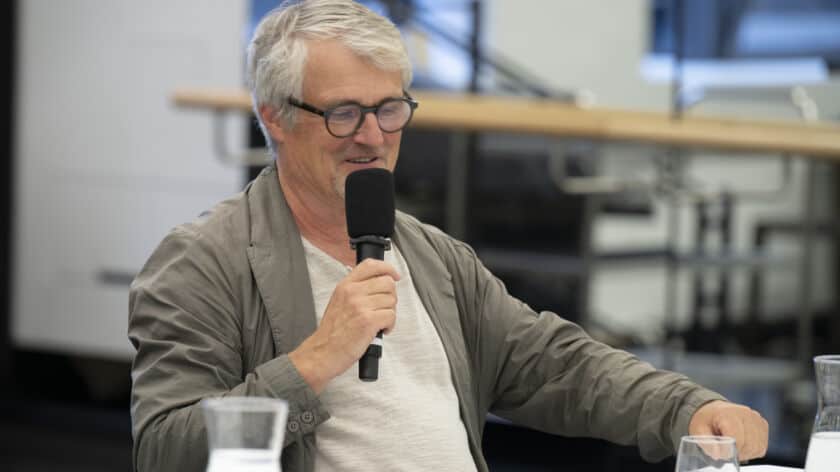
The opera is dedicated to Igor Stravinsky. “Stravinsky and Henze defined a law for every piece they wrote, designating a specific playing field for themselves. Within this playing field, they moved within their own language. This means that there is great unity within,” says Ingo Metzmacher. He points out one scene in Act I of the opera as “Stravinsky-like”, so to speak: the Prince ignores the command to intervene in the battle only after receiving express orders from the Elector. Henze writes this command as a fanfare. “Henze manages to wait half an hour before arriving at this fanfare. He didn’t want to ruin the effect by having the trumpets play directly.” Immediately after this fanfare, two trumpets play an echo from the lighting bridge of the Felsenreitschule. “Henze would have liked that,” says Ingo Metzmacher, who met the composer Hans Werner Henze regularly during his lifetime, engaging in musical exchange and getting to know him very well.
The opera by Hans Werner Henze and Ingeborg Bachmann deals with the conflict between law and affection, and the two levels of dream and reality. “These contrasts are easy to recognize in the score,” says Metzmacher. Georg Nigl agrees: “That’s something Ingo brought out very clearly in the rehearsals. It’s hard to portray these different levels in a transparent way, but we found good images for these phenomena together with the orchestra.”
In Metzmacher’s opinion, Henze and Bachmann focused more on the dream-like aspect of the story, even indicating that everything might ultimately have been a dream, which is also reflected in the composition: “When in the end, the Prince wonders whether he might have dreamed all of this, the music from the beginning returns.”
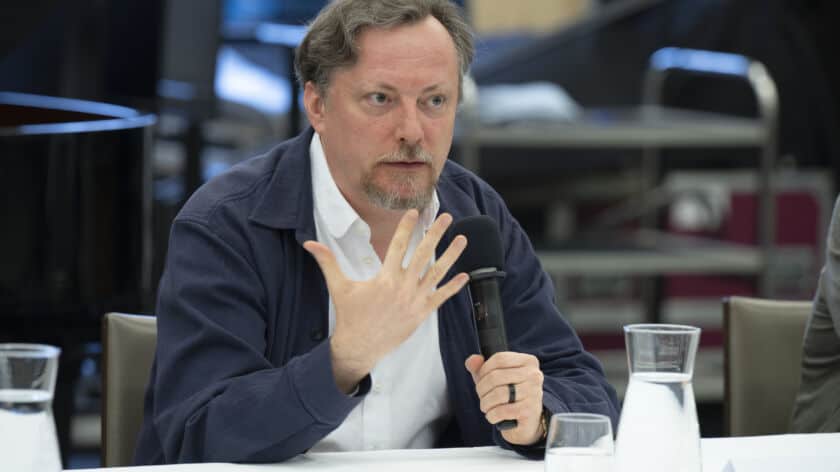
Because Heinrich von Kleist’s play had been politically abused over the course of its history as a glorification of war, Ingeborg Bachmann long refused to adapt it into an opera. When she finally did rearrange the libretto, she reduced the military style of speech, focusing on its inherent humanity and emotions instead. As Georg Nigl explains, she was intrigued by the fact that the story contains no character who is truly evil. When Nigl began studying his role, he did not understand it at first: “Because I could not empathize with the fact that a soldier fears death – in retrospect, that is – when it’s about him personally. Then I learned that it was customary in the 17th and 18th century to distinguish between the honourable soldier’s death in battle, and death on a personal level.” This second level, i.e. the realization of one’s own mortality, was essential for Henze and Bachmann in the context of post-war Germany in the 1950s. The central character is the Prince of Homburg, whom Henze once called a “sleepwalker” or “dreamwalker”. Georg Nigl explains that the vocal part is “really a tenor role” and that he will only sing it this once in Salzburg, because it is “vocally so demanding”. “I am doing this for the Salzburg Festival and for Markus Hinterhäuser, whose idea this was.” Der Prinz von Homburg will be performed in concert on 20 August. “For me as a singer, a concert performance is similar to a sitzprobe (reading rehearsal) during a stage production. I am very excited, almost in a romantic mood, because it brings you back to the score, and thus to the point of departure.” Ingo Metzmacher underlines the “stage energy, the theatrical energy” inherent in the music, which he intends to bring to the fore. Very good singers are of the utmost importance here. “We have an outstanding cast,” Georg Nigl and Ingo Metzmacher agree. Metzmacher will conduct the ORF Vienna Radio Symphony Orchestra, with whom he has enjoyed working for more than 30 years. He describes their relationship as “very friendly”: “It’s always a great pleasure, and we get along exceptionally well.”