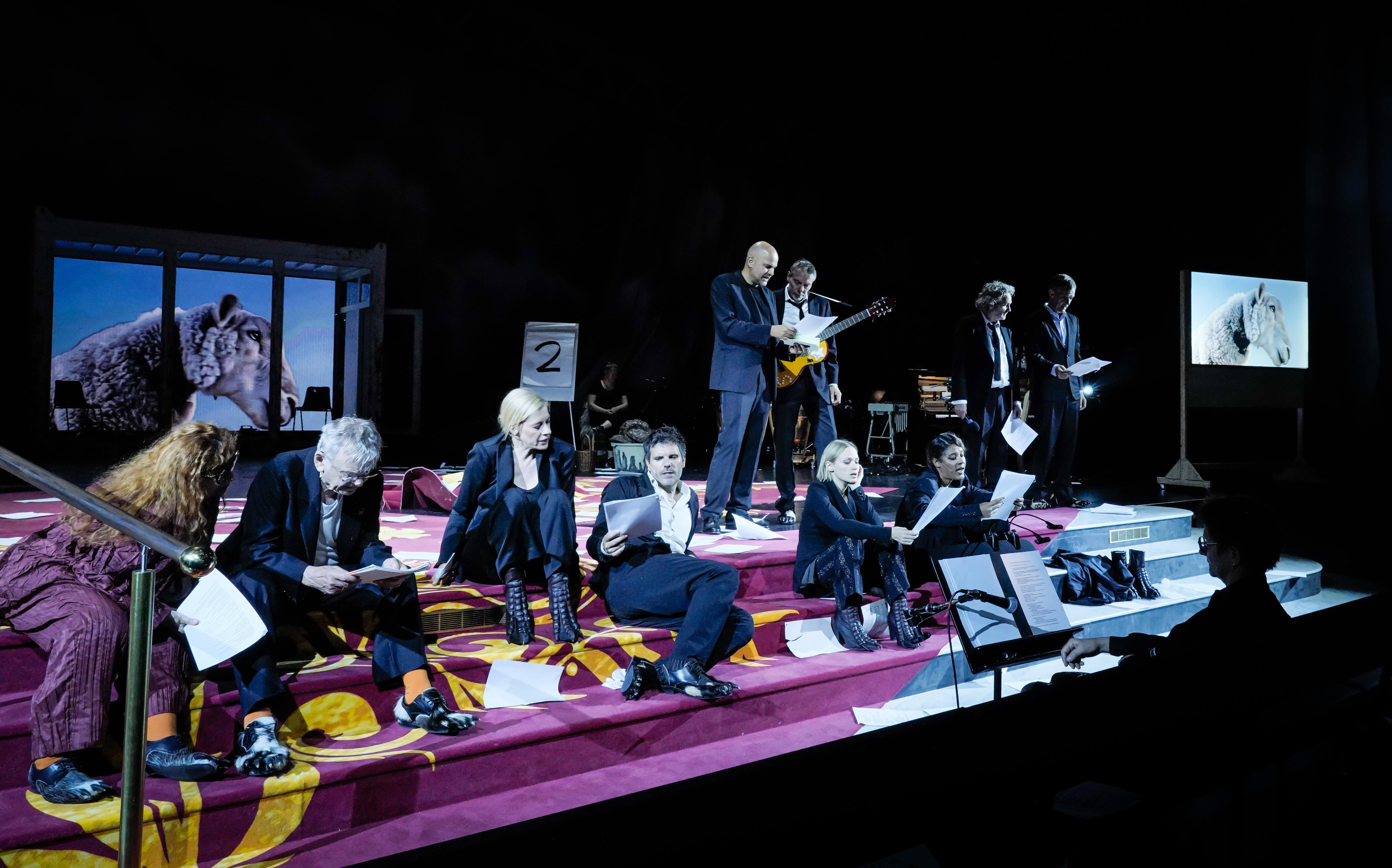

The Misanthrope
Der Menschenfeind
Molière

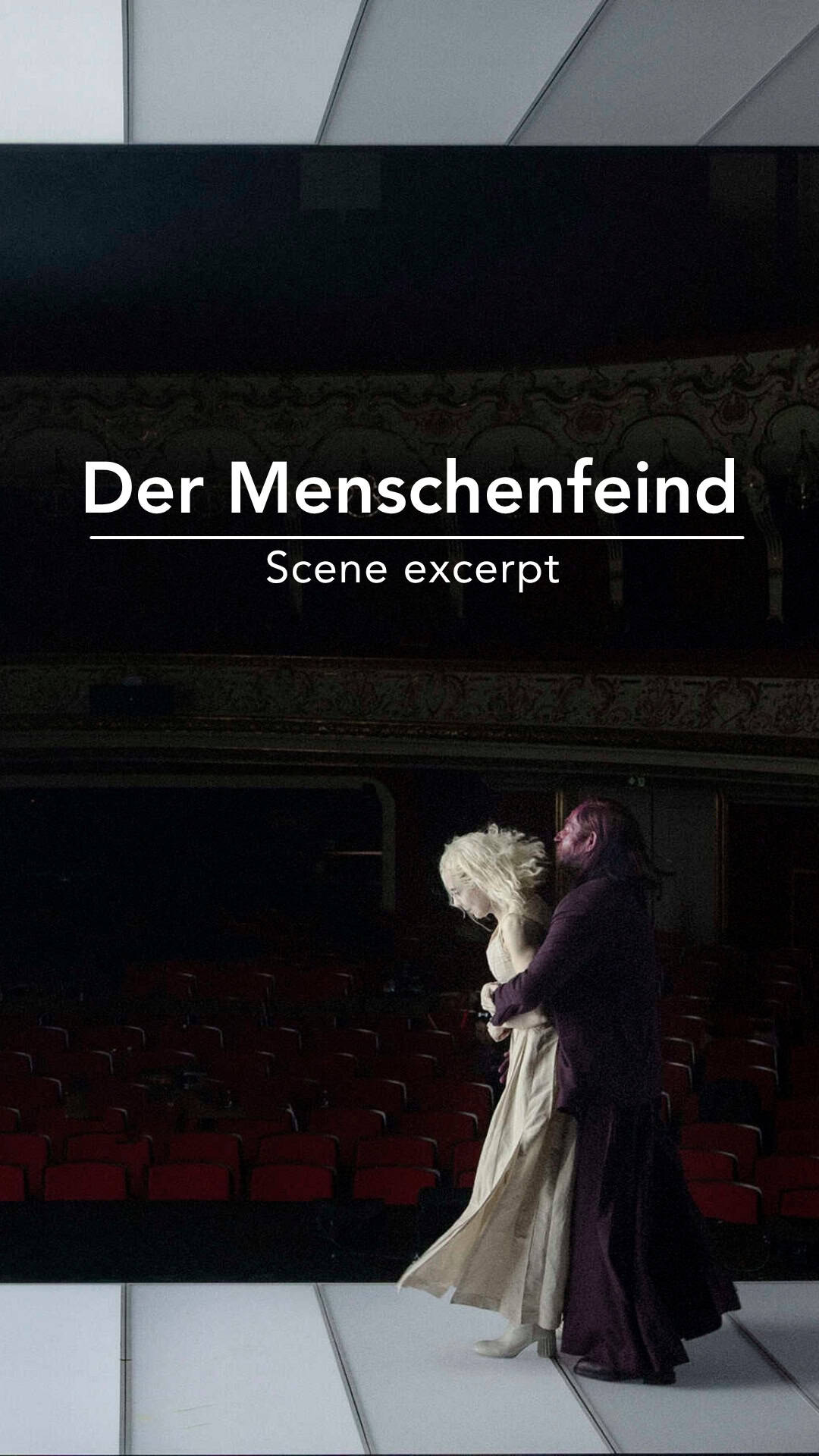
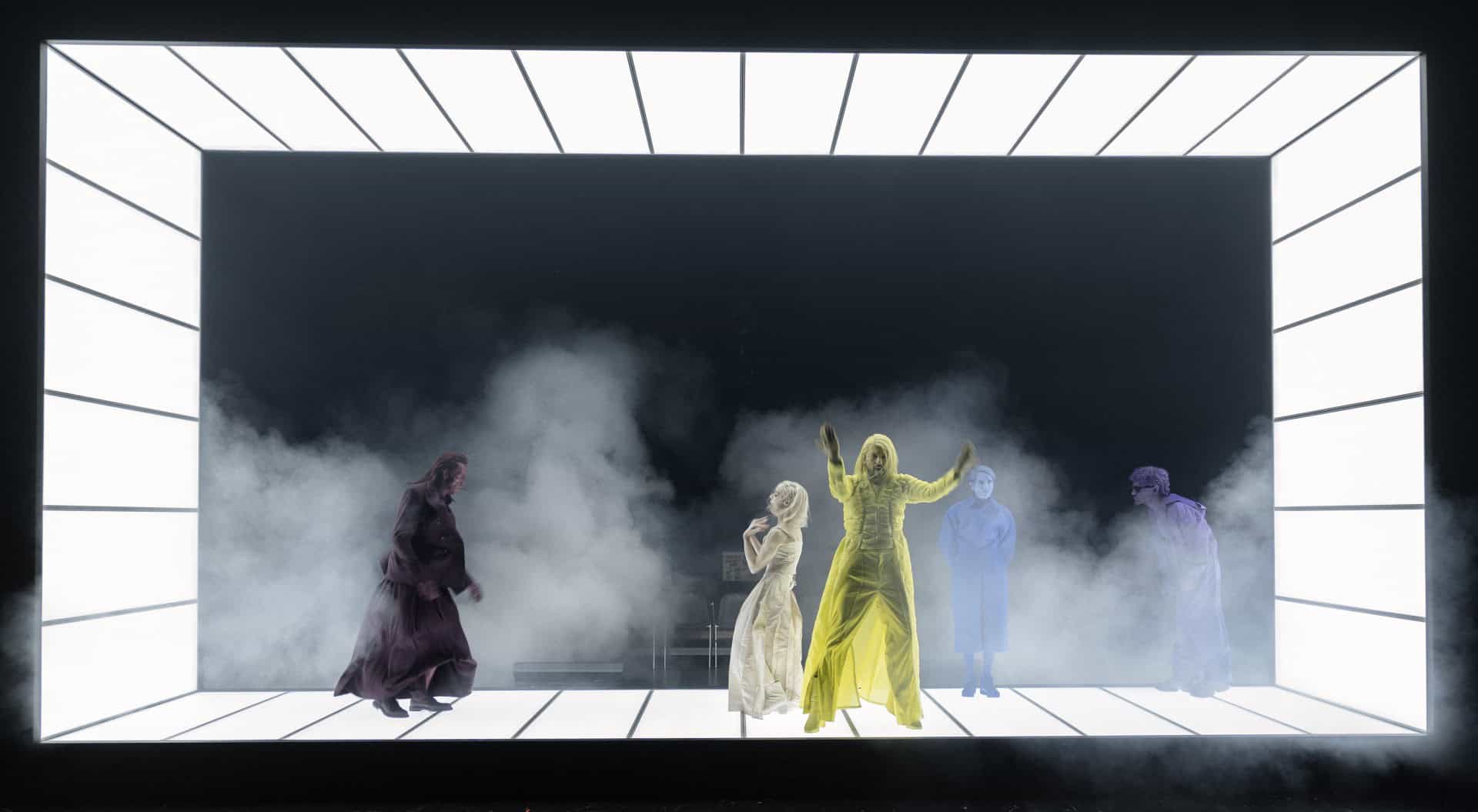
The multi-award-winning director Jette Steckel stages Molière’s Le Misanthrope (Der Menschenfeind), a glittering satire of social hypocrisy, with a contemporary gaze. An interview with the director.
The original title of Molière’s play, Le Misanthrope ou l’Atrabilaire amoureux, is known as The Misanthrope or The Cantankerous Lover in English. So which is Alceste: hater or lover?
Jette Steckel: There are theories positing that these two feelings entail one another. We cannot feel love without knowing its opposite. The question remains whether the opposite of love isn’t hate, but rather disinterest. In Alceste’s case, I think that his hatred is fed by his belief in humanity and his love for human beings: because he continuously witnesses them failing, when measured against their potential. He is an idealist.
In Molière’s comedy, the terms politeness, decency and truthfulness play a role. The rules for human coexistence and the breach of social convention are major issues. Is the core question: how do we want to treat one another?
The issue is communication. What we communicate, and how we actually act, i.e. our behaviour. We have passed the point where we refuse to take responsibility. After all, we pretend to take responsibility, we would like to, but we don’t. Our wording and our appearance seem responsible, but often they are merely a camouflage of correctness, and behind it, we hide in resignation, eschewing true, real and consistent social responsibility. At the same time, we have long lost our belief in any kind of individual effectiveness.
The heated repartee between Alceste and his friend Philinte, his rival Oronte and Arsinoé, who woos him, is dominated by opposing attitudes regarding truth and lies, or honesty and hypocrisy. What does this play tell us about relationships, about love and friendship?
The question of radical honesty is invoked frequently. Alceste practices it. We expect absolute honesty from people we trust, but actually receiving it can be pretty painful. Under the guise of honestly, it’s easy to criticize. It seems to me that the language of love is different than that of radical honesty, which can also be very hurtful. It is also hurtful when one senses that lies are being told – whether for opportunistic or other selfish reasons. All these communicative patterns appear in the play, and are dissected in Molière’s alexandrines.
Alceste’s opposite at the centre of this society is Célimène, the lady of his heart. She refuses to be restrained by social corsets, declining to succumb to the ascriptions of others. She obeys her own will and need for freedom. In doing so, of course she encounters opposition, but she enjoys testing and transcending these boundaries. Is this mere playfulness, or is she serious?
I believe that she is very serious; she is trying to fight for her freedom without losing all those around her. Loving another person does not mean possessing them. Nor does it mean that you cannot love another person. “The more I give to thee, the more I have” – as Shakespeare has Juliet say. Ultimately, this might be the key to understanding Célimène as well.
The Misanthrope (Der Menschenfeind) was a flop in Molière’s day. In its flagrant social criticism, it unsettled the audience. The ridiculous characters were not peasants or servants, but noblemen – in other words, the audience’s own social class. Molière was holding up a mirror to his peers, challenging them to laugh at themselves. Where is the humour in this play, and which parallels do you see between the courtly life Molière portrays and today’s society?
The humour is in the text, in its rhetoric and subtle brutality. Therefore, I find it interesting to take all characters seriously. The so-called laughingstocks – that’s us. Molière denounces what we ourselves denounce, while sharing the lifestyle. Our tolerance for ambiguity and contradictions becomes increasingly strained the more information and knowledge we have. Drawing all the consequences we find necessary would ultimately mean that we could not participate in social life. It’s impossible to behave in an absolutely correct manner – while living the way we do. Therefore, from my point of view, it would be short-sighted to portray the characters around Alceste as comical figures. Instead, we should try to defend them, as if the accusations were aimed at us.
David Heiligers conducted the interview.
First published in the Festival insert of Salzburger Nachrichten