Since the 16th century, the story of Doctor Faust – the scholar who sells his soul to the Devil – has stood at the heart of the European literary tradition. In early modern interpretations, it served as a theological and moral warning: a cautionary tale of human overreach. Faust’s pact with the Devil marks a deliberate rejection of God and the heavenly order, which ‘had turned away from him’, as the earliest chapbook puts it. From that moment, his path leads inexorably to hell and damnation.
At the close of the 18th century, Johann Wolfgang von Goethe transformed the story of Faust beyond recognition. His project spanned some sixty years, beginning around 1772 and continuing intermittently until 1831. The complete text was published just months after his death in 1832.
With his two plays, Goethe elevated the Faust legend to the heights of world literature, placing it alongside Homer, Shakespeare and Dante – as a vast work of extraordinary scope and semantic richness, ultimately resisting any single interpretation. He opened a space for reflection that extends deep into the 19th century and even resonates in the modern era. Faust, once the damned heretic of the early modern period, becomes in Goethe’s hands a desperate seeker whose rallying cry is ‘Ah, but I will!’ Driven by restless impulses that know no bounds, Faust emerges as the prototype of a modern human being.
From this starting point unfolds a vast European vision, ever ready to be refigured and reimagined for the present. Goethe’s Faust is like an open city, with many paths leading into it. On one level, the play tells the outward story of a single man – the scholar Faust – who, overcome by revulsion and emptiness, rejects his former life and strives for a fresh start. The famous ‘Zueignung’ (Dedication) captures precisely this moment: a man looks back and rekindles an inner stirring – ‘Again you show yourselves, you wavering forms, / Revealed, as you once were, to clouded vision. / Shall I attempt to hold you fast once more?’
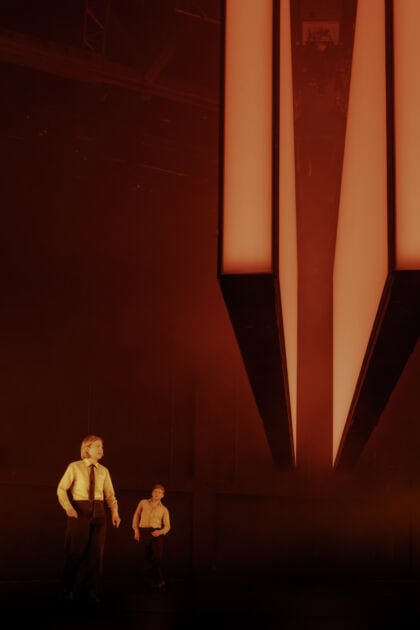
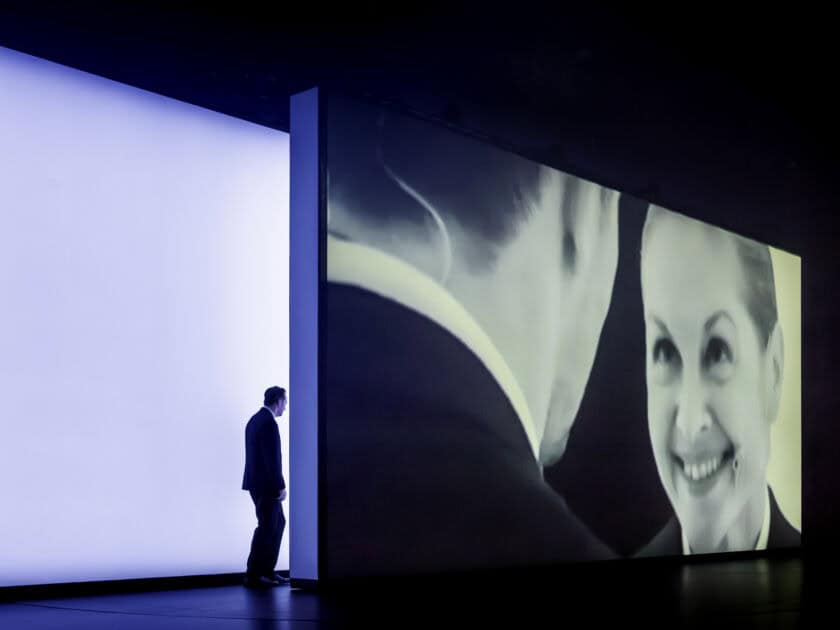
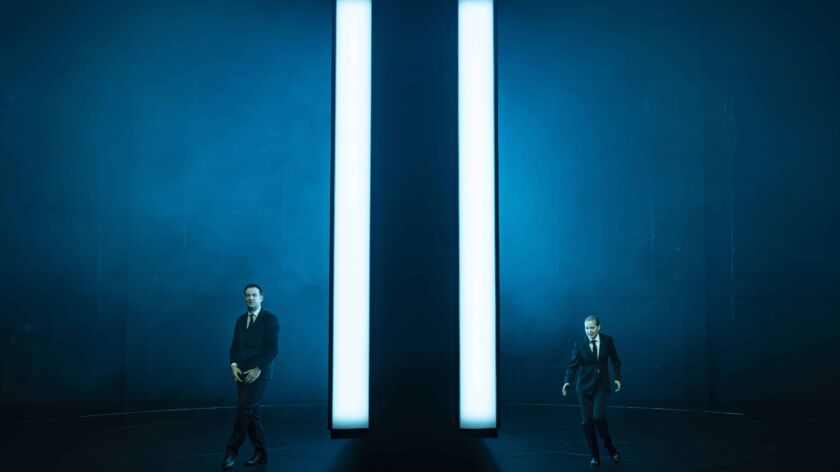
Faust’s famous declaration – ‘two souls, alas, are housed within my breast’ – turns the spotlight inward. The drama shifts from the external to the internal, unfolding as a sweeping panorama of the soul. No longer mere figures on a stage, the characters embody the warring factions within a divided consciousness – personifications of inner drives moving through the landscape of the psyche. Here, the theatre depicts a state of mind rather than a physical place. The characters stand as expressions of the self’s constituent parts, in constant tension with one another. Mephistopheles is no external presence, but a shadow of Faust’s own darker, repressed side – the destructive force that tempts and drives him. With him, Faust sets out on a transformative journey through the world, one that leads him into the depths of his own consciousness – through pleasure and responsibility, creation and destruction. The young Faust is the part of him where life still throbs – restless for experience, for touch, for the immediacy of being – something the older Faust has lost in his monstrous thirst for knowledge. Gretchen is his feminine counterpart, the part of him that embodies morality, vulnerability, innocence and love. She holds up a mirror to his own emptiness and inadequacy, his lack of empathy and devotion. In her gaze he sees what he has cast out of himself – and which now confronts him, unbearably close. And so, he destroys her.
Goethe himself admitted to a ‘Nordic barbarity’ that lies beyond classical notions of humanism. The forces at play in Faust are knotted together in ways that can never be undone, dragging themselves through the barren landscape of modernity – while ‘burning with desire and hunger for the unattainable’, to borrow Goethe’s own phrase from Faust II.
Yvonne Gebauer
Translation: Sebastian Smallshaw