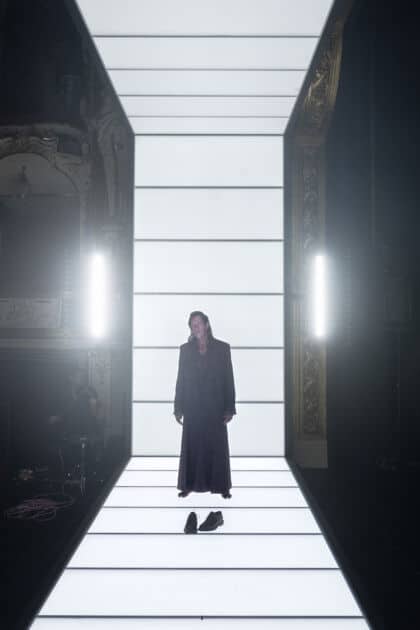
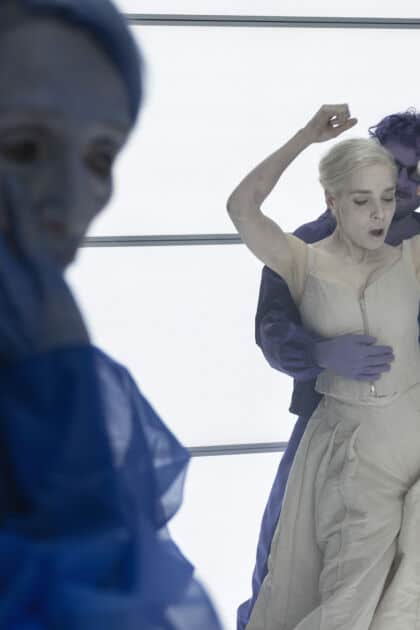
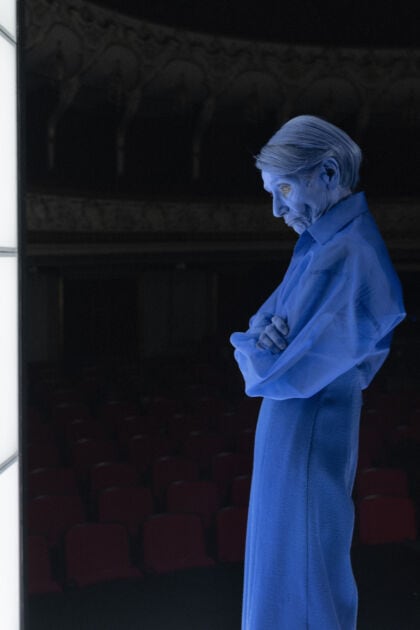
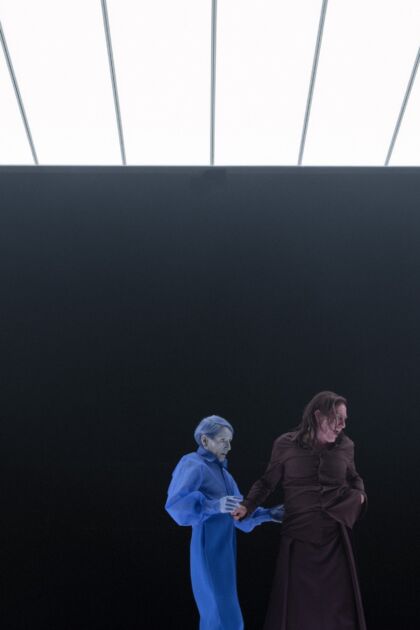
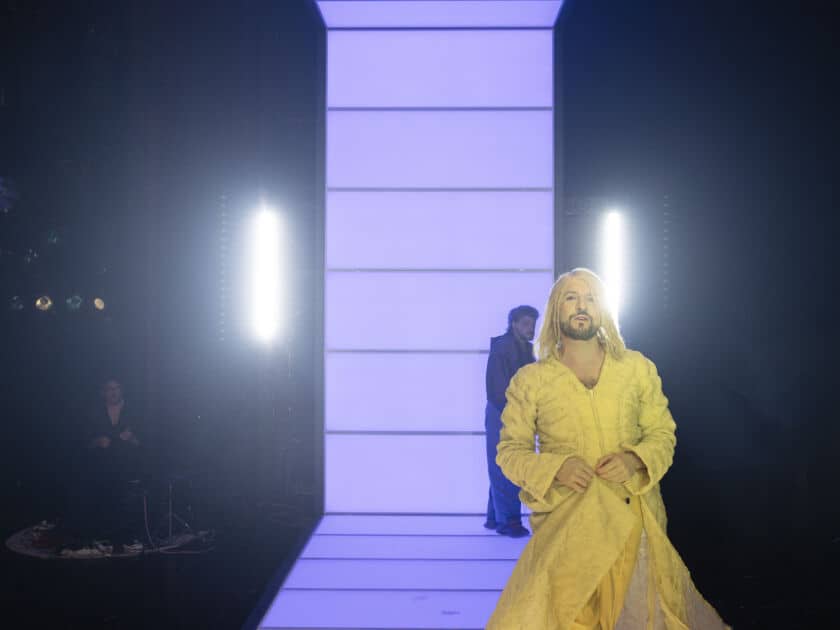
Molière’s comedy The Misanthrope, first performed in 1666 with the playwright himself in the title role – as with most of his plays – is a sparkling satire on social hypocrisy that has lost none of its relevance today. At its centre lies the irreconcilable conflict between uncompromising idealism and a world in which posturing and deceit have become the norm, masquerading as good manners.
Alceste, the ‘misanthrope’, is a man of radical honesty. He despises all the lies, intrigues, masks and games that define daily life at court – a world where reputation matters more than deeds. Steadfast and unbending, he clings to his convictions, even when they cut him off from the very society he scorns. He hovers between tragic hero and comic fool – a man on the verge of breaking under the weight of his ideals, yet too stubborn to yield an inch to those around him. Opposite him stands Célimène, a young widow and a born conversationalist. Sharp, witty and full of charm, she throws herself with relish into the game of manners. Her salon is the heart of the play – a world of intrigue, gossip and sly conversation. Célimène knows how to deftly play her suitors off against each other, secure her standing and manipulate social networks to her advantage.
Despite his moral stringency, Alceste loves Célimène. His love for her brings his inner dilemma into sharp relief: he desires a woman who embodies everything he despises. His attempts to persuade her to live in accordance with his own ideals are doomed to fail. In the end, all he can do is retreat into solitude – a drastic choice in a world that does not share his values. Molière situates this conflict, which echoes aspects of his own life, within the setting of a courtly salon: a microcosm of a society that prizes surface over substance. In this world, lies often prove more useful than the truth, and social survival depends on the careful art of polite diplomacy. At the same time, Alceste is not a figure whose actions or morals invite admiration – he is too wrapped up in himself to show generosity or compassion. What remains is, at best, an empty self.
The Misanthrope thus poses fundamental questions: is radical honesty a viable and valuable pursuit, or merely an abstract construct with potentially destructive consequences? How many compromises are required to find one’s place in society?
For all its existential depth, The Misanthrope is essentially a comedy. The tragic keeps slipping into the comic – as when Alceste, ever sure of his own virtue, lets jealousy or self-righteousness get the better of him, completely losing sight of how he comes across. Molière pulls off the rare feat of weaving philosophical insights into scenes that are endlessly entertaining. He makes us laugh by exaggerating human folly and exposing the limits of idealism in a flawed world.
Originally written for the court of Louis XIV, The Misanthrope remains no less relevant today. Its themes – social conformity, the masks we wear in our daily lives, the longing for authenticity and the fear of being excluded – resonate as much now as ever. In our current age of social media, self-improvement, white lies and carefully curated personas, Molière’s play strikes a surprisingly modern chord.
Director Jette Steckel – known for her visually bold and emotionally intense productions – offers a fresh, contemporary take on Molière’s text. A recipient of numerous theatre awards and prizes, including the Hamburg Rolf Mares Theatre Prize, an invitation to the Berliner Theatertreffen and the Faust Theatre Prize, she has long-standing ties with the Thalia Theater and will guide its ensemble on a journey through Molière’s universe.
Sonja Anders, Nora Khuon
Translation: Sebastian Smallshaw