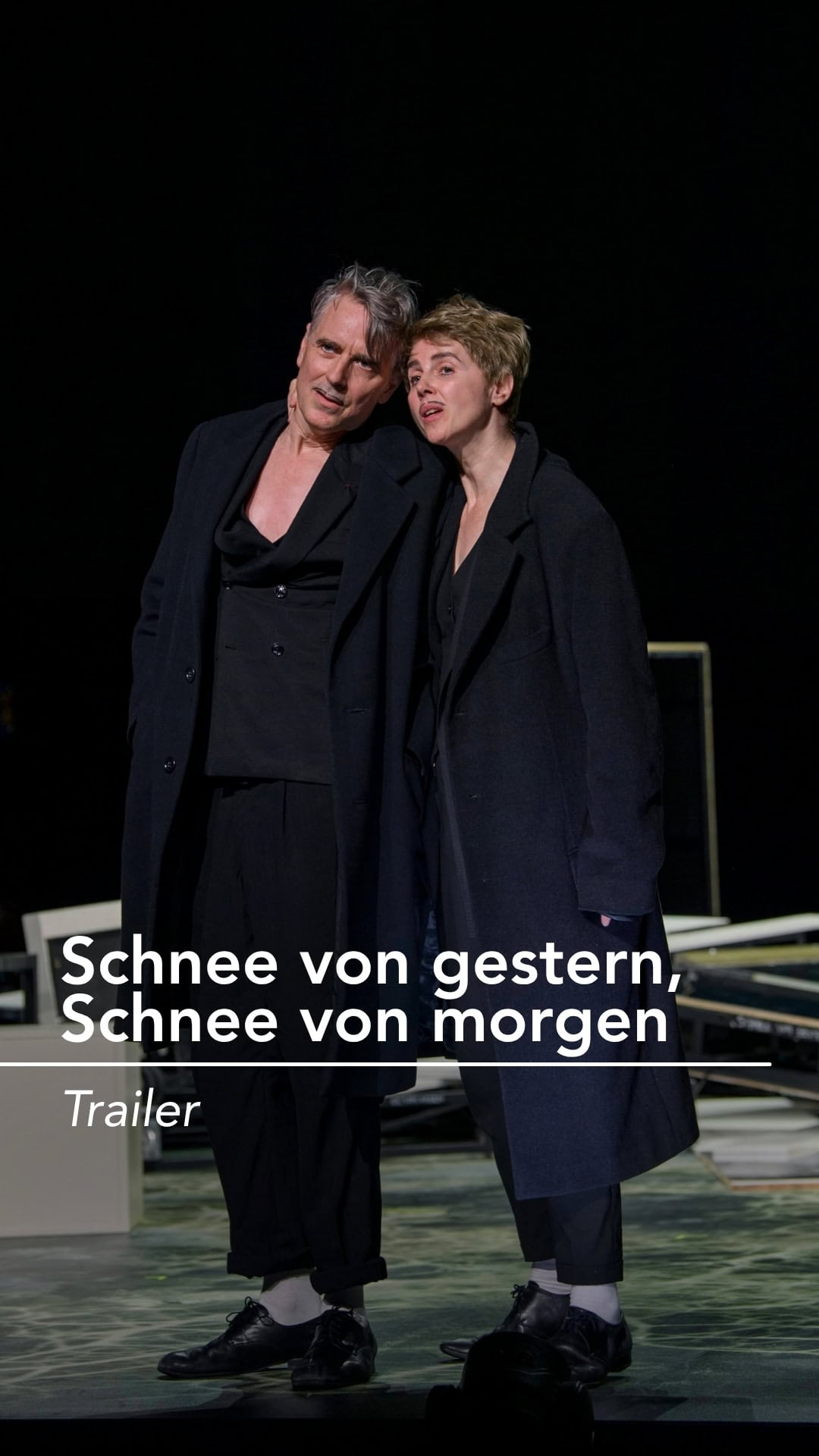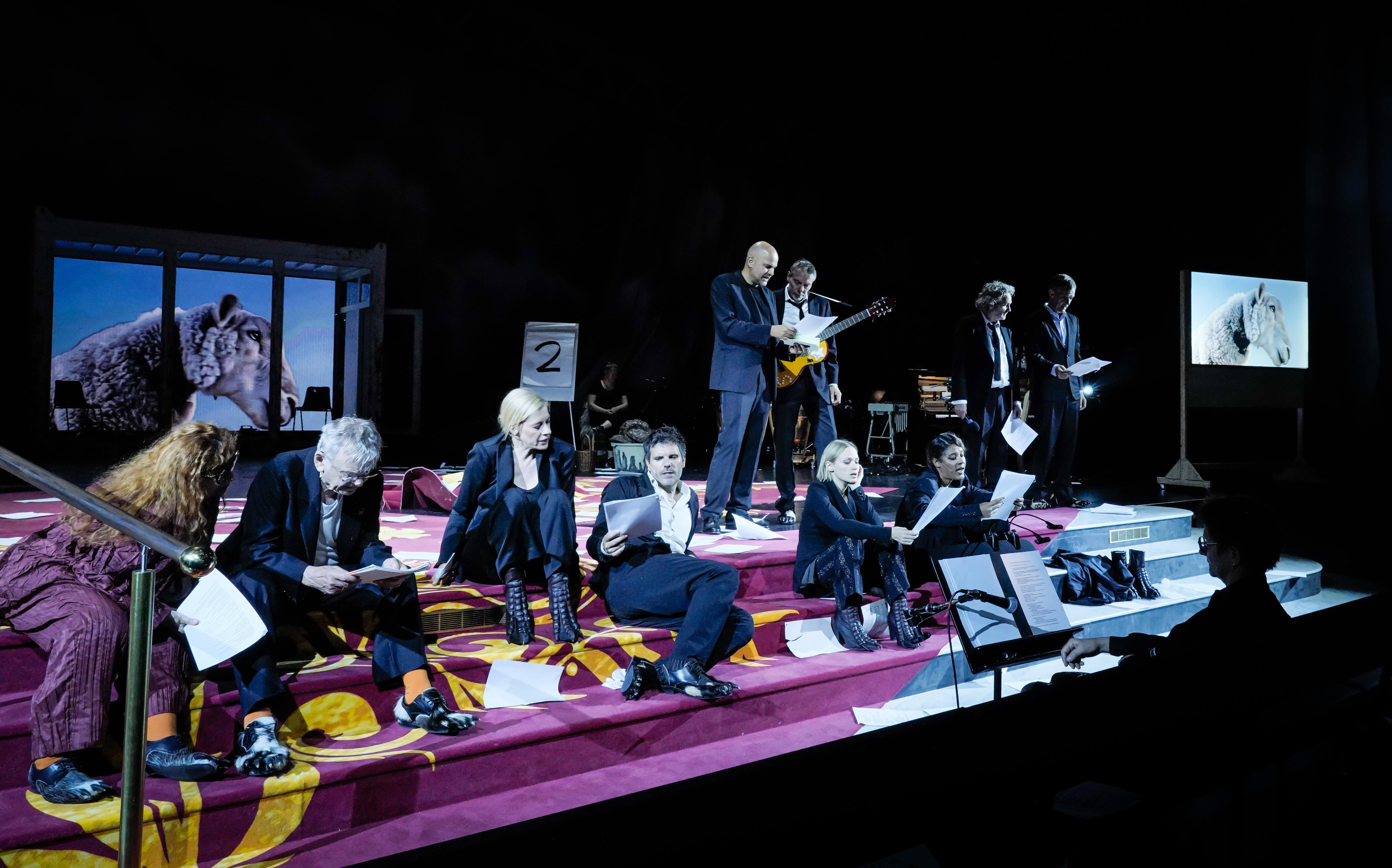
Schnee von gestern, Schnee von morgen
Snows of Yesteryear, Snows of Tomorrow
Peter Handke
Schnee von gestern, Schnee von morgen Jedermann and Caliban in Shakespeare’s Tempest; he was a brilliant Raskolnikov in Andrea Breth’s Dostoyevsky dramatization of Crime and Punishment and shone as Kleist’s Achilles alongside Sandra Hüller. In Peter Handke’s multiple award-winning family epic Immer noch Sturm, he internalized the narrative ego “with virtuoso fragility” … This Festival summer, Jens Harzer returns to the Salzburg Festival: with the impressive monologue De Profundis, adapted from Oscar Wilde – and in the world premiere of Peter Handke’s Schnee von gestern, Schnee von morgen, directed by Jossi Wieler.
In his new play, Peter Handke has devised a narrative instance that requires decoding. Handke’s first-person narrator enters into a dialogue with the world, opening a room of many temperatures which may be read intrinsically and chorally, continuously coming up with ideas and discarding them. “The special thing about studying Handke is that he demands of the theatre that it take responsibility, find its own voice, through his texts. That’s a way to salvage a treasure,” says Jens Harzer, who has become a connoisseur of Handke’s oeuvre over the years.
Harzer recounts that it was the kind of gaze, trained on the little details within the greater context, and the way it could be transferred to life, that won him over to Handke’s writing. At the age of 17, Versuch über die Müdigkeit touched a nerve in him, soon making Peter Handke one of his favourite authors. While studying acting in Munich, he expanded his personal repertoire to include his plays. “I liked them, what more is there to say,” Harzer drily summarizes, fast-forwarding with gestures by several years to arrive at the Salzburg Festival, where Dimiter Gotscheff directed the legendary world premiere of Immer noch Sturm in 2011. “Many of those who laid hands on this piece realized that it had a special dimension, in size and poetic reality. Everyone thought: ‘My God, what a world is this!’,” he recalls.
The seeds sown during his youth grew into a special connection. Handke and Harzer met a few days before that world premiere. The author had attended rehearsals and praised the team during the subsequent feedback session. The ending, however, which Gotscheff had staged as a long monologue by Harzer as Handke’s alter ego, instead of the dialogue Handke had envisioned, was roundly rejected by the author – who even threatened to boycott the world premiere.
Gotscheff, however, stuck to his decision as a director, which made the premiere a tension-filled occasion, with everyone wondering whether Handke would ultimately appear on stage for the final applause with the team. After Jens Harzer’s final bow, Peter Handke finally walked on stage too: “And so we stood there, holding hands. And that is really the moment we found one another.” The blockade was gone, and their joint history had a new beginning. Whenever Handke writes a new play today, he sends it to Harzer. “To be involved in this process for a moment… that is a beautiful thing.”
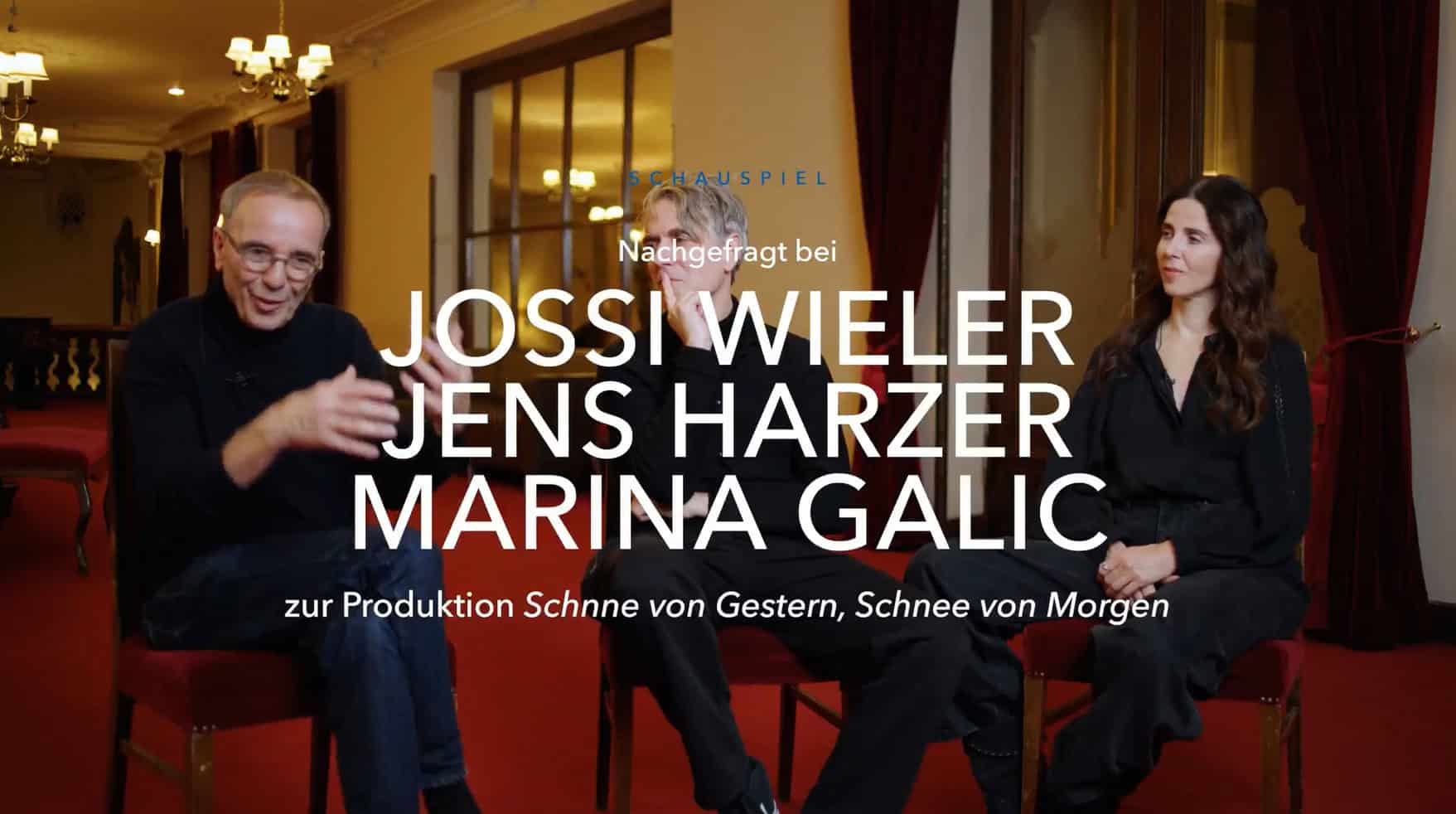
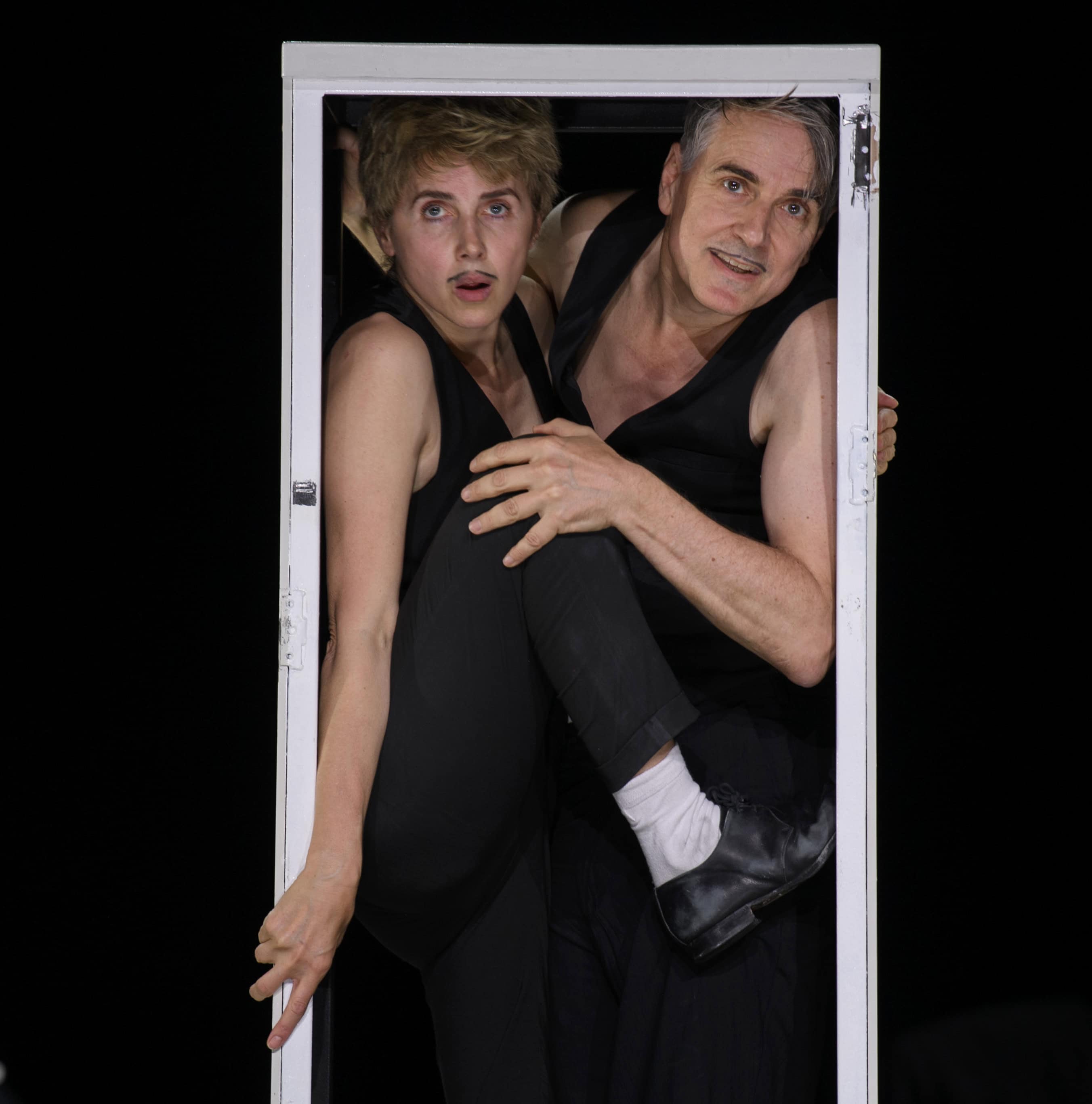
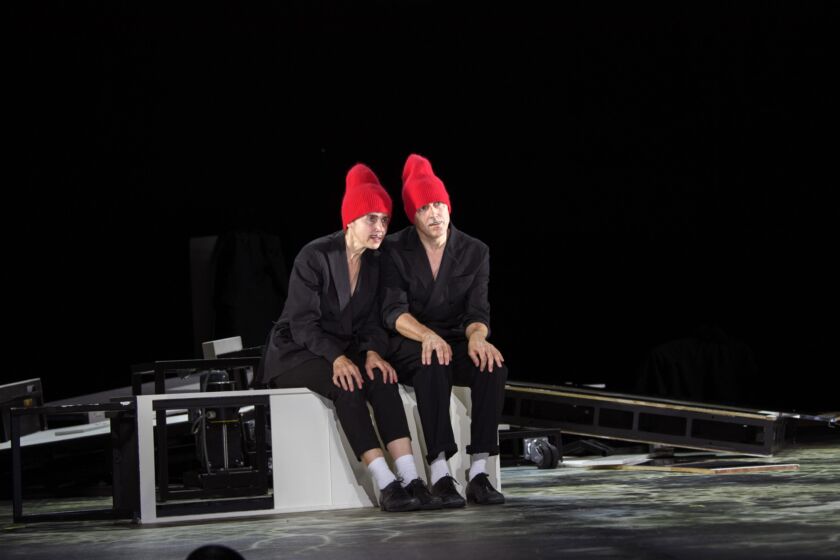
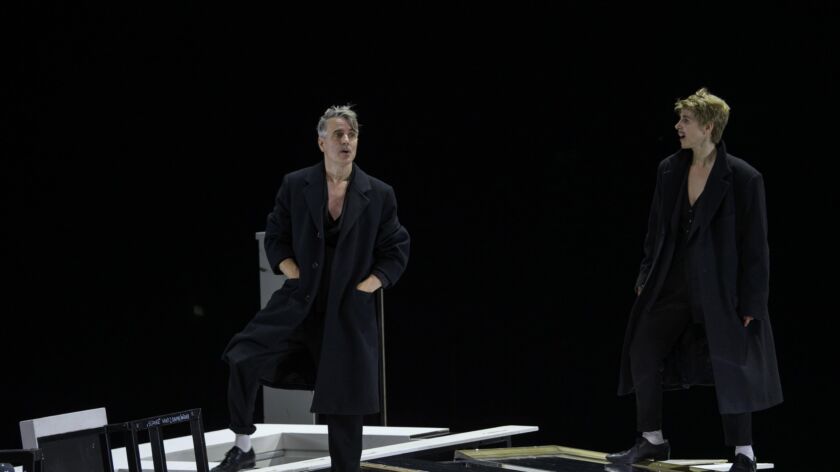
Once again, Jens Harzer fast-forwards his story, returning to the present. Under Jossi Wieler’s direction and alongside Marina Galic, he now becomes a nameless, restless “Man pacing”, about to take another measure of Handke’s cosmos.
Inke Johannsen
First published in the Festival insert of Salzburger Nachrichten