
Lucio Silla · Così fan tutte
Wolfgang A. Mozart
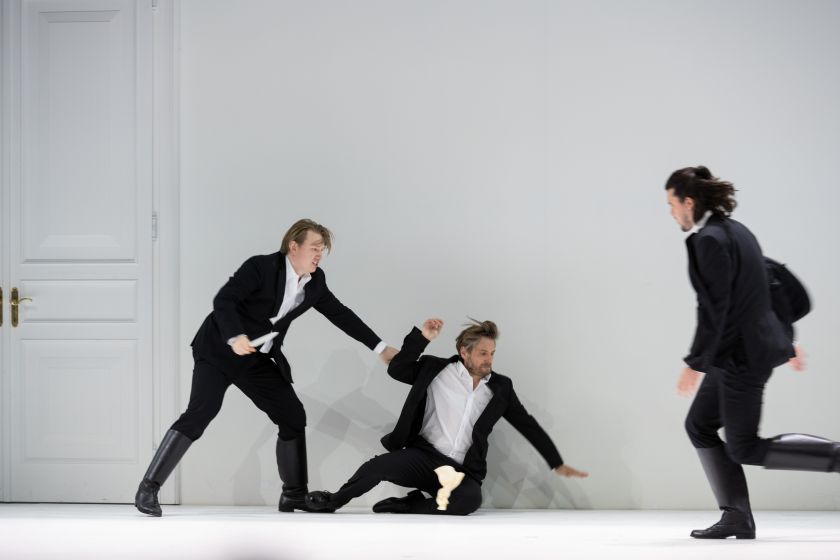
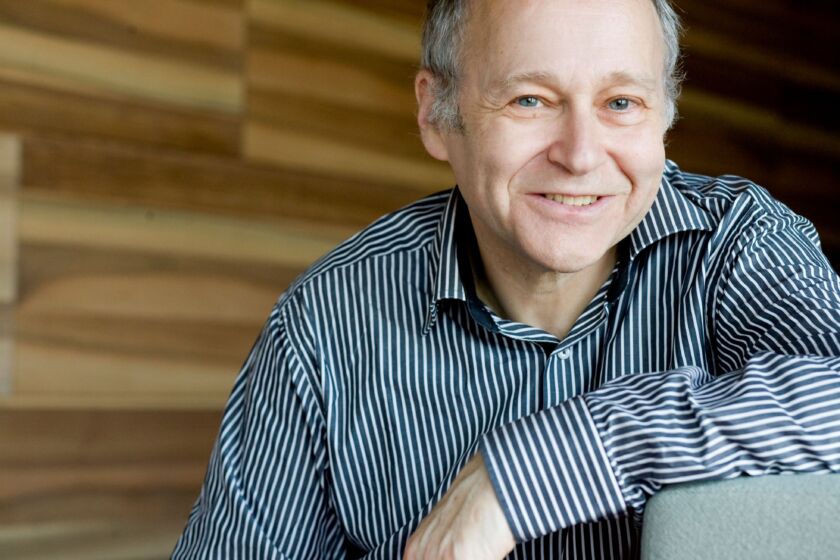
With Lucio Silla and Così fan tutte, the Salzburg Festival presents two Mozart productions fully focused on psychological interpretations of the protagonists. Following her successful Mitridate last year, Birgit Kajtna-Wönig presents another semi-staged opera seria by the adolescent Mozart, while Christof Loy’s celebrated production of the “School for Lovers” returns in an expanded new version.
The profound gaze into the protagonists‘ souls and the ability to unlock their feelings and thoughts in profound detail in music mark Wolfgang Amadeus Mozart’s operas. This is true even for an early work such as Lucio Silla, in which the 16-year-old composer innovatively demolished the boundaries of opera seria.
Birgit Kajtna-Wönig directs a semi-staged version of Lucio Silla at the Felsenreitschule. As for the 2025 Mitridate, the director joined conductor Adam Fischer in creating a version of the work that has been abridged to two and a half hours. Yet as Kajtna-Wönig points out, “this performance does not mean you are missing out. ‘Semi-staged,’ to my mind, means concentrating on the core of the opera. We focus entirely on the essential elements: the characters on stage.” Kajtna-Wönig considers this a worthwhile task, for in this opera, first performed in Milan in 1772, Mozart decided to explore the psychology of the characters in an innovative and unfamiliar way. “It fascinates me to see how he developed at that time – the character of Lucio Silla has far more dimensions than other opera roles at the time. Here, Mozart achieves a multitude of layers, enriching the opera greatly,” says the director. Adam Fischer emphasizes the advantages of a semi-staged performance, as opera seria is “a kind of hermaphrodite between concert and musical theatre anyway. Doing an opera seria in a concert setting is often more appropriate, because an opera audience might expect too much action otherwise – and might then be disappointed, in the worst case. An opera seria must not be purely a concert, nor an over-staged affair, I think. In both cases, that means losing sight of its true character.” Fischer emphasizes that he hopes the audience “is open to the portrayal of emotions without action, for that is the nature of this genre.” The tenor Giovanni Sala, who appears in the title role, is joined by Sara Blanch, Xenia Puskarz Thomas and others, bringing the characters of Lucio Silla to life.
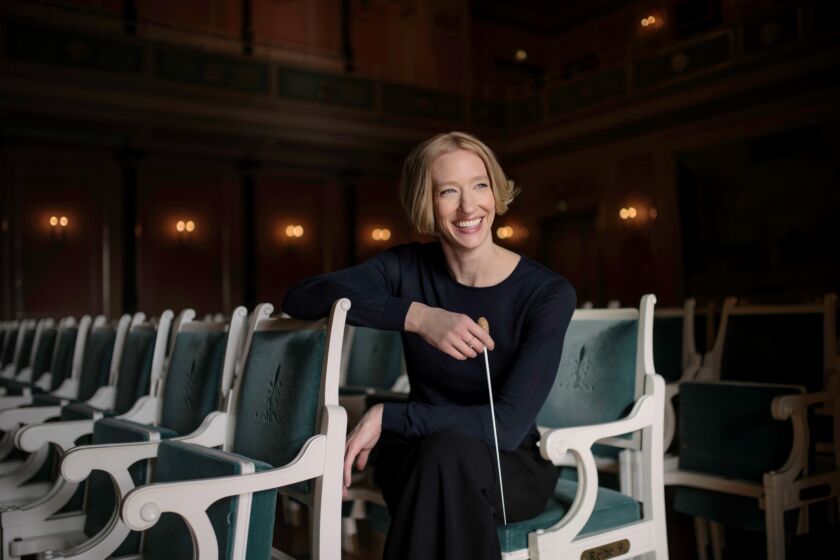
The second Mozart opera of this summer will be Così fan tutte, directed by Christof Loy – the production might be billed as a rediscovery, for it is an expanded version of the 2020 production. At the Salzburg Festival, the coronavirus restrictions necessitated an abridged version of the opera – another instance in which the full focus was on the characters: Loy considered the reduced possibilities an invitation to delve deeply into the music, closely observing the interaction between the protagonists: “The psychological processes and emotional states the characters undergo are so complex that the decision to keep the stage action so minimalistic helps us to truly see all that,” he said at the time. His approach was to work “like a magnifying glass, in the best sense. We can zoom in so closely on the characters because there is nothing to distract us.” The conductor Joana Mallwitz describes the opera, which is subtitled “The School of Lovers,” as a “kaleidoscope of love. All the forms it may take, all the states it goes through in a human life – whether desperate love, doubting love, the love of kindred souls or light-hearted love – can be recounted through this music and these characters.” Under her baton, Elsa Dreisig, Victoria Karkacheva, Andrè Schuen, Bogdan Volkov, Lea Desandre and Johannes Martin Kränzle will appear on stage at the Großes Festspielhaus.
Theresa Steininger
First published in the Festival insert of Salzburger Nachrichten