


Where God and Man Collide
The Downfall of the Myth from the Spirit of Music
Because they have torn apart and eaten Zagreus, his most beloved, Zeus hurls his lightning bolts at a group of Titans, burning them to ashes. These ashes, which contain Titanic and Zagreic elements, are mixed with clay and saliva by Prometheus, forming human beings. He trains his sons and daughters to be adaptable, since they will not be able to exist from nature’s gifts alone. They will have to trust in their spirit and imagination. For they will be alone. And – this is the core of all the lessons taught by Prometheus – interaction with the gods is to be avoided.
He counsels us to stay out of their way. Neither should we curry favor with them nor measure ourselves against them. We should not let them enchant us, and we should not desire them. Those who follow this advice have good chances of being happy. – We know nothing of them, and that is an indication that they have succeeded.
Where god and man collide, tragedy ensues. And moreover: a human being’s tragedy – thus the myth will have it – is only rarely the consequence of his own actions; mostly, it is the end of a long story which began long before the life of the person in question. After all, the cruelty of tragedy is that it does not punish the one who caused it, not even the one who prolonged it, but mostly an innocent person who then breaks down under the weight of his ancestors – as if he were nothing but the final proof.
Ariadne, for Example
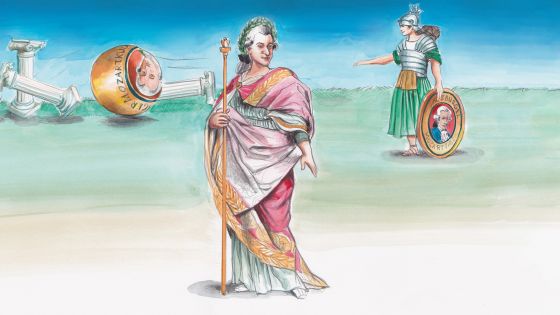
Ariadne lives under the curse of her mother Pasiphaë; and Pasiphaë lives under the curse of her husband Minos.
Minos, a mortal son of Zeus and Europa, rules over the island of Crete. He despises the sea, stands on the beach with spread legs and ridicules Poseidon. He does this not in the form of words, but by an almost ritual omission: he refuses to sacrifice to the god of the sea. Any inhabitant of an island does well to respect the blue-haired ruler. Poseidon may not be the smartest of gods, but he is powerful. He is able to tear whole islands from the sea-bed, as he did in the case of Delos. The storms obey him; when Artemis asked him to stop the winds, so that the Greeks could not sail for Troy before Agamemnon had not sacrificed his daughter Iphigenia, Poseidon gave the order, and not a leaf stirred anymore.
Minos is to sacrifice a bull to him, his best bull. The proud king of Crete, however, would not dream of it. Poseidon complains to Zeus. This is unusual. It might have been expected that the short-tempered god might simply send a flood to wipe away his challenger. But Minos is one of Zeus’ sons, and Poseidon does not want to fight this brother. Zeus counsels him to provide an appropriate sacrificial animal to the island himself. Poseidon fails to recognize the humiliation inherent in such a suggestion. Thus, one day a white bull emerges from the sea in Crete. His eyes shine like the midday sky, the tips of his horns sparkle like diamonds. Too beautiful to be sacrificed, Minos decides. He keeps the bull for himself, burning a worn-out old ox instead. Poseidon’s revenge is unprecedented in mythology. He is not allowed to harm Minos. Therefore, he takes it out on his wife Pasiphaë. He sows lust in her heart. She lusts after this very bull. She wants the bull to take her. She is unable to resist. That is the curse Pasiphaë must live with from this moment on.
read on ...