Eroticism, Slapstick, Vocal Splendour
In Rossini’s Il viaggio a Reims, the opera comments on itself – which is what has made the piece such a rewarding template for directors to this day.
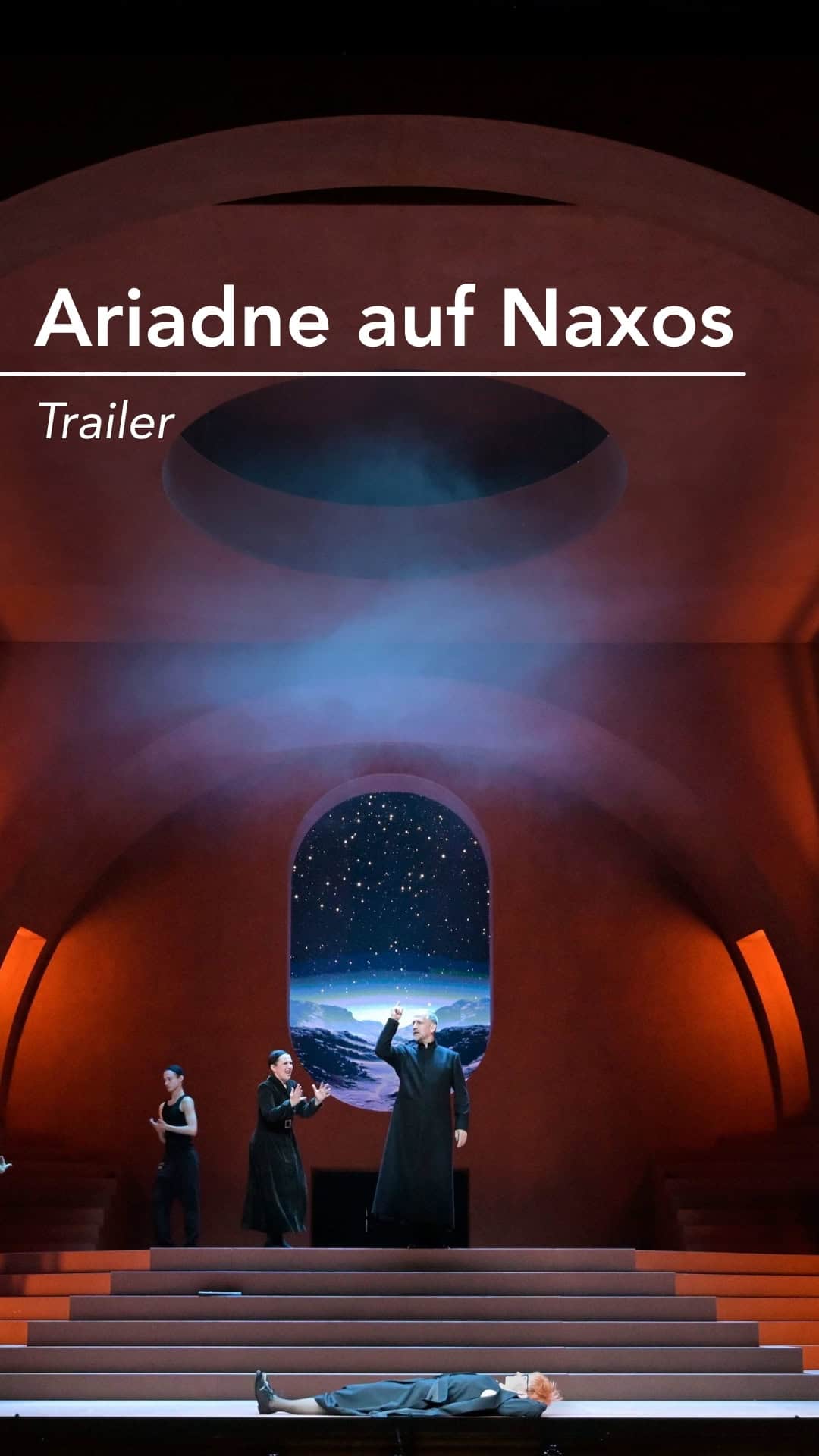
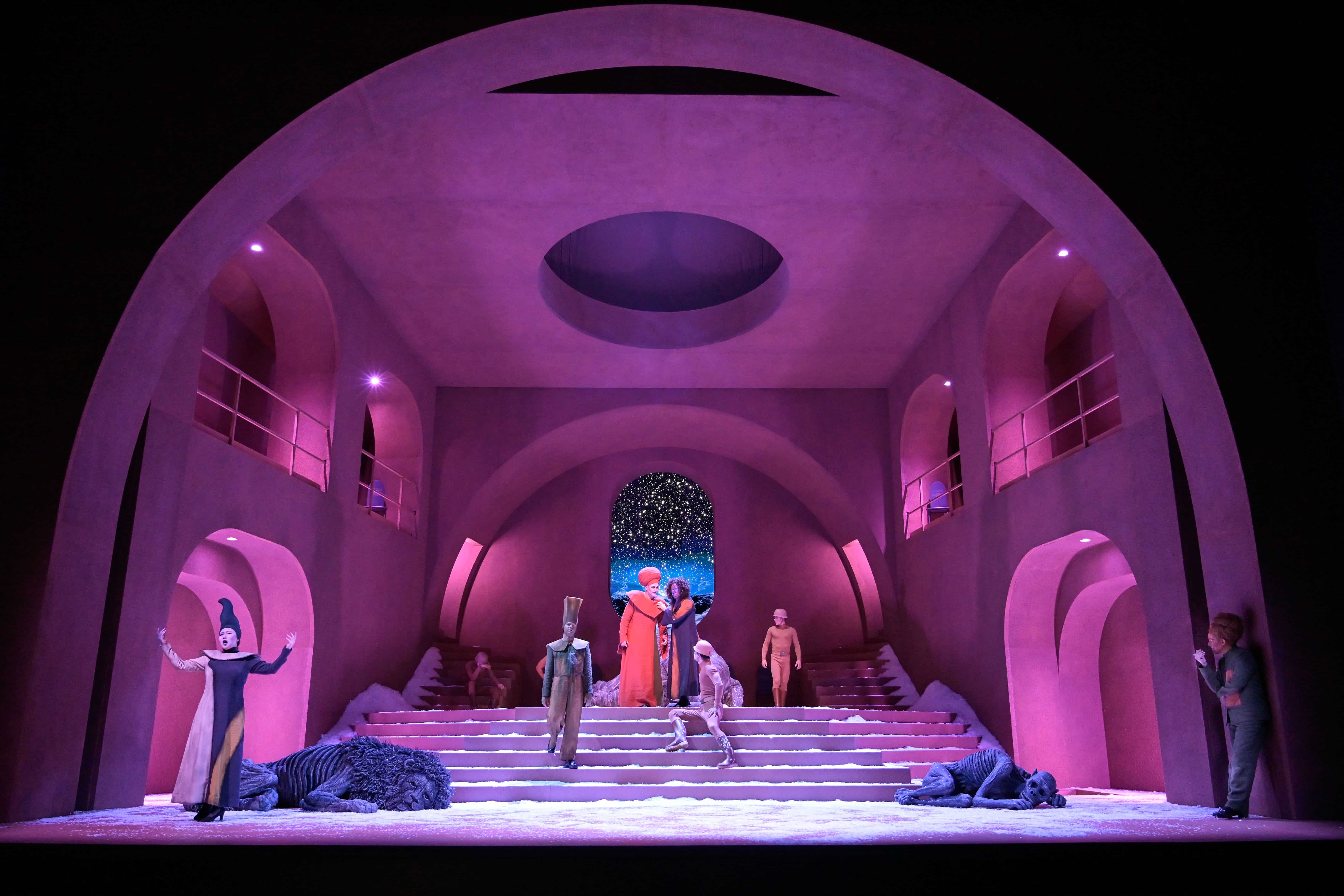
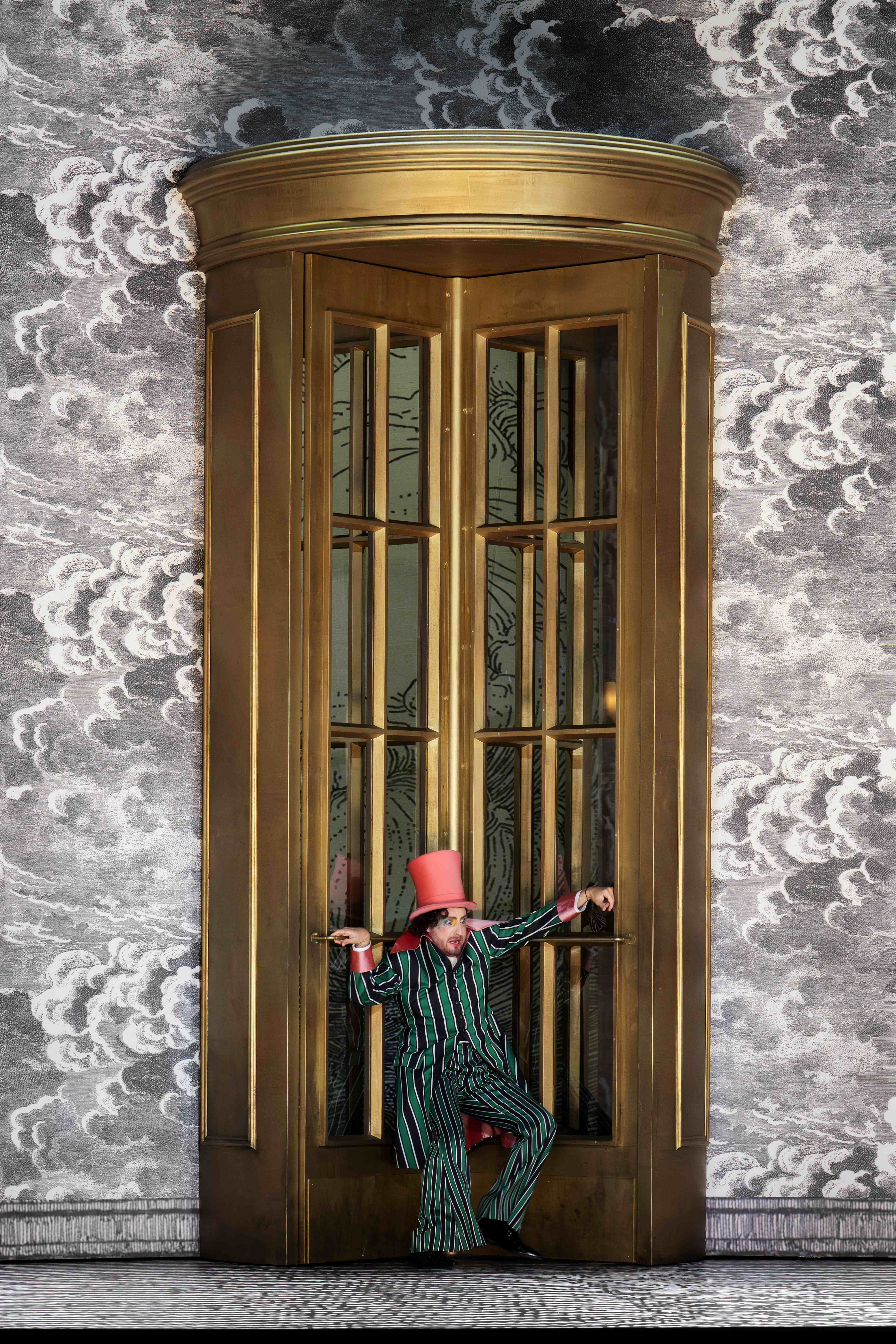
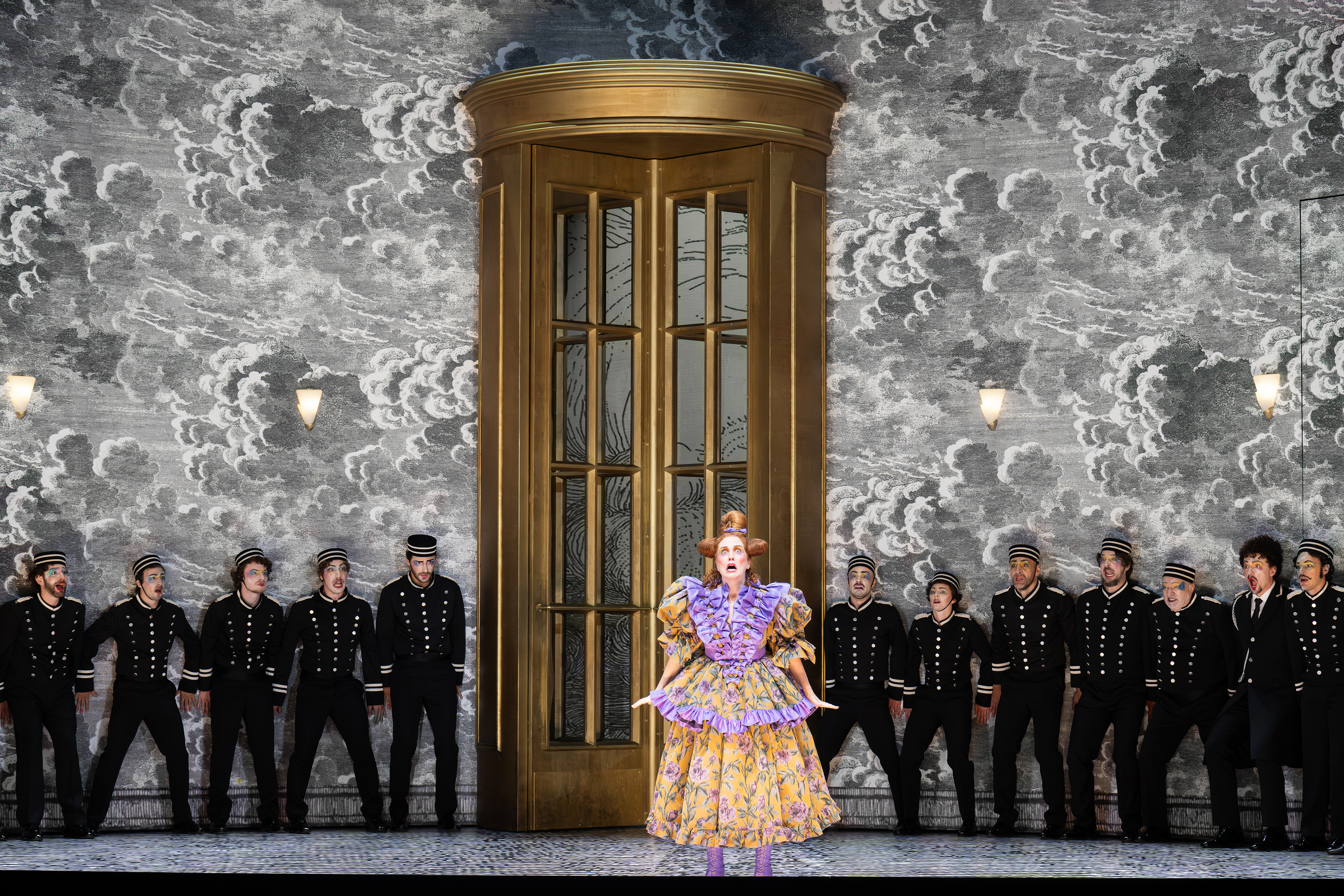
Not a hand stirred when Il viaggio a Reims received its world premiere in Paris on 19 June 1825. Not because Gioachino Rossini’s latest opera had been poorly received, but because applause in the presence of the newly crowned King Charles X would have been deemed inappropriate. The international travelling party on stage had considerably more fun. Because not a single horse is to be found anywhere in France, they never actually reach Reims, where the said Charles X had been crowned a few weeks earlier following the old custom, and instead must endure a stay at the „Golden Lily“ spa hotel, where they manage to amuse themselves nonetheless – and the audience has been laughing with them ever since. Much of this has to do with the peculiar characters that Rossini and his librettist Giuseppe Luigi Balocchi have brought to the hotel: among them a general’s widow whose husband fell to an enemy attack on their wedding night, an Italian antiquities dealer, a music-obsessed German major, and a rather turbulent Russian count.
Opera about Opera. „The Journey to Reims“ is an early example of metatheater: the work reflects on its own conditions of creation. With his coronation opera for Charles X, Rossini wrote his last Italian-language work and his first genuine one for Paris. The previous year he had taken over the management of the Théâtre-Italien, where the great singing stars traditionally sang in Italian. For the special occasion, some of the most famous were brought together on stage, headed by Giuditta Pasta. The Salzburg Whitsun Festival does the same in its production: with an all-star cast, led by Intendant Cecilia Bartoli herself, in Pasta’s former role: Corinna, described in the cast list as “a celebrated Roman improvisational artist” – also a singer who, like Bartoli, comes from Rome.
Il viaggio a Reims is thus also an opera about opera itself, in which Rossini could deploy (and had to deploy) all the vocal categories and aria types he had previously fashioned in Italy. That ten of the 18 roles are leading roles pushes to an extreme a particular quality of the art form: that the plots here often serve only as occasions for singing. As when a French countess, in the slow section of her aria, laments the loss of her wardrobe, before then rejoicing in the fast section at the reappearance of her hat.
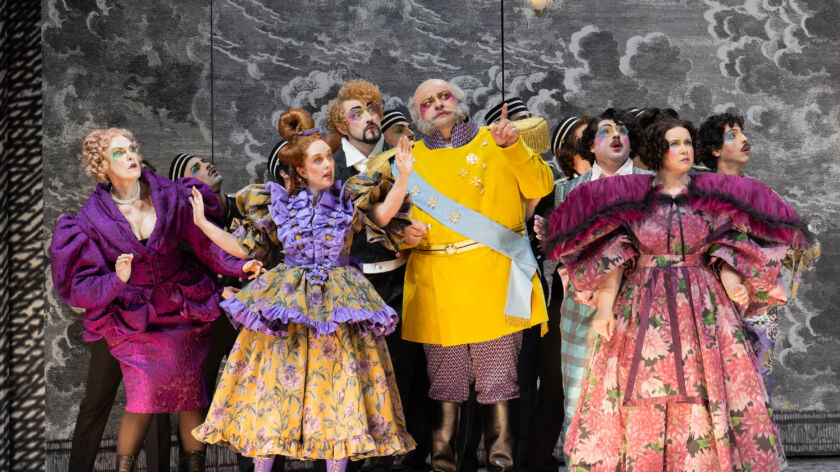
Sexy and Witty. That the disproportion between the emotionality and the occasion for singing becomes comic was something that Jacques Offenbach in Paris would build entire works from a few decades later. The comically experienced director Barrie Kosky will also exploit it for his new production of Il viaggio a Reims. For the second year in a row he is working with the Salzburg Whitsun Festival – and stays in the hotel. With Hotel Metamorphosis, the two achieved in last June an equally unusual and ultimately successful project: a self-created Baroque opera.
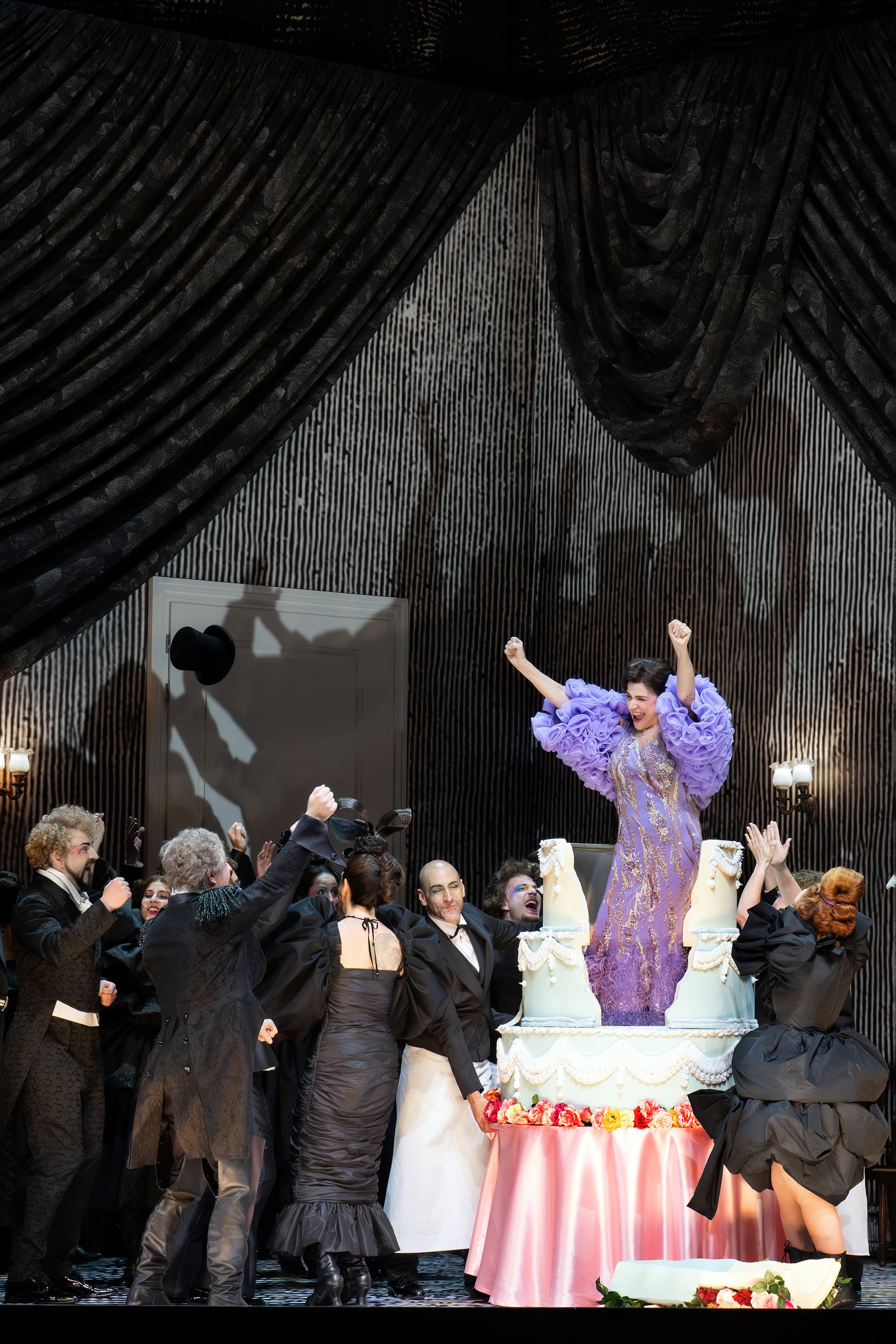
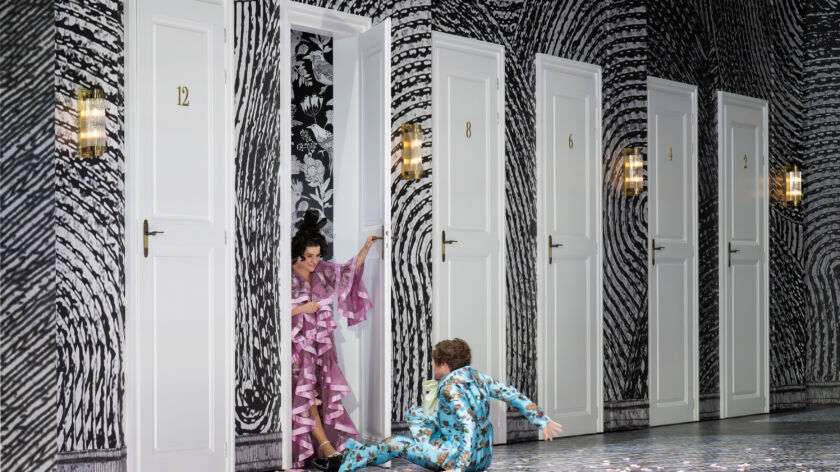
Now the Nobel hotel „Zur goldenen Lilie“ is given from the outset by the libretto. “A group of people finds itself together by chance, stranded in a hotel – the perfect constellation for comedies, as we also know from Feydeau or Buñuel,” enthuses Kosky: “Feydeau is one of my favourite dramatists, who did not work until after Rossini at the end of the 19th century, but who may be seen as one of the forerunners of what in the 20th century developed into the form of slapstick. He invented this genre of farce with its incredibly fast-paced entrances and exits, and its combination of eroticism and slapstick: people in compromising situations, unmasked lovers, people meeting for assignations in hotel rooms. This world created by Feydeau can also be found in the Marx Brothers and other comedic forms. With this production I would like to create a frenetic state – a musical intoxication in which the comic element in Rossini’s music is embodied sensuously. Naturally there are also wondrous cantabile passages, but the overall impression is of a world spinning utterly out of control.”
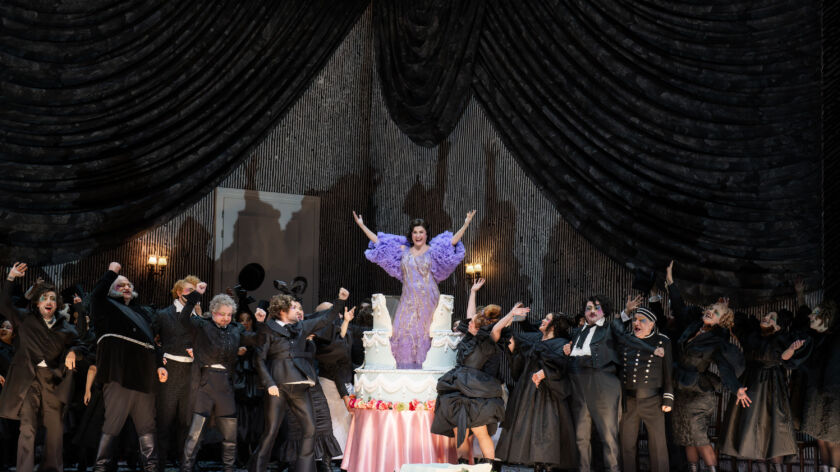
Optimal Effect. Gioachino Rossini stood in many respects between the world of the 18th and 19th centuries. As the most celebrated composer of his time, he was unquestionably regarded as an original creator. In his scores he still gave singers space for improvisation, but restricted it by writing out the ornaments in increasing detail over the course of his life. He nonetheless still reused entire parts of earlier operas when composing new ones for another city. There were no live recordings to make such self-plagiarism conspicuous; the usual time pressure did the rest. For his most famous opera, The Barber of Seville, Rossini claimed he took no more than thirteen days. He also prefaced it with an overture that had already proved its worth in at least two other operas.
Song Contest à la Rossini. In Il viaggio a Reims this was not possible, since Rossini as director of the Théâtre-Italien had already shown some of his own operas there. There is foreign material in it nonetheless, unmistakably so even to contemporary ears. To celebrate the day and themselves, the international travelling party stages at the end a kind of early Eurovision Song Contest, to which among others the Englishman contributes the British national anthem and the German music fanatic contributes what is today the German anthem – which at the time was the Austrian imperial hymn.
The newly composed material, however, was not something Rossini wanted to see disappear into a single opera that remained necessarily tied to a specific occasion. Much of it found its way three years later into „Le Comte Ory“, a French work for the Paris Opéra. Conversely, in 1848, fittingly for the June Uprising, a version not authorised by Rossini was seen in Paris, in which the hotel guests are unable to enter the city due to the workers’ barricade fighting.
Of Il viaggio a Reims itself, only a fragment of the score survived, which was not rediscovered until 1977 at the Accademia di Santa Cecilia in Rome. Once the opera could be reconstructed from it, it was essentially given its re-premiere in 1984 at the Rossini Festival in Pesaro, naturally with leading singers of the day. Since then, even smaller theatres have repeatedly tested their ensembles with it.
This is certainly also due to the openness of its form, which meets a performative theatrical understanding of the present day. Especially for directors, who are known to be just as happy to bring today’s opera audience to the barricades and who are from the outset both permitted and indeed required to add a great deal here. That Barrie Kosky can definitely do this, he demonstrated not only last year with his Vivaldi pastiche for the Whitsun Festival.