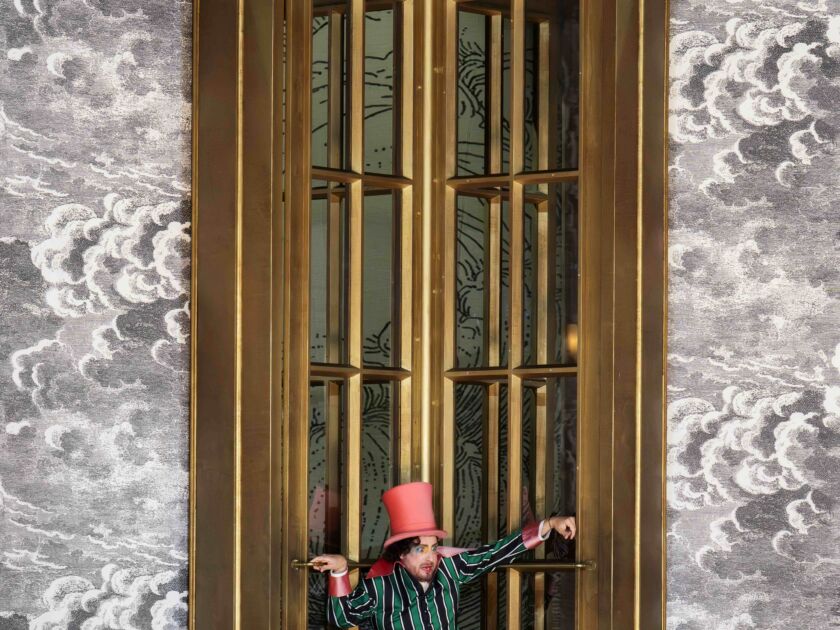
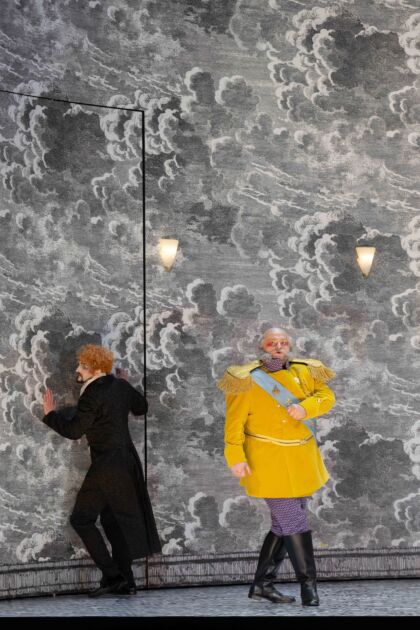
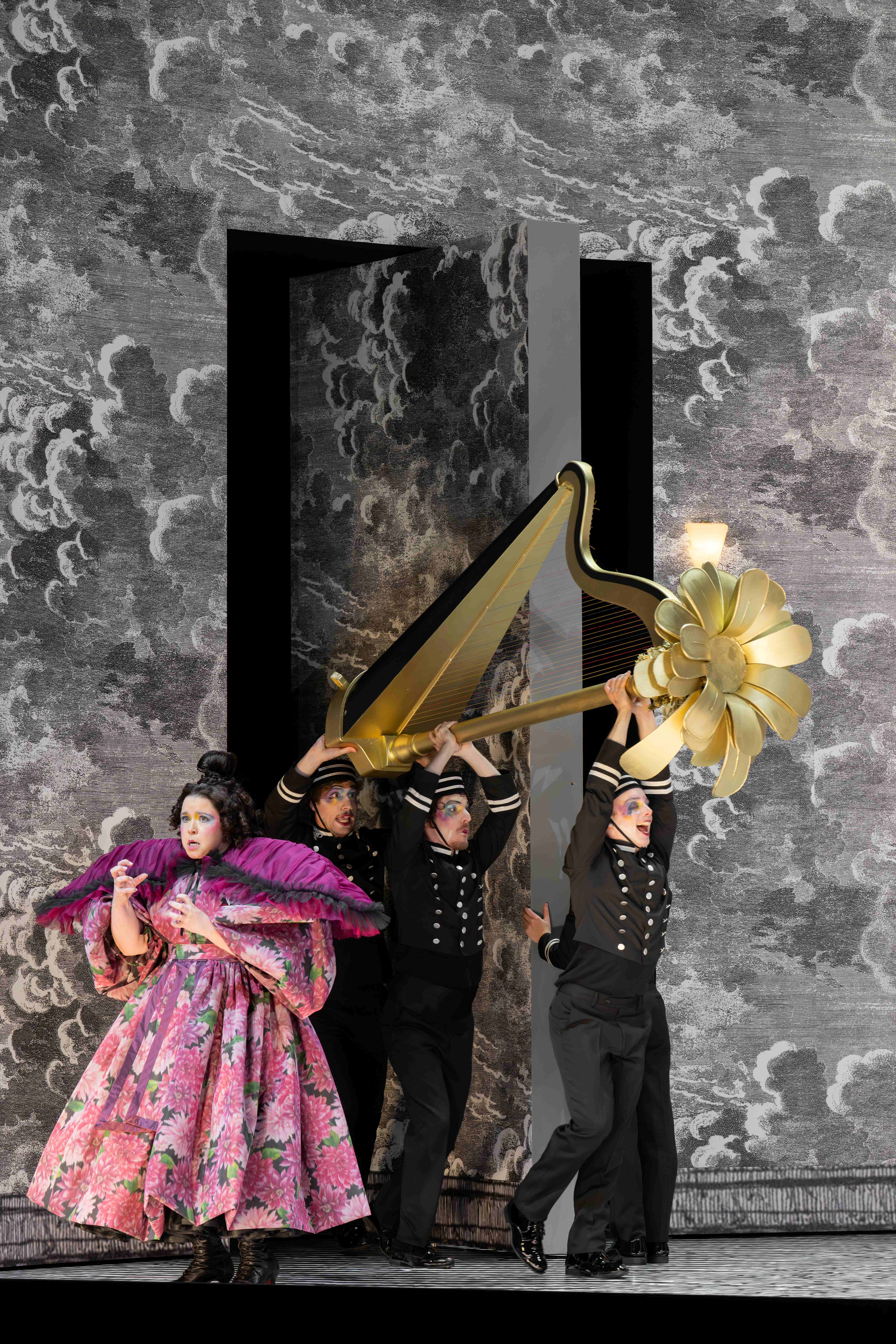
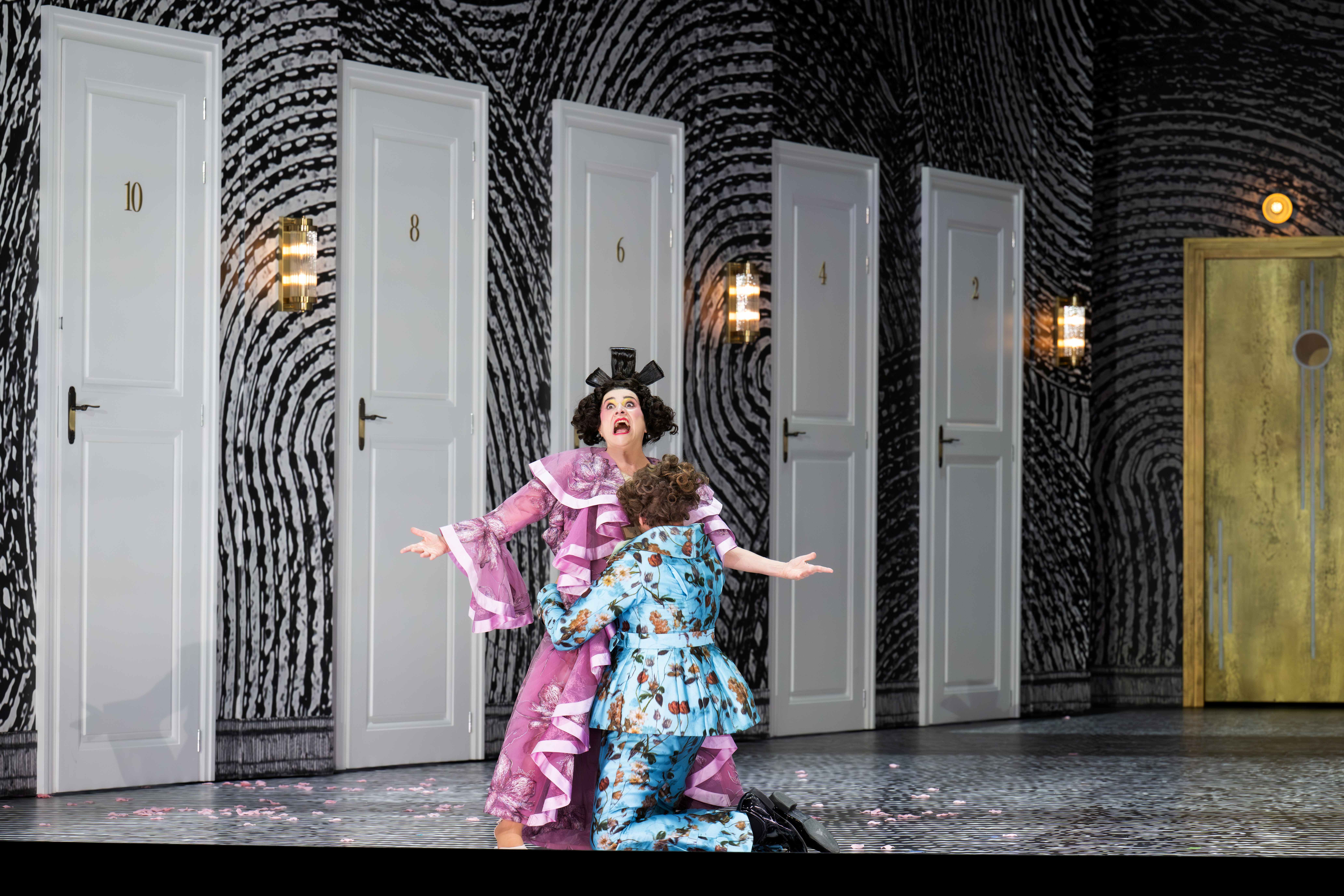
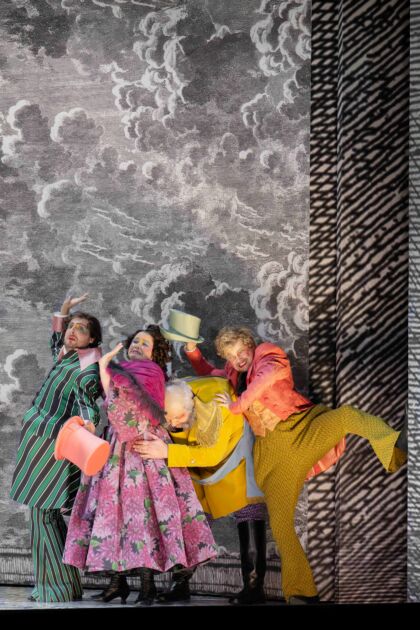
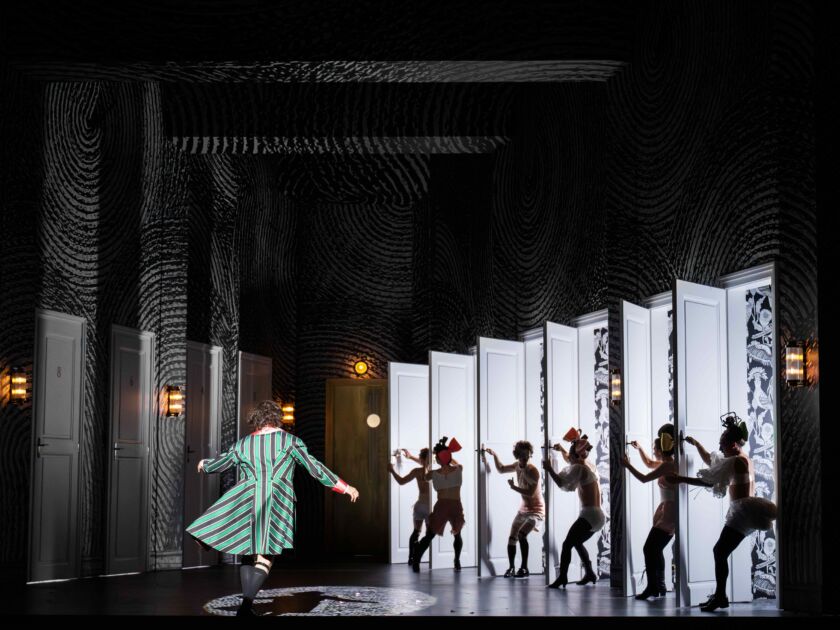
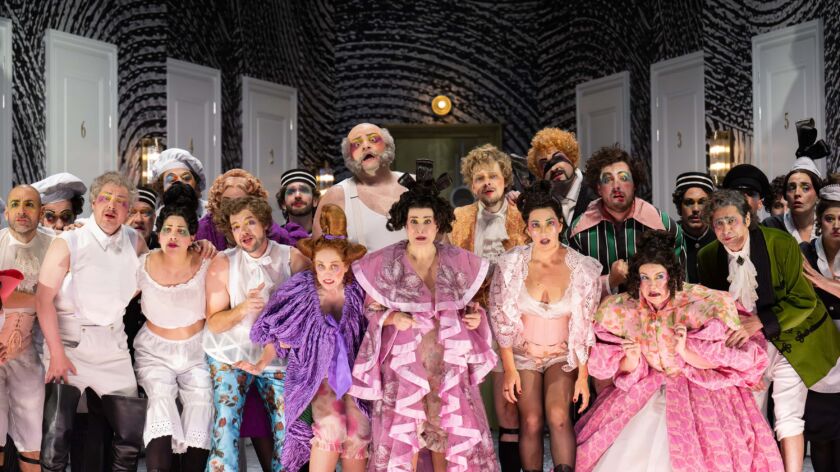
People-watching in a hotel lobby can be an entertaining pastime, especially if you encounter individuals like those featured in Rossini’s Il viaggio a Reims. All of them want to go to Reims to attend the coronation of Charles X as King of France, but since there are no horses to be found at any price, they are stuck in a provincial spa hotel. And so we are treated to a motley international parade of characters caught in a web of sympathies and antipathies, flirting and jealousy, enthusiasm and vanity, ideals and eccentricities…
Rossini composed Il viaggio a Reims for the festivities celebrating the same historical coronation that features in the opera. After the premiere at the Théâtre-Italien in Paris on 19 June 1825 and three further performances, he locked the score away in a drawer, subsequently reusing around half the music in his French opera Le Comte Ory (1828). It was not until 1977 that the manuscript – believed lost – of the parts not used in Ory was rediscovered in Rome. With the aid of other sources, it proved possible to reconstruct Il viaggio a Reims, and in 1984 this extravagant occasional work received its first modern staging at Pesaro. The opera is in many respects unusual, not least for its cast: the budget for its first performance was appropriate to the royal occasion, allowing Rossini and his librettist Luigi Balochi to devise no fewer than 18 roles, including ten demanding main roles for which celebrated stars such as Giuditta Pasta were engaged.
Il viaggio a Reims was the first opera Rossini wrote for Paris, where audiences had been crazy for his music for many years. The work is also his last Italian opera – and as an opera buffa it looks back on a genre that he had in effect left behind him with La Cenerentola (1817). Rossini and Balochi followed the razzmatazz around the French king’s coronation from the distanced perspective of foreigners, and it’s noticeable how uninhibitedly and with how much fun they approached their prestigious commission. With the guests at their hotel coming from all corners of Europe, librettist and composer were able to play extensively with national clichés. They also relished playing with the conventions of Italian opera, parodying them in both text and music – in this respect Il viaggio a Reims is also a meta-opera.
At times the comic effect arises simply from the contrast between cause and expression: when the fashion-obsessed Contessa di Folleville hears that the stage-coach carrying her festive wardrobe has overturned on the road, she clothes her anguish in words and tones that would be suited to a far more tragic event; at the arrival of a sole surviving hat she breaks out in equally fulsome jubilation. Here and in many other moments when the characters are carried away by their emotions or no longer have the situation under control, we meet the infectious ‘mechanization’ of the music that is so typical of the composer – as though it takes on a life of its own. And yet in this delirium of sound and rhythm, the humanity of Rossini’s characters always shines through.
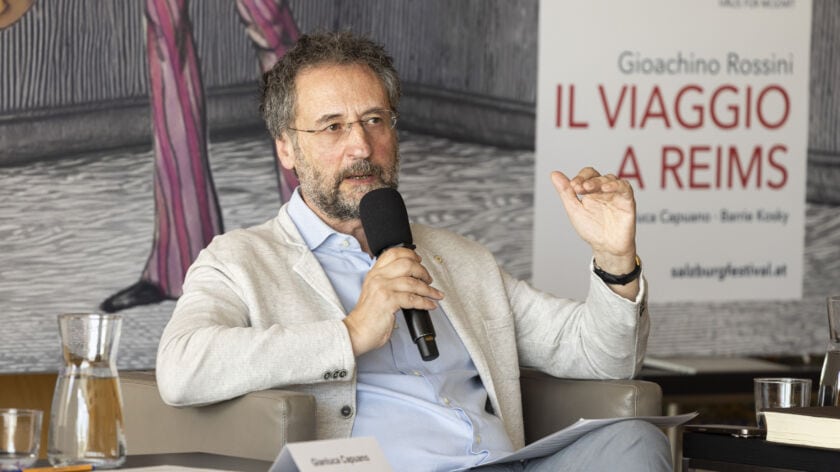
A group of people thrown together by chance and confined for a while in a limited space – this is a classic situation from which playwrights and film directors have often struck comic and absurd sparks. The fact that Il viaggio a Reims only has a minimum of external action is thus not seen by director Barrie Kosky as any kind of shortcoming – quite the opposite: for him, it is an irresistible invitation to invent additional stories. In his trunk for this production Kosky has packed plenty of Feydeauesque wit, verve and erotic slapstick. Combined with Rossini’s electrifying music, which in the ensembles above all develops an ineluctable, almost physically tangible force (Il viaggio a Reims boasts among its musical numbers a unique ‘gran pezzo concertato’ for 14 (!) voices), these ingredients promise a delirium of comedy and madness. And in the maelstroms of laughter, we can cheerfully forget that the opera was actually composed to celebrate an ultra-conservative monarch.
Christian Arseni
Translation: Sophie Kidd