The richest man in Vienna is a pretty dislikable character, at least if the impression his staff give of him is to be believed. Overbearing and ruthless, from afar he summarily overturns the musical programme for a ‘grand assemblée’ at his town house, despite preparations for the performance already being well underway backstage. To him, insulting the artists’ sense of professional pride is a trifle of such supreme unimportance that he couldn’t care less. The opera seria Ariadne auf Naxos, composed specially for the occasion by an up-and-coming composer hoping to make a name for himself, is for him merely one of the postprandial ‘entertainments which promote digestion’, on a par with fireworks or dancing. Best to make it brief, or even better, combine it with an opera buffa, to avoid the risk of boredom.
It’s no coincidence that this excoriating portrait of an ultra-rich philistine who is represented only by his arrogant lackeys recalls the snobbishness skewered by Molière in his comedies. The first version of the opera Ariadne auf Naxos had been developed by Richard Strauss and his librettist Hugo von Hofmannsthal as a part of their adaptation of Molière’s Le Bourgeois gentilhomme. However, this mixture of straight theatre and music theatre did not go down well with the audience when it premiered at the Stuttgart Hoftheater on 25 October 1912.
And it was precisely Hofmannsthal and Strauss’s sense of professional pride that was aroused by this debacle. Accordingly, they replaced Molière’s comedy with an operetta-like ‘Prologue’ with the speaking parts reduced to one role, though retaining the ironic tone and mannered content in their new depiction of the complications surrounding the musical banquet at the plutocrat’s mansion. The opera’s second version was staged at the Court Opera in Vienna on 4 October 1916.
The somewhat hysterical Prologue, in which overwrought artistic personalities collide at a brisk comedic tempo with folk-theatre bawdiness and snide Viennese humour, was translated by Strauss into a buoyant, light-hearted parlando style. By contrast, the festive ‘operatic performance’, combining the Ancient Greek story of Ariadne with the fictitious comedy Die ungetreue Zerbinetta und ihre vier Liebhaber (The fickle Zerbinetta and her four lovers), is more or less classical in its compositional approach, celebrating the triumph of high culture through numerous references to the music of previous centuries.
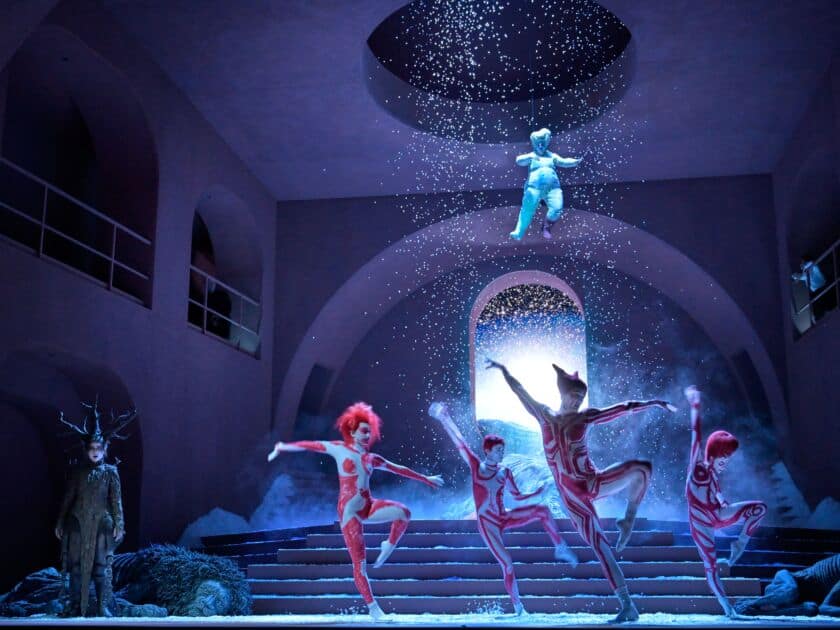
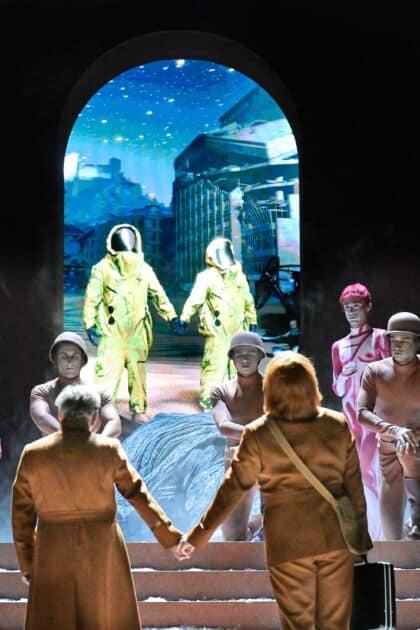
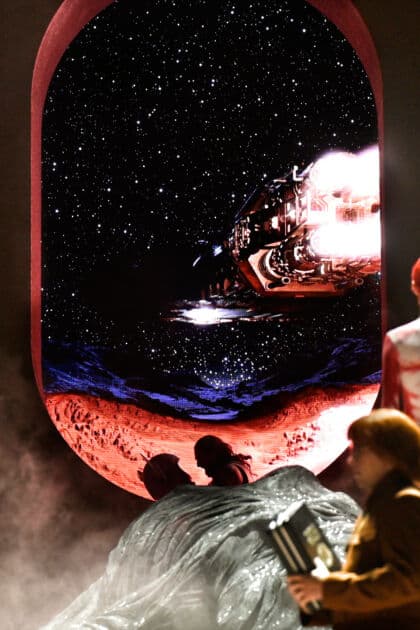
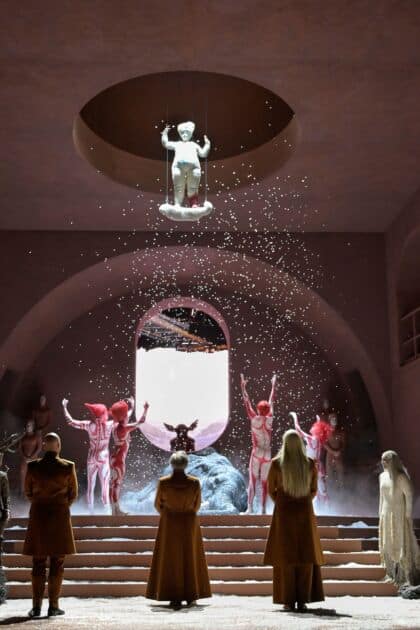
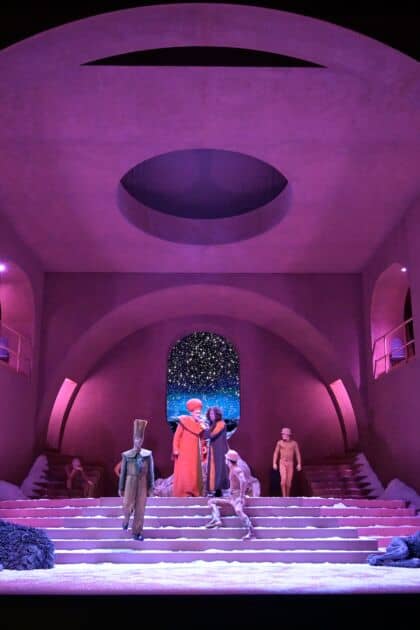
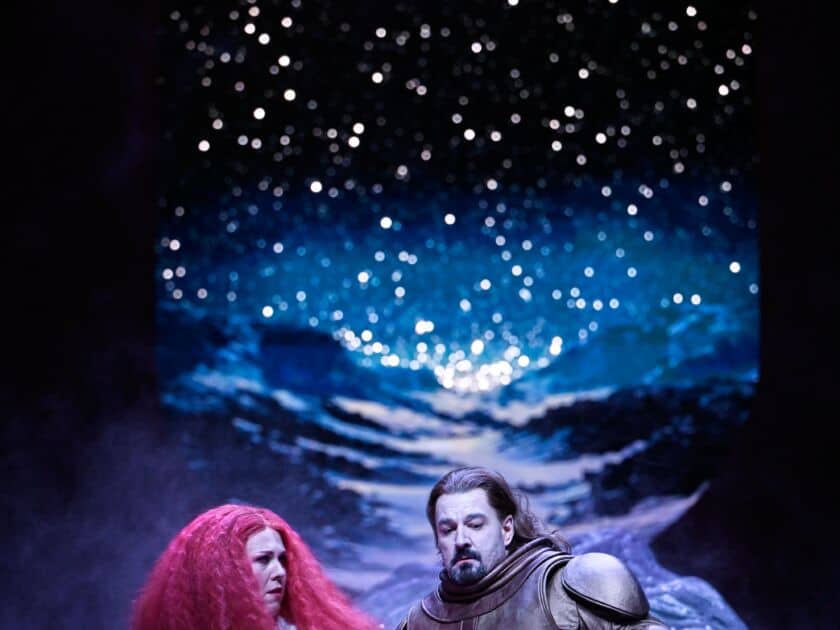
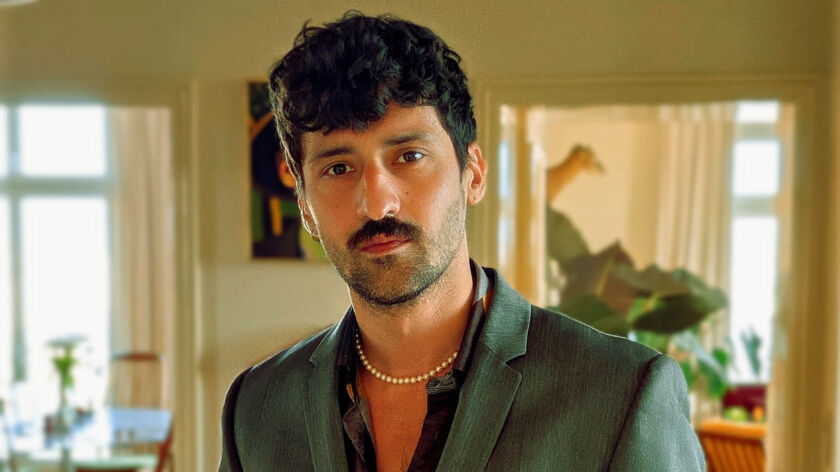
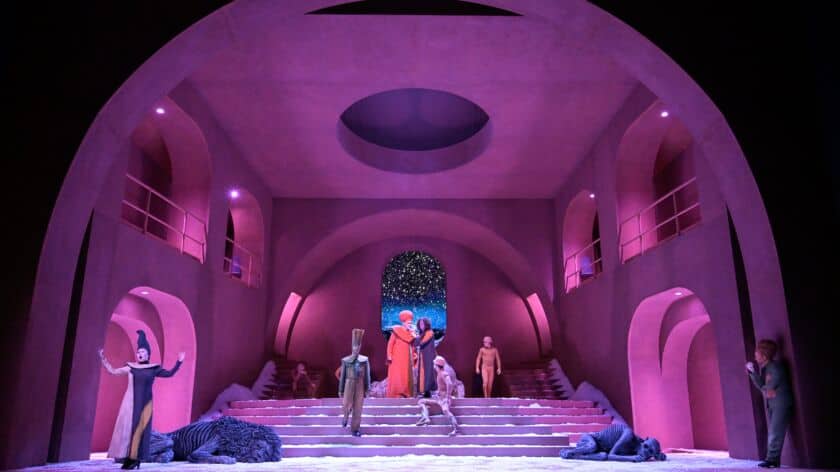
In relocating this parody of the wealthy phoneys of the Vienna Ringstrasse to the present, director Ersan Mondtag, here making his Salzburg Festival debut, launches into galactic space. Mars is where the richest philistines of our time would really like to hold their banquets, a place where only the super-elite can follow them, and where those who create art rank even below the most menial of the household servants, as freelance toilers, mere sonic confectioners of a musical dessert course.
On this barren planet, the ‘barren island’ of Naxos – where in the second part of the work the encounter between Ariadne and Bacchus takes place – is a silent metaphor for modern ruthlessness. Men who can afford to buy anything lay waste to their home planet with their rapacious business dealings, just as the Greeks denuded their verdant islands to build warships in order to plunder Troy. Afterwards, the victors abscond with their spoils to places that only they can reach and inhabit, as does Bacchus, when he takes Ariadne along with him on his journey to Olympus.
For the egomaniac masters of monetization, it’s just a short hop from one barren wasteland to another. And their futuristic scheme of escaping into space actually has a strong connection with the myth of Ariadne. The true saviour of the Cretan princess, the supplier of Ariadne’s ball of thread, was Daedalus, the first human being to fly, and thus ‘patron saint’ of space travel. Following her death, Ariadne herself will be immortalized by her divine spouse as a constellation in the firmament. And it’s there that the hermetically sealed palaces of the capitalist gods will soon be standing. In their sumptuous sandcastles, Strauss and Hofmannsthal’s farce about the Viennese bourgeoisie can play out anew. Though the concluding fireworks may well be of a very different kind.
Till Briegleb
Translation: Sophie Kidd