Of Love and Duty
Even without costume and mask, operas can unfold their very particular power.

Whenever presenters offer opera in concert form, the question of meaning is often raised: a concert remains a concert, and opera remains opera only when not deprived of its scenic component. But experience teaches otherwise: musical-dramatic works often unfold their full musical magic precisely when listened to in peace, without being distracted by action on the stage. Much of what is gestural in quality, of "direction of performers", so to speak, is also audible. Exploring this, without having to forgo the live experience, can open doors to a deeper musical understanding.
Double Play. Especially when new music is involved, as in the case of the first concert production of this year’s Salzburg Festival on 23 July in the Kollegienkirche: Pascal Dusapin’s Passion, which has little to do with the Passion settings familiar to us, but is a complete reinterpretation of the ancient Orpheus myth – a myth, that is, with which our operatic history once so properly began.
Unlike in Monteverdi or Gluck, who also have quite different versions of the mythological narrative to offer, in Dusapin’s version we encounter the singer and his Eurydice – this time they are simply called “Him” (portrayed by Georg Nigl) and “Her” (Sarah Aristidou), supported by a chorus (“The Others”, sung by the Schola Heidelberg), in a completely different dramaturgical context: “She” is simply not willing to follow “Him” at all, and “He” therefore need not turn around to motivate the retreat to the underworld. The layers of feeling and the gently glimpsed quotations from earlier “Orpheus” settings make Dusapin’s work a sonorous puzzle – one may close one’s eyes so as not to miss a single nuance …

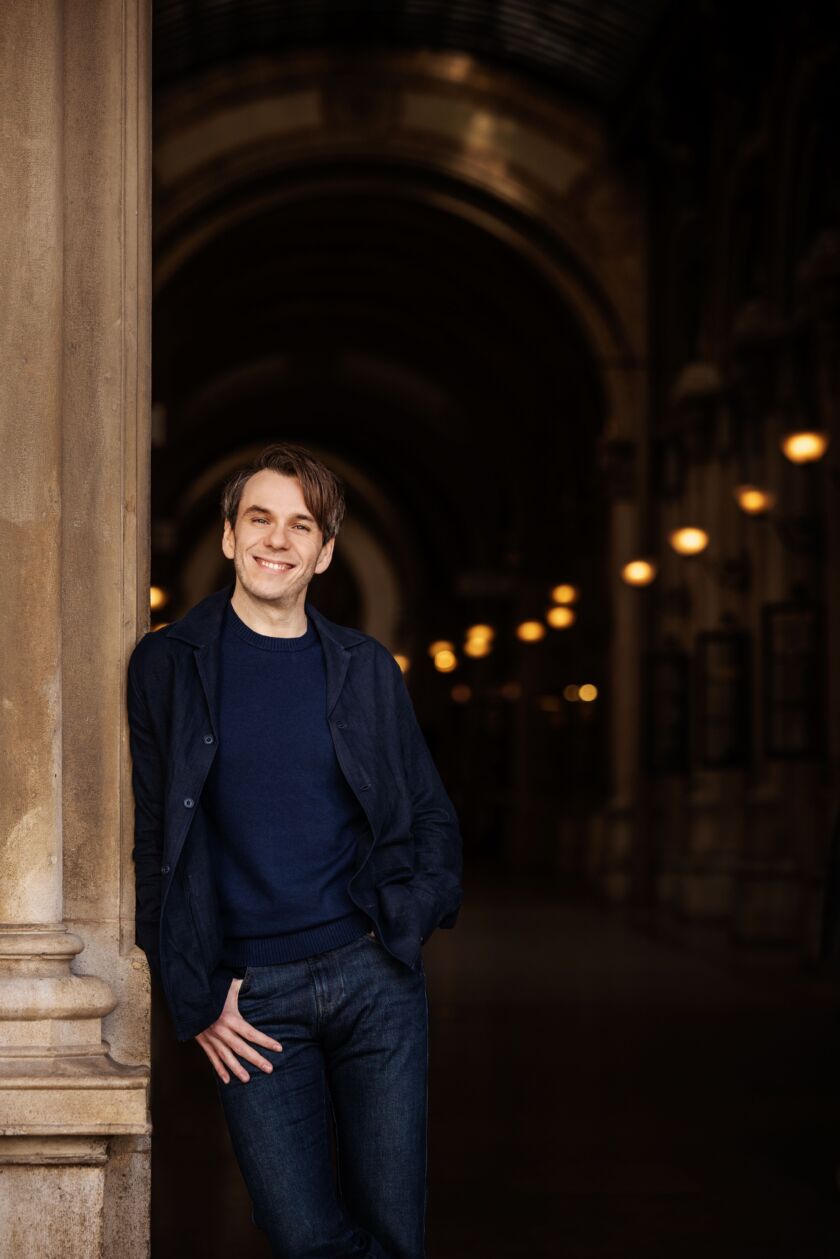
Tragic Triangle. This may also work wonders in the case of a much-played masterpiece of French opera: with Jules Massenet’s Werther, strict critics are on hand with dismissive remarks – after all, it involves an adaptation of a Goethe novel. In German-speaking countries one readily speaks of superficiality. Though this perhaps becomes prohibited when one tries only by listening to detect the fine character sketches of the French master. After all, Benjamin Bernheim has praised Massenet for how much “poetry” inheres in his music and “how much beauty I can express there”. The figure of Werther in particular has captivated the tenor from Alsace: the role is “sad, depressive, melancholic” – above all because this Werther is an “misunderstood” man, someone who cannot make himself comprehensible to his surroundings. And that despite being “extremely cultivated and highly educated”. On 29 July and 1 August in the Großes Festspielhaus, Adèle Charvet will be the “wrong woman at the wrong time” (Bernheim on Charlotte). The orchestra of the Brussels Théâtre Royal de la Monnaie performs under Alain Altinoglu.
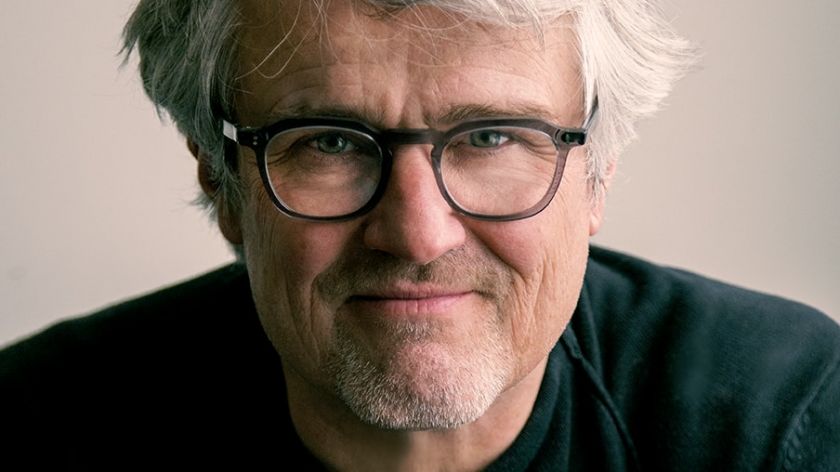
Against Blind Obedience. A work of the 20th century rounds off on 20 August the offerings of concert performances in the Felsenreitschule: Hans Werner Henze’s Der Prinz von Homburg, which arose at a precarious moment in recent musical history, as a response to the rigid laws of the then avant-garde. Here too one might for once manage without stage sets and costumes; it is worth listening in when Ingeborg Bachmann “condenses” Heinrich von Kleist. Especially with Georg Nigl, a Prince Friedrich stands before us who is as celebrated for his clarity of diction as for his intense vocal artistry. When he philosophises on immortality or on life, death, and the path of human beings “From two spans this side of the earth to two spans below it” …
Text: Wilhelm Sinkovicz
First published on 16.05.2026 in Die Presse Kultur Spezial: Salzburger Festspiele