“The privilege of a solitary life”
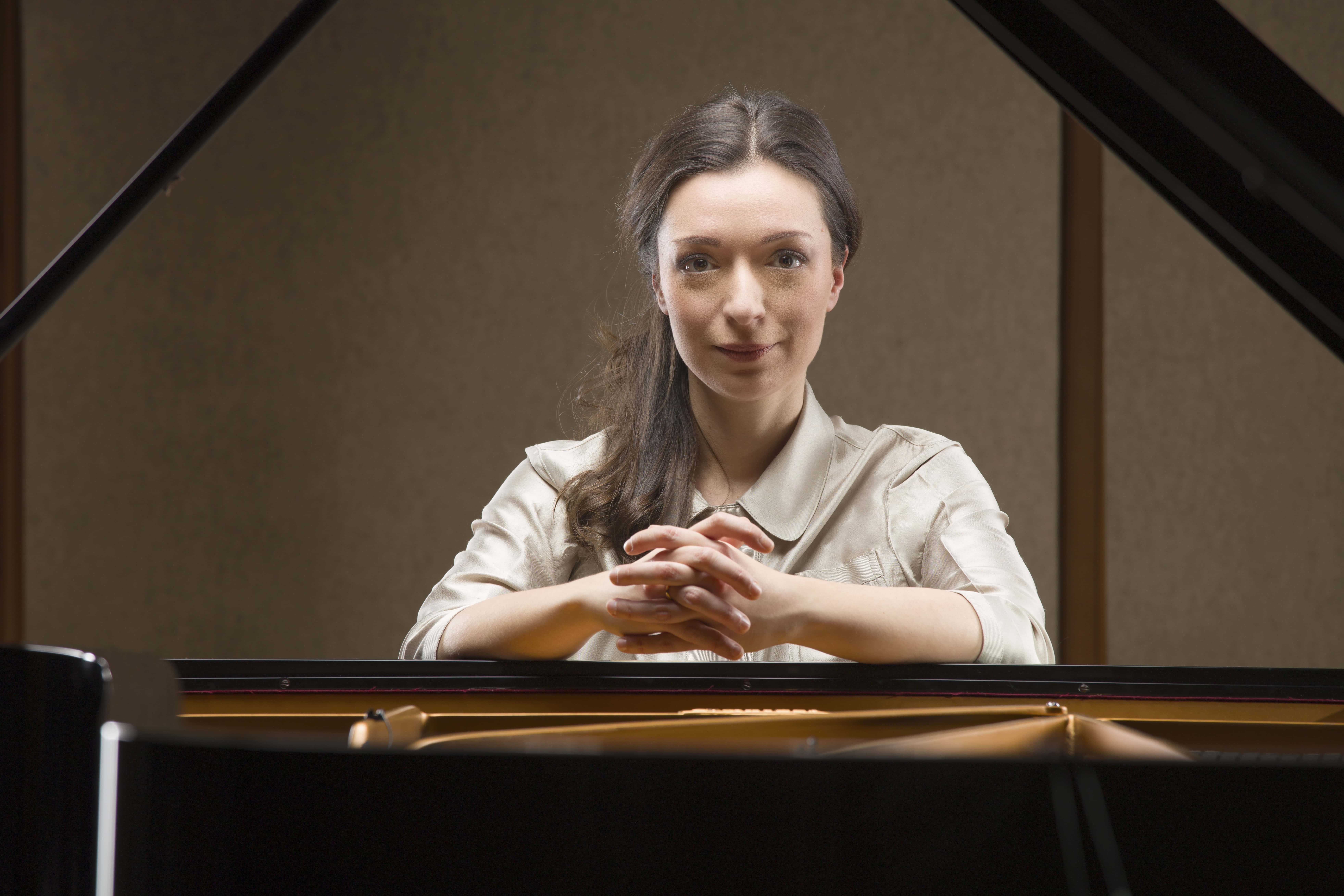
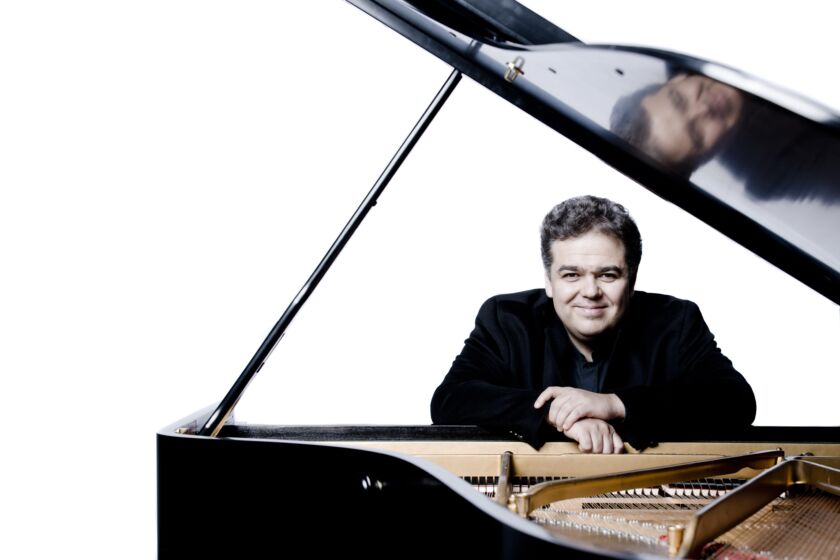
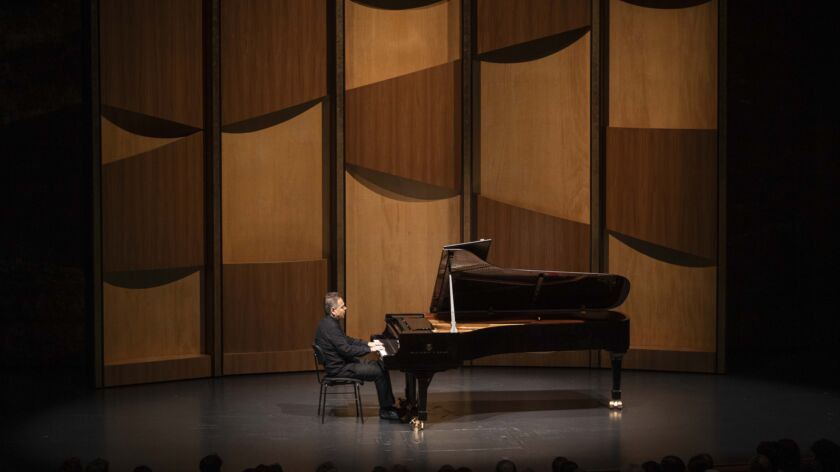
Arcadi Volodos, a Festival artist since 2002, offers insights into the development of his career in this rare interview, describing his views on Schubert and Chopin and extolling his special connection with the Salzburg audience.
You initially studied singing and conducting and it was only at a relatively late date that you started out on a career as a pianist. What inspired you to make this move?
Arcadi Volodos: In my own case, you know, there was never this story of a “child prodigy” glued to a piano from the age of three. This all came much later. And above all it was an entirely natural process. When I was a child, no one thought of me as especially talented and I had no idea where my journey might take me. My very real passion for the piano was not awakened in me until a relatively late date.
And today I am really happy that everything happened as it did. With the passing years I have come to realize that my childhood was not stolen from me. I grew up like any normal child and experienced all of the important stages in a child’s development. My life was subjected to no rigid timetable or to any stifling sense of discipline, as is often the case with child prodigies.
Ultimately it was I myself who decided on my career as a soloist because for me it means the privilege of a solitary life. A conductor is always dependent on lots of other people and he or she has to rely on them. A pianist, conversely, is his own master. I combine the conductor and the whole orchestra in one and the same person. This freedom and the chance to be honest with myself in silence are worth it because I have achieved all of this in my own way, even if that journey was not as short as it might have been.
Your concerts, including this summer’s recital in Salzburg, often feature music by Schubert. Do you have a special relationship with him as a composer? And what is it that
makes his music so distinctive for you?
I’ve often been asked this same question and, to be honest, I don’t know how to answer it. More especially, I really don’t want to know the answer. Herein lies the secret for me. Schubert’s music is pure emotion and requires no explanation. What matters here is very much the “vast expanses” of which Schumann once wrote, when time stands still and you find yourself in a space where there are no clocks or watches but just an indescribable feeling of being alive.
This summer you will also be playing works by Chopin. How would you rate Chopin both personally and in terms of piano music in general?
It was with Chopin that my love of the piano began: his scherzos, studies, ballades and sonatas – I played them far too often and perhaps also far too soon. When we are young, we often view this music through the prism of spontaneous Romanticism without really being aware of its true depth.
Chopin’s role in the history of piano music is immense and the same is true of his contemporary, Liszt. They both increased the possibilities of the instrument and invested it with an infinite potential, though they did so in very different ways. While Liszt brought a new and greater power to the piano so it sounded like a full symphony orchestra, Chopin found his own unique approach, which can be compared to no other They both coined a completely new word in music: before they came on the scene, no one had made the instrument sound quite like they did.
You yourself have prepared transcriptions of pieces by various composers. And some of your colleagues are also composers in their own right. Is this an option for you too?
For me the art of transcription is far closer to the art of improvisation than it is to the art of composition. I have never deliberately produced any transcriptions. These have always come into existence entirely spontaneously and extremely quickly. It was as if they were emerging from within me of their own accord.
This is the reason why I have never set them down on paper. For me, their greatest appeal has always been that I play them differently each time. I like taking up a musical idea and finding a new form of expression for it each time that I return to it. There are no limits to this search and as soon as the notes are committed to paper, this freedom disappears.
You have given only solo recitals for some time now and no longer perform with orchestras or with chamber ensembles. Why did you decide to do this?
The decision to stop performing with orchestras and to limit the number of my recitals was one of the best I have ever taken. Music has nowadays acquired the characteristics of an industry. With only two rehearsals it is difficult to reach a genuine understanding with the conductor and with the orchestra. Everything happens so quickly: you have to prepare the programme straightaway, you’re told to turn up for a rehearsal at nine in the morning “in order to work through everything as quickly as possible”, and the concert takes place the very next day. This isn’t my way of understanding music. I prefer to immerse myself in the music. In the case of a solo recital I have far more freedom in my choice of tone colour, tempo and rubato. In short, the freedom of expression bears no comparison to what one feels when performing with an orchestra.
This summer will mark your seventeenth appearance at the Salzburg Festival. How would
you characterize your feelings about the Festival atmosphere and about the Salzburg public?
The most important thing about my contact with the audience is that they have to understand the need to listen in silence. Their reaction when you come out on to the stage, to say nothing of all their applause and their enthusiasm, has practically no significance for me. Far more important is the atmosphere when you are actually playing. This is why I really enjoy performing in Salzburg. Here there is always a very special, electrifying silence in the hall – it’s often so intense that you can hear even the quietest whisper.
When you look back on your own career, what advice would you have to offer young
pianists as they set out on their own path in life?
Perhaps the most important thing is not to lose sight of a certain attitude to art, an attitude that used to be entirely self-evident. Today this tradition is slowly being lost. For the great master musicians of the past music was never a profession or a means of earning a living. I do not believe that music exists so that it can adapt merely to suit the age but that it should rise above that age. When a musician walks out on to the platform, then there is a certain sense in which he or she mediates between our own world and something that lies beyond that world’s limitations.