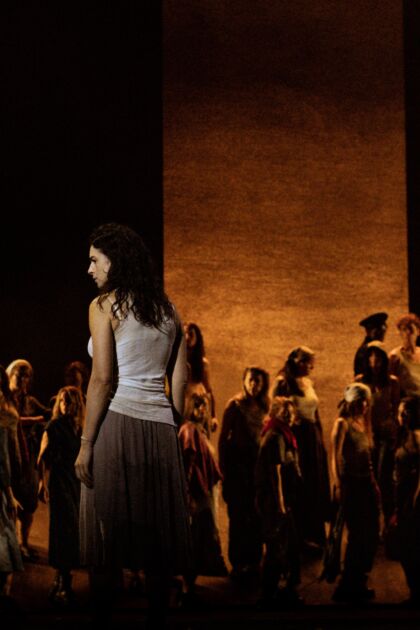
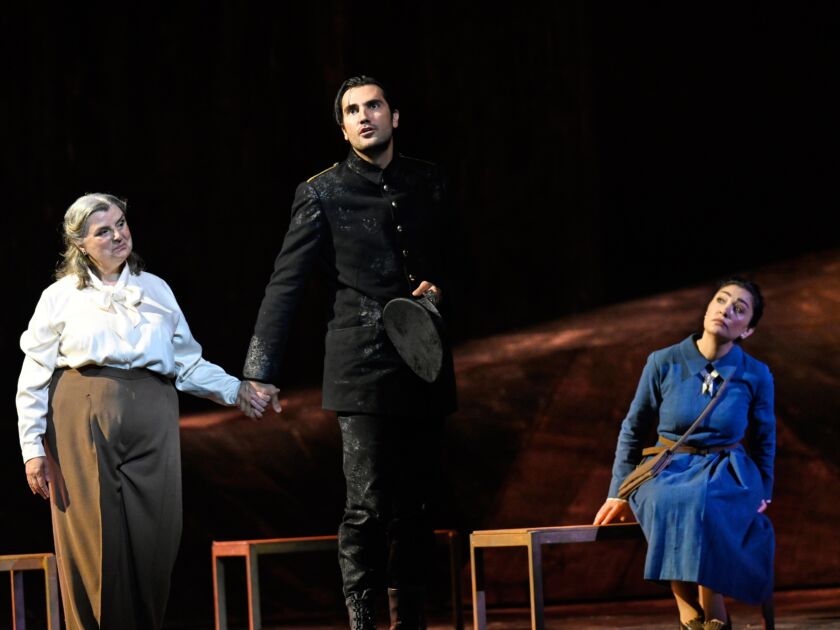
‘Who knows of what demon I was about to become the prey!’ A kiss from his mother, delivered by the young Micaëla, and the memory of his home village have saved Don José just in time. The ‘demon’ he alludes to is the woman who provocatively tossed a flower to him shortly before – not to one of the many men that were eagerly expecting her, but to him, an unknown officer, the only one who has not paid her any attention. José immediately senses the power that Carmen has over him. He will fall for her, with every fibre of his being, deserting and becoming a criminal just to be near her. And when she turns away from him and begins an affair with the bullfighter Escamillo, he will kill her.
The fascination Carmen possesses is closely bound up with her uncontrollability. This is most clearly evident in the right she claims to freely choose and discard her partners: love is to be enjoyed but not forced or held onto. For José, on the other hand, love must be everlasting; it is possessive and jealous – being deprived of or challenged for it humiliates his ego, and provokes violence. Carmen’s aggressively flaunted sexual independence was viewed as offensive, even scandalous, by the bourgeois morality of the 19th century (and beyond). The audience of Paris’s Opéra-Comique, where she appeared on stage for the first time in 1875, only accepted such a protagonist because as a ‘gypsy’ and social outsider she was firmly located in a radical otherness. That made her even more dangerous, imbuing her with the potential to create seductive and disturbing counter-images – to models of how life should be lived, to conventions and social constraints.
When José – stripped of his rank for having saved her from imprisonment – seeks out Carmen in Act II of Bizet’s opera to receive his promised reward, she plunges him into a fresh dilemma. If he truly loved her, she says, he would no longer heed the summons to barracks but follow her, and ‘over there in the mountains’ surrender to ‘that intoxicating thing’ called ‘freedom’. Carmen opens up perspectives that skew familiar co-ordinates – whether they are the longing for security and status, the precedence of the future over the present, belief in a hierarchical society or the need for clear limits and unequivocal identities.
In Prosper Mérimée’s novella Carmen, the opera’s literary source, José himself is the narrator of his story. On stage, Carmen was by necessity given her own voice; nonetheless, she reveals hardly anything of her inner life. Whereas Bizet gave José’s music the quality of passionate and increasingly aggressive expression of emotion, in Carmen’s music he integrated Spanish and ‘gypsy’ idioms alongside popular music of the time. But where does Carmen merely play with roles, and where does she reveal her true self? Switching rapidly between giving and withholding herself, she is like light that cannot be grasped.
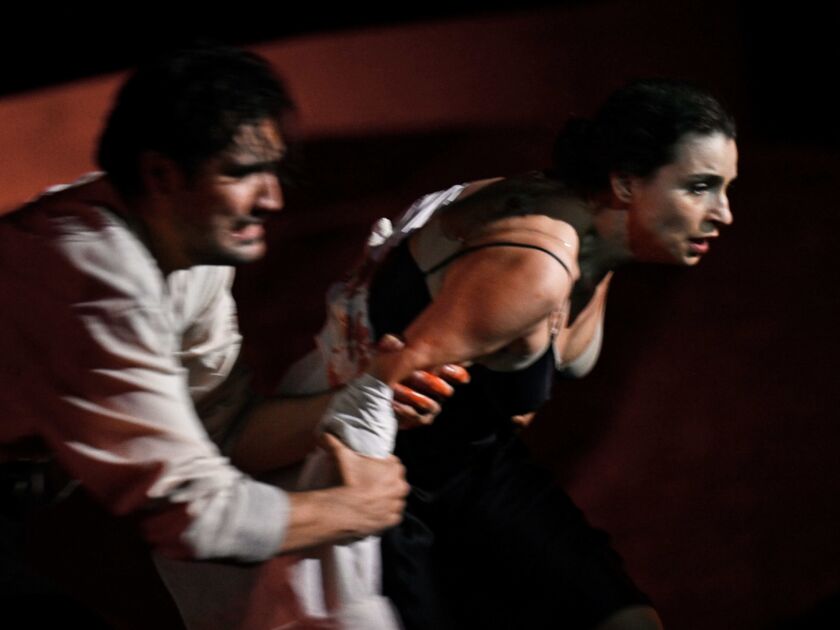
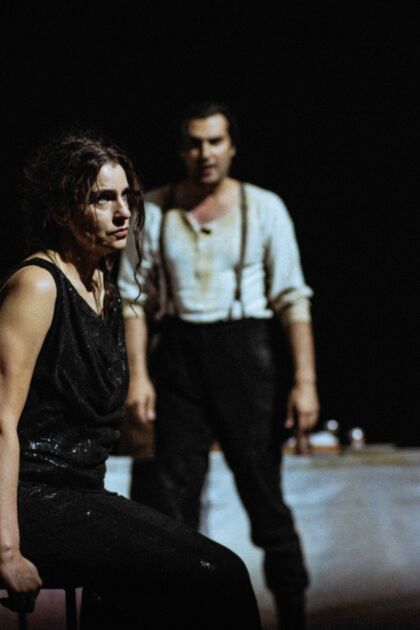
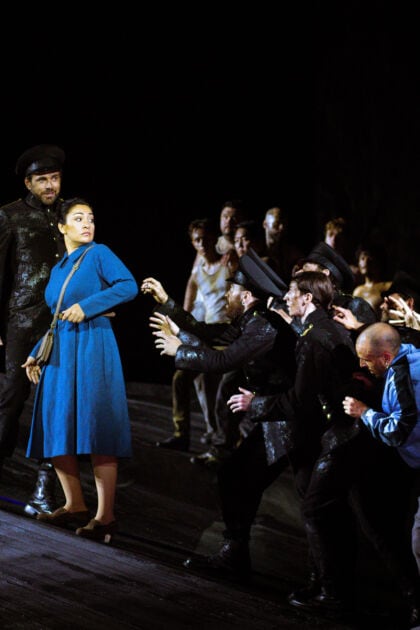
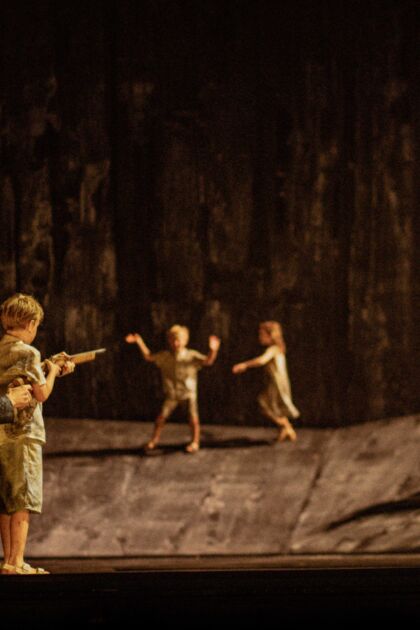
In her production, director and choreographer Gabriela Carrizo sets out to explore the identity and motives of this quasi-mythical woman, focusing on the perspectives of both Carmen and José. As in her creations for her Peeping Tom dance theatre company, notable for their intense physicality, multilayered meanings and poetic power, she zooms in on the psyche and unconscious of the characters. Beyond depicting a fatal relationship, Carrizo is intent on making palpable the part played by the protagonists’ context in the story’s dynamics and tragic outcome. What are the roles of family ties – above all José’s relationship with his mother – and of the two characters who do not appear in Mérimée’s novella: Micaëla with her ‘respectable’ femininity, and Escamillo with his strident virility? And finally, how much is determined by the various social groups – from which José remains essentially as alienated as Carmen? Bizet’s opera is also a story about encountering difference (in others and in ourselves), about whether we perceive it as enriching or threatening, and how we deal with it.
Christian Arseni
Translation: Sophie Kidd