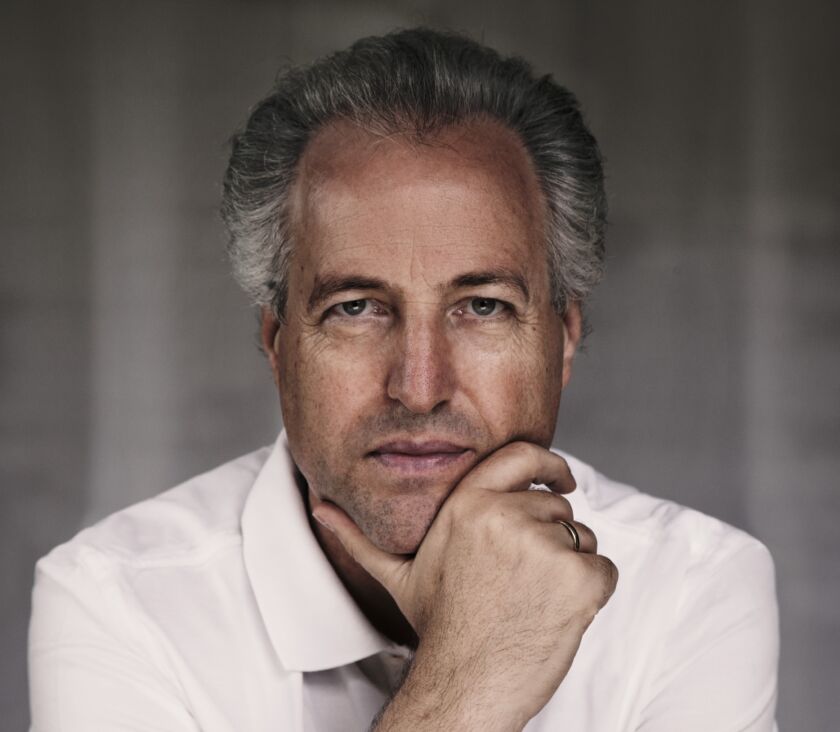
Manfred Honeck in conversation on Richard Strauss and Ariadne auf Naxos
and what he passes on to young conductors.
Fromm Richard Strauss to Manfred Honeck:
Ariadne auf Naxos was the first opera by Festival co-founder Richard Strauss to be performed at the Salzburg Festival – exactly 100 years ago. The composer also conducted the performance on 21 August 1926.
In 2026, Manfred Honeck will conduct the Vienna Philharmonic. Elīna Garanča will make her debut in the title role. Ersan Mondtag makes his Salzburg directing debut.
Manfred Honeck has been conducting at the Salzburg Festival since 2000. Since 2021, he has served as the jury chairman for the Herbert von Karajan Young Conductors Award. In 2026, Manfred Honeck will be prominently featured at the Salzburg Festival, filling three separate roles:
He will conduct the new production of Ariadne auf Naxos. He thus follows Richard Strauss, who conducted his work at the Festival exactly 100 years ago. He appears with the Pittsburgh Symphony Orchestra at the Großes Festspielhaus on 27 August – the native of Austria has served as the orchestra’s music director since 2008. His work chairing the jury of the Young Conductors Award is also dear to his heart. On 17 August, the previous year’s winner, Christian Blex, will conduct the ORF Radio Symphony
Orchestra in the Prize Winner’s Concert.
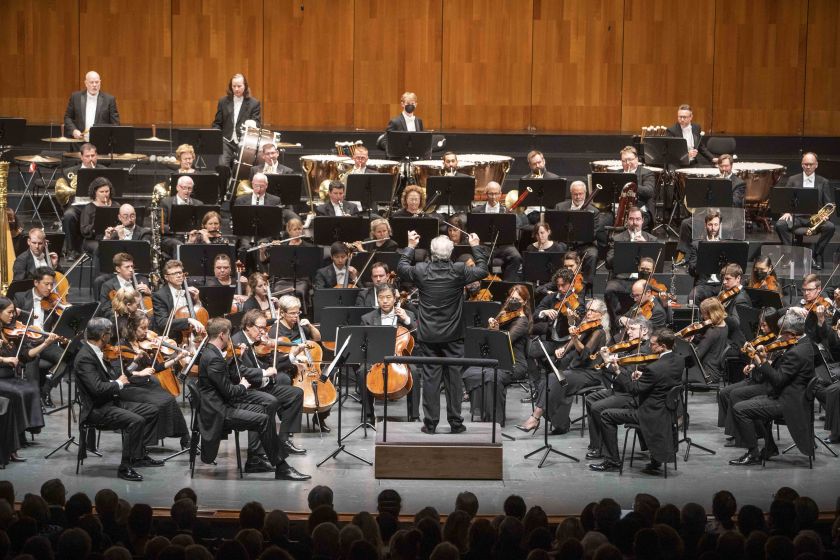
In conversation with the Salzburg Festival, Manfred Honeck offers insights into his perspective on the music of Festival co-founder Richard Strauss and the special challenges of Ariadne auf Naxos.
Salzburg Festival: If you were to describe Richard Strauss‘ music to someone who has never heard or come into contact with it, how would you try to convey the character of the music to such a person?
Manfred Honeck: Rich in colour, sumptuous and delicate. It pays attention to the various characters. I would recommend listening to the tone poems first and only then delve into the world of the operas. I think that is a good start for those who are not so familiar with Richard Strauss. His melodies and inventiveness are amazing.
SF: Let’s talk about Ariadne auf Naxos: for the second version of the work, Molière’s play Le Bourgeois gentilhomme was replaced with a composed prelude. How would you characterize it?
Manfred Honeck: Basically, the prelude is one big recitative in which the individual characters – along with their petty jealousies, enmities and ambition – are very clearly portrayed by Richard Strauss in his music. Kate Lindsey in the role of the composer as well as Elīna Garanča as Ariadne are ideally cast. We consciously tried to enable these little subtleties and nuances derived from the language to be optimally implemented. At the Haus für Mozart, that is an important consideration.
SF: The opera combines serene, comical elements with serious aspects. How do you view the role these contrasts play?
Manfred Honeck: I think these various attributes enrich the proceedings – you can’t always be sad, and being cheerful all the time is also boring. I think this art of nuance and differentiation is very well executed in Ariadne. There are parts that are almost operetta-like, that you could sing along when you leave the opera. Then there are moments that delve deeply into Greek mythology, where you can feel that this is grand opera. The duality of opera seria and comedy is fundamentally inherent in Ariadne – let’s not forget that in the story, the richest man in Vienna demands that comedy and opera seria take place
simultaneously – a great challenge for the composer.
SF: Does that imply special challenges for you as a conductor, compared to other works?
Manfred Honeck: Indeed it does: we must not forget that Richard Strauss also composed
Salome, Elektra and Der Rosenkavalier. Here, he reverts to a smaller orchestra: the strings
are quite reduced. The winds – flutes, oboes, clarinets, bassoons, trumpets, two horns – are
also somewhat reduced, but you find all of them in a classical orchestra setting. There’s a bit
of percussion, one trombone – it’s more of a chamber orchestra, really. The surprising thing,
however, is that this music sounds at times as if it were performed by a full orchestra, with
an opulent sound. Why? Strauss had mastered the art of doubling certain melodies in
certain instruments, creating the illusion of a large orchestra playing. I find it endlessly
fascinating how Strauss produces such a rich palette of colours, even with a smaller
orchestra. That is very typical for Ariadne.
SF: If you look at the opera’s roles – two major soprano roles, each of them embodying a different concept of love and a different connection with it: would you say that these differences between Ariadne and Zerbinetta are also reflected in the music?
Manfred Honeck: This is something Strauss does very clearly. Zerbinetta is the one who loves freedom, who could love any man, and you can tell: this coquettish manner in which Strauss has composed it – those are difficult coloraturas he has devised, something Ariadne does not have in this form. Ariadne’s lines are one of a piece, her melodies tend to be somewhat broader and courtlier. The contrast could not be clearer. Nor should one forget that Ariadne has been abandoned on this island in the midst of a profound depression and is close to death, and that Bacchus liberates her, so to speak. She cannot be like Zerbinetta. Zerbinetta does not have this past and this death-wish; she wants to live, and you can hear that incredibly clearly in her coloraturas.
SF: Do you have a special moment, a favourite spot in this opera?
Manfred Honeck: I would say that my favourite spot is probably the end – where the whole thing is close to dissolution and goes from ruins to hope and a world of love and peace, where Bacchus and Ariadne form a unit. To me, that is a great moment and never fails to uplift me. Nor should one forget the first part, the prologue. The prelude is designed as a recitative, and the subject of that conversation is: what will this opera be like, will all this work out? Many spoken words – those too are great moments in which Strauss illustrates the fear of the artist, of the composer: how will I ever manage this? Perhaps there are also vanities, then again friendships – it’s all very audible in the prelude. Those are also moments where I have to say: he could not have found a better solution than this.
I was fortunate to have played Ariadne very frequently, with different conductors and casts, at the Vienna State Opera when I was still a violist, and I grew enormously fond of it. This is chamber music of the highest calibre, and for each role, you need singers who are able to act with considerable virtuosity. I can remember Jessye Norman as Ariadne or Edita Gruberova as Zerbinetta. Our cast will be no less stellar. It’s a fantastic cast.
To me, it’s also a great event because Ariadne was the first opera by Richard Strauss to be performed at the Salzburg Festival. It wasn’t Der Rosenkavalier, Elektra or Die Frau ohne Schatten – it was, indeed, Ariadne, and to me it’s just a beautiful thing that the Vienna Philharmonic plays in Salzburg year after year. Another aspect making this special to me is that it’s my brother’s last year as concertmaster of the Vienna Philharmonic.
SF: In addition to Ariadne, you will also conduct a concert at the Festival.
Manfred Honeck: Yes, I will be on a grand European tour with the Pittsburgh Symphony Orchestra, and of course the Salzburg Festival is a must. I am looking forward to Shostakovich’s Fifth Symphony, and the pianist Alexandre Kantorow will play the solo in Rachmaninov’s Rhapsody on a Theme by Paganini. It is a great joy for me to go on tour with this fantastic orchestra, and to perform in Salzburg at the Großes Festspielhaus on 27 August.
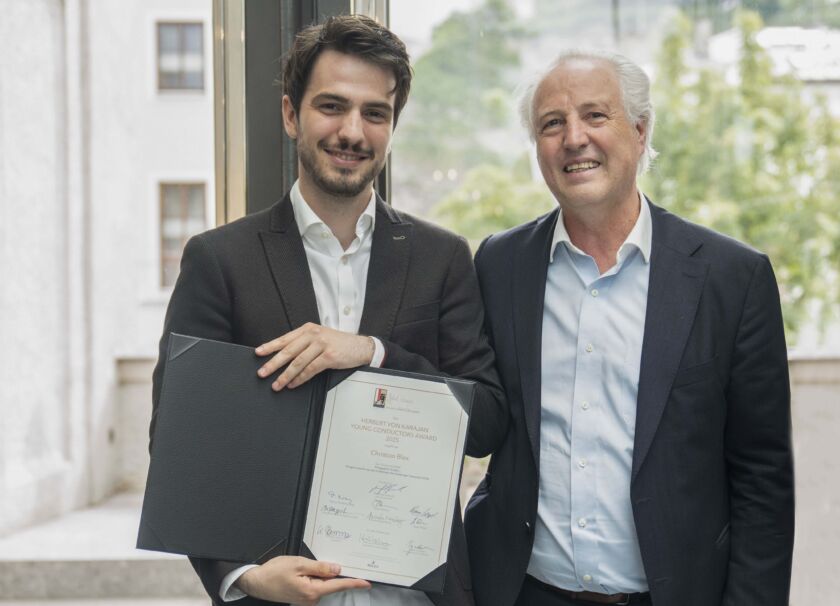
SF: As an internationally renowned conductor, what does it mean to you to chair the jury of the Herbert von Karajan Young Conductors Award?
Manfred Honeck: It means a lot to me, because this work allows me to see what young conductors are up to, and what the future will bring. Of course it’s important to me to see great talents supported. It was no different in my case. Furthermore, I find the cooperation within the jury very interesting in its richness of ideas.
SF: Which pointers would you have been grateful to have had at the beginning of your conducting career? Or, put differently: what advice would you give your younger self?
Manfred Honeck: I would counsel patience above all else. It’s no use being a shooting star for a short while and then to fade away quickly. Of course, hopefully there will always be the Karajans, who are able to stand at the very top from a young age. I think young artists should allow themselves to take shape, to give themselves time to grow. For everyone with an exceptional talent, the decisive moment comes.