Completion of the digitalisation project
Since the reopening of the Festival Archive at Villa Riedenburg, the archive team has been working on its first major digitisation project. This project has now been completed.
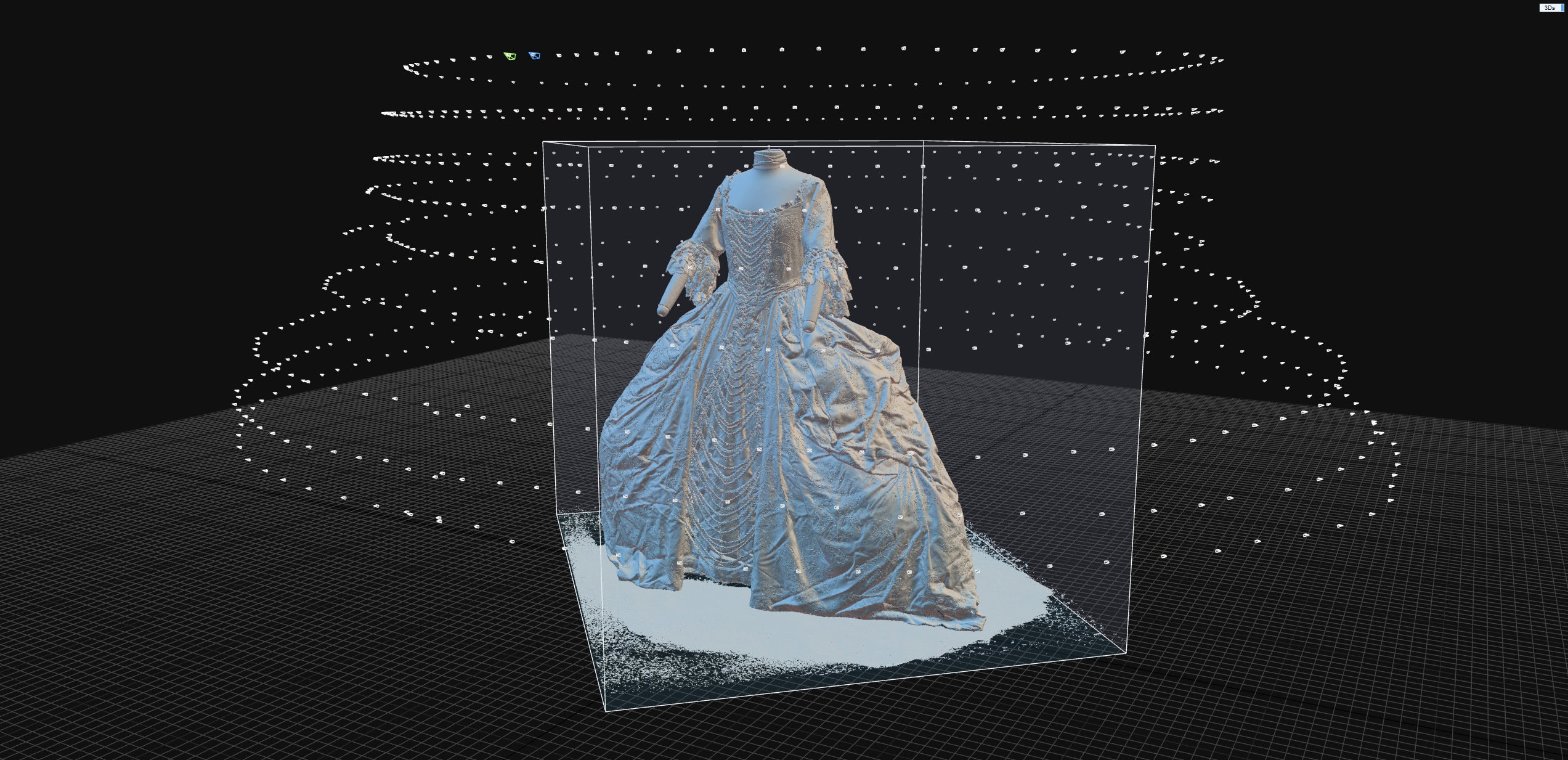
The programme booklets, posters, costume designs and 3D costume models, now available in digital form, will be made accessible via an online catalogue.
This was made possible by sponsorship from acm (austrian capital management GmbH) and through the “Digital Cultural Heritage” funding programme, an initiative of the Federal Ministry for Housing, Arts, Culture, Media and Sport (BMWKMS), which provides funding to various Austrian cultural institutions to enable them to convert their collections into digital formats and upload them to the central cultural heritage platform “Kulturpool” (www.kulturpool.at). Thanks to the award of this grant, the Festival Archive team was able to begin digitising four sub-collections in the summer of 2024.
The bulk of the project consists of the Salzburg Festival’s own printed publications. In addition to all the programmes for a total of over 6,400 productions, this collection also includes bound annual programmes, leaflets and special publications such as exhibition catalogues, commemorative speeches and almanacs. A total of 9,096 publications, comprising 249,105 pages, had to be catalogued manually before being handed over to CCS Content Conversion Specialists GmbH, a leading international expert in retro-digitisation.
All of the digitisation projects were carried out in collaboration with external partners. Working with Aumayer druck+media GmbH in Munderfing, 9,481 digital images relating to 263 different productions were created from the collection of costume designs. For the digitisation of 1,099 posters, the services of the Festival’s long-standing partner MEDIA DESIGN: RIZNER.AT in Salzburg were utilised.
The surviving costumes and props from four selected opera productions, which have gone down in the history of reception and therefore hold particular significance in the Festival’s history, were 3D-scanned. Working closely with the Festival’s costume and props department, Simon Hochleitner from the University of Art and Design Linz is creating 3D models of 52 costumes and 25 props using a complex photogrammetry process.
The digitisation is supported by acm (austrian capital management).