
Friederike Kühl
Soprano
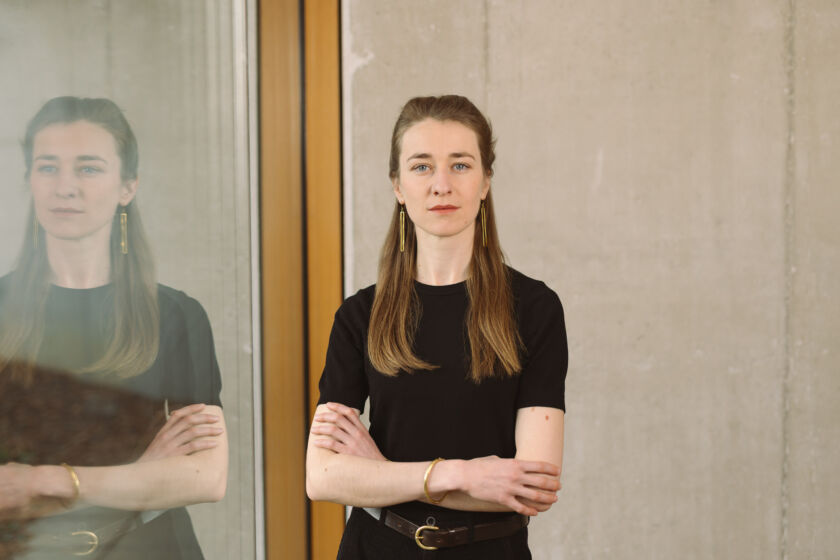
The soprano Friederike Kühl was born in Stuttgart and grew up near Basel in Switzerland. Her career is focussed on contemporary and early music. She is a member of the Bremen-based ensemble Phaeton, which weaves together pantomime and Baroque dance to tell stories through music and gestures. She is also a founder member of the Workers Union, a collective for contemporary music, and of the chanson ensemble Die Damen und Herren Daffke.
With the vocal ensemble Cantando Admont under the direction of Cordula Bürgi she regularly appears at international festivals and at renowned concert halls such as the Amsterdam Concertgebouw, the Cologne Philharmonie, the Radialsystem in Berlin and the Centro Cultural de Belém in Lisbon. She has worked with conductors such as Beat Furrer, Pablo Heras-Casado, David Robertson and Emilio Pomàrico.
Recent career highlights include the world premiere of Furrer’s Das große Feuer at the Zurich Opera House, the role of Sister Jasmin in Haas’s chamber opera Thomas at the Berlin State Opera, performances of works by Morton Feldman and Manos Tsangaris at the Wien Moden Festival in the Vienna Musikverein and the Secession building, and three pieces for flute and soprano by Beat Furrer with the flautist Iva Kovač at the Schubert Hall of the Vienna Konzerthaus. At the Salzburg Festival she performed the highest woman’s part in Luigi Nono’s Quando stanno morendo with Klangforum Wien under Sylvain Cambreling.
On stage she has also appeared in Once to be realised, a co-production of the Munich Biennale and the Deutsche Oper Berlin and the Onassis Cultural Center in Athens, and as the Queen of the Night in Mozart’s Die Zauberflöte at the Schlossfestspiele Ettlingen.
Friederike Kühl studied in Rostock and furthered her artistic training on the Erasmus scheme in Salerno in Italy, and in masterclasses with Gemma Bertagnolli, Ian Bostridge, Renate Faltin, Rudolf Piernay and Sarah Maria Sun.
She was awarded the ‘Out of the Box’ Prize of the City of Salzburg and has received bursaries from Yehudi Menuhin’s Live Music Now and from the Oscar and Vera Ritter Foundation.