Obituary: Dr. Heinrich Wiesmüller
“In Heinrich Wiesmüller, the Salzburg Festival has lost a personality who influenced the institution profoundly for decades – quietly, wisely and with a natural ease that has become rare today,” the Directorate of the Salzburg Festival (Kristina Hammer, Karin Bergmann, Lukas Crepaz) expressed its mourning at the death of Dr. Heinrich Wiesmüller.
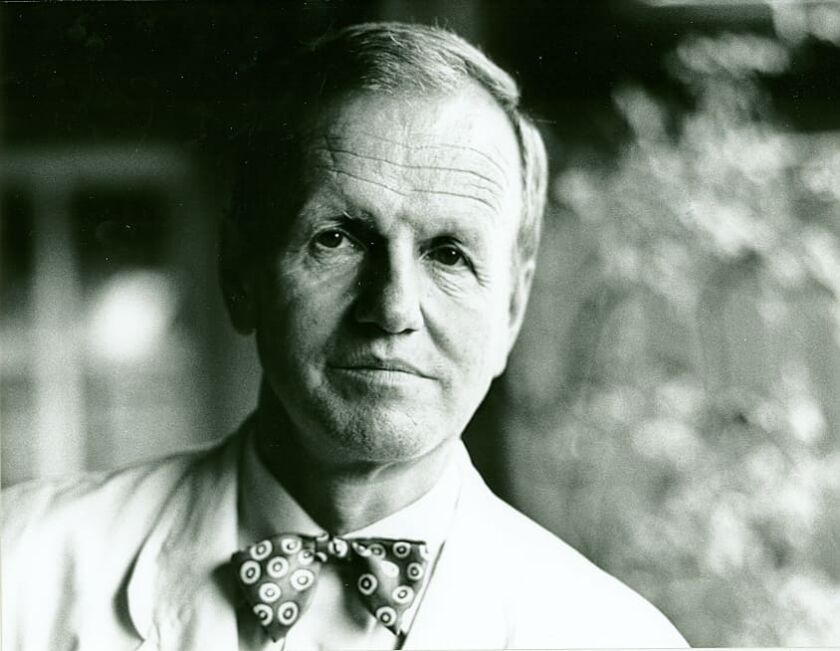
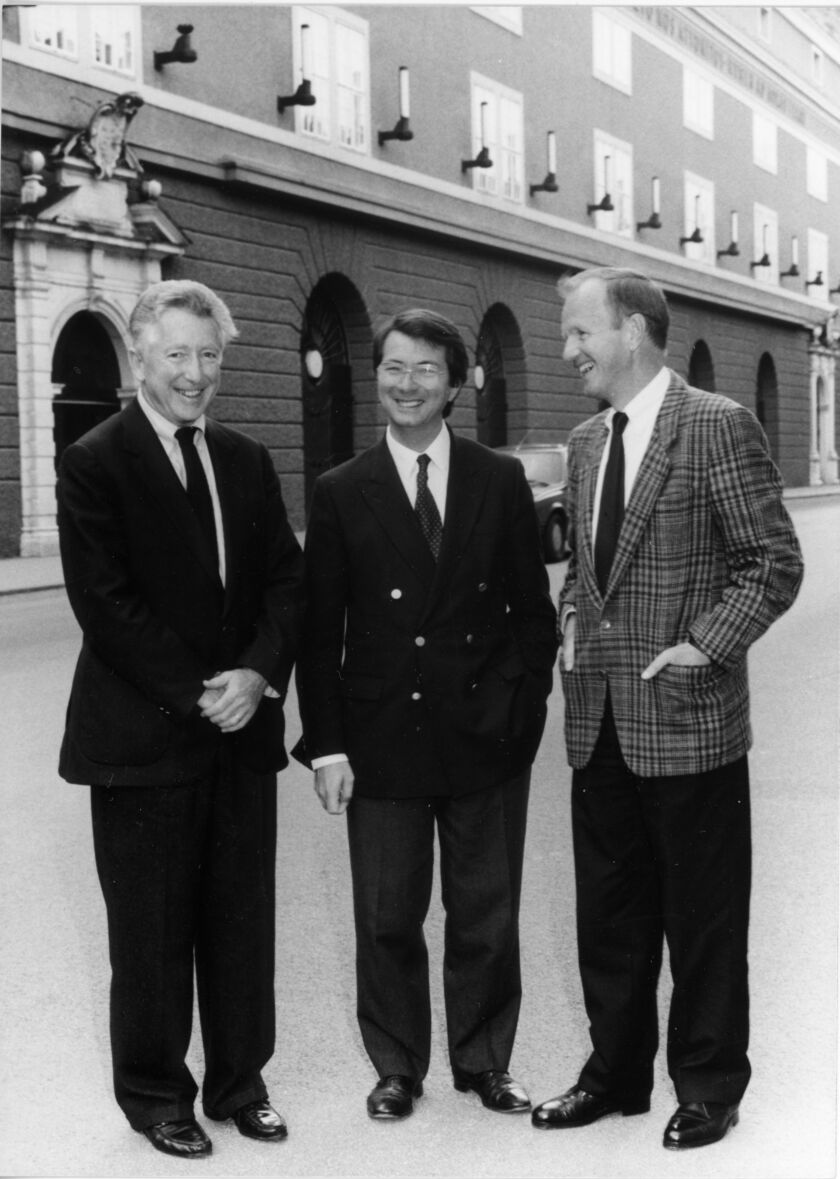
Wiesmüller was not a man to seek the spotlight. Public recognition, vanity or excessive attention to his own person were far from his mind. His focus was always on the issues themselves: music, theatre, literature, the arts, but also politics, the economy, people. His curiosity was boundless, his interest in the world comprehensive. “I was always interested in everything,“ he once said – a statement that best describes his nature.
This curiosity brought him in touch with the Festival at an early age. While many citizens of Salzburg were familiar with it through direct childhood impressions, the son of a forester in the Lungau region first learned of the Festival through radio broadcasts. This led to a lifelong connection culminating in three decades of responsibilities: as a member of the Supervisory Board (2001 to 2007), a member of the Directorate (1976 to 1985), as an advisor (1986 to 1989) and from 1991 to 1995 as President of the Salzburg Festival.
In all these positions, Wiesmüller was never a loud presence, but always a decisive one. He was a strategist of fairness, a facilitator in difficult times, a man of dialogue. Where others took positions, he sought solutions. Where conflicts seemed frozen, he found ways. It was this rare ability to reconcile differences that made him indispensable.
He accompanied the Festival through some of its most eventful epochs – from Herbert von Karajan’s era to the profound renewal under Gerard Mortier and the years of Peter Ruzicka and Jürgen Flimm. Four artistic directors, four different handwritings – and always, Wiesmüller was one of those calm anchors in the background ensuring continuity and enabling the dualism between old and new that is so important, especially in Salzburg.
Especially in times of upheaval, his importance became obvious. After Karajan’s death in 1989, he was essential in repositioning the Festival and making it viable for the future. He supported reform, even when it was uncomfortable, because he recognized that stagnancy was not an option. At the same time, he preserved a feeling for tradition – not as a rigid concept, but a vibrant foundation for everything else.
Gerard Mortier himself was later to honour him in words that reveal much about Wiesmüller’s role, noting that without his support and understanding, the difficult beginning would not have succeeded. It was this very mix of clarity, patience and loyalty that distinguished him.
Structurally, Wiesmüller also left a lasting mark on the Festival: suffice it to mention the strengthening of the financial foundation, the inclusion of tourism, important infrastructure developments such as the transformation of the Schüttkasten into the ticket office with an ample rehearsal studio under the roof, and not least his ability to bring personalities together. Like few others, he had the capacity to comprehend business and the arts not as opposites, but as a productive whole. In his work for the Bankhaus Spängler and in his cultural activities, he offered an example of this combination – wisely, sustainably and always with an eye on the common good.
He received numerous awards for his achievements, including the Grand Decoration of Honour for Services to the Republic of Austria, the Austrian Cross of Honour for Science and Art First Class, the Grand Decoration of Honour of the State of Salzburg and the Ring of the City of Salzburg. To him, however, the cause itself was far more important than any accolade.
Heinrich Wiesmüller was, in the words of the Salzburger Nachrichten, a “grandmaster of cultural policy”. He took responsibility and provided orientation and purpose to the Festival at decisive moments. His work endures. As does his attitude.
Our profound sympathies are with his family, especially his wife Johanna and his children, Mag. Markus Wiesmüller and Dr. Maria Wiesmüller. Our thoughts are with them in these trying hours.
“The flag of mourning flying on the Festspielhaus today is a symbol of our grief and gratitude for Heinrich Wiesmüller’s work at the Salzburg Festival,” declared the Directorate of the Salzburg Festival.